
SHAH ALAM: The Meranti, Balau and Belian trees are among Malaysia’s most recognisable timber species.
However, the survival of these huge trunks are increasingly at risk as deforestation continues to endanger the country’s tropical rainforests.
Due to this, a group has taken it in their stride to help rebuild Malaysia’s rainforests – one seed at a time.
Established in 2012, the Tropical Rainforest Conservation and Research Centre (TRCRC) operates across three sites nationwide – the Tropical Rainforest Living Collection (TRLC) sites in Merisuli, Sabah and Banun in Perak and the Elmina Rainforest Knowledge Centre (ERKC) in Selangor.
TRLC Merisuli spans 224ha within the Ulu Segama-Malua sustainable forest management project while TRLC Banun spans 500ha and is part of the Amanjaya Forest Reserve.
Apart from functioning as an in-site collection of rare and endangered trees in the peninsula, it also aims to advance Malaysia’s Central Forest Spine initiative by reconnecting fragmented forests across Peninsular Malaysia.
The ERKC, meanwhile, aims to conserve species and provide environmental education while also operating a nursery.

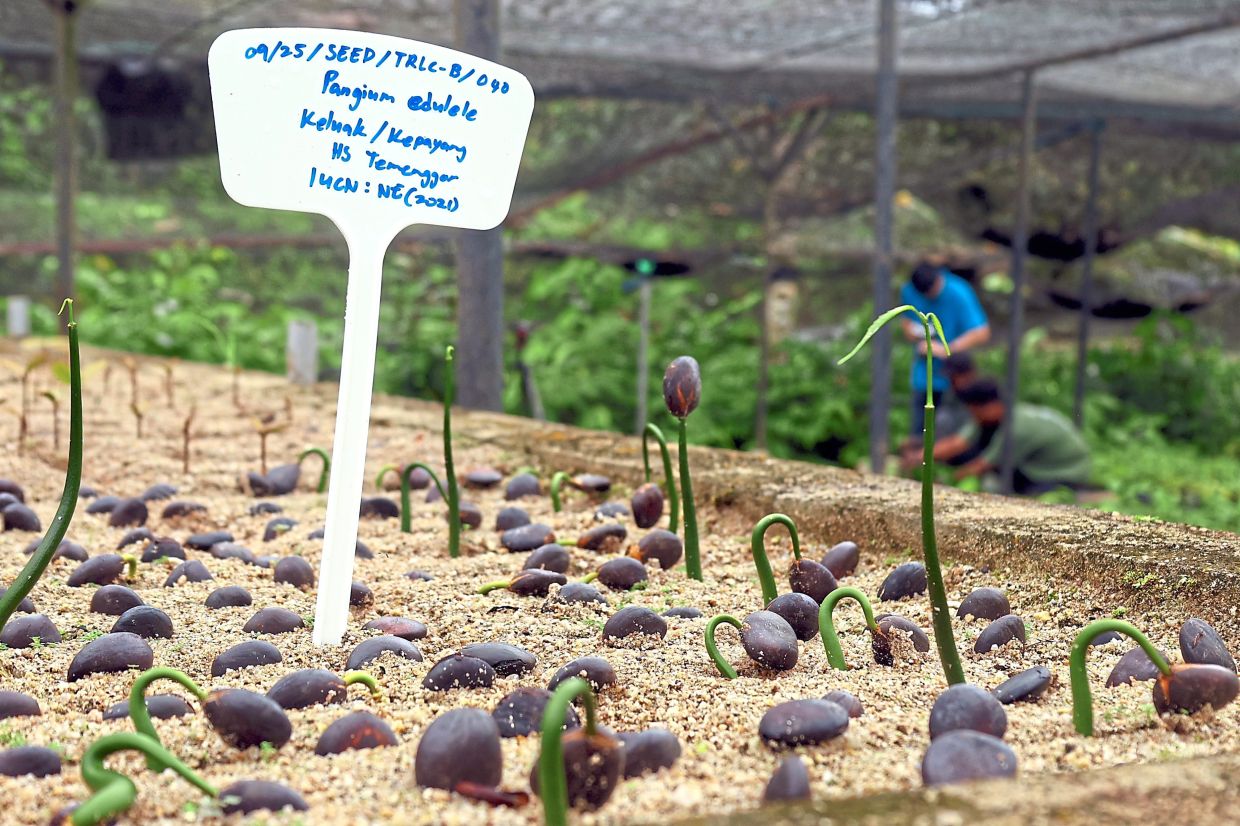
Besides conservation, each of the sites have their own nurseries, housing species native to the area.
“These range from ‘least concern’ to ‘critically endangered’ under the International Union for Conservation of Nature (IUCN) Red List,” said TRCRC conservation and project coordinator Intan Syafiqah Mohd Hamezan.
Intan Syafiqah said the nurseries are designed in a manner that simulates a plant’s growth from the seedling stage in the wild.
At the germination stage, the plants are kept under 90% shade, similar to how young seedlings in the forest are protected from direct sunlight by taller vegetation.
Upon reaching a certain size, it will be transplanted into polybags before being placed at the growing areas.
Following this, the plants will then be taken just outside the nursery and left to harden before being replanted at conservation sites.
“The whole process can span months and years as its growth depends on whether the species is fast growing,” she said.
To date, more than 200,000 seedlings have been nurtured at TRCRC’s on-site nurseries since 2012 while 65,420 trees have been planted at its sites.
Some 319 tree species have also been rescued.
Of the number, 17 are critically endangered, 21 endangered, 39 vulnerable and 21 near threatened under the IUCN Red List.
Among the TRCRC’s focus are trees from the Dipterocarpus family, which includes Meranti, Keruing Gombang, Balau and Belian.
Last year, a total of 25 indigenous communities were trained with 19 staff from the indigenous people and local communities employed by the TRCRC.
Intan Syafiqah said replanting projects are also carried out to coincide with the monsoon or rainy seasons.
“After two weeks, we will return to collect the baseline data for further analysis.
“This includes data on the height, root collar diameter and the crown width.
“The next data collection process will take place in the following three months.
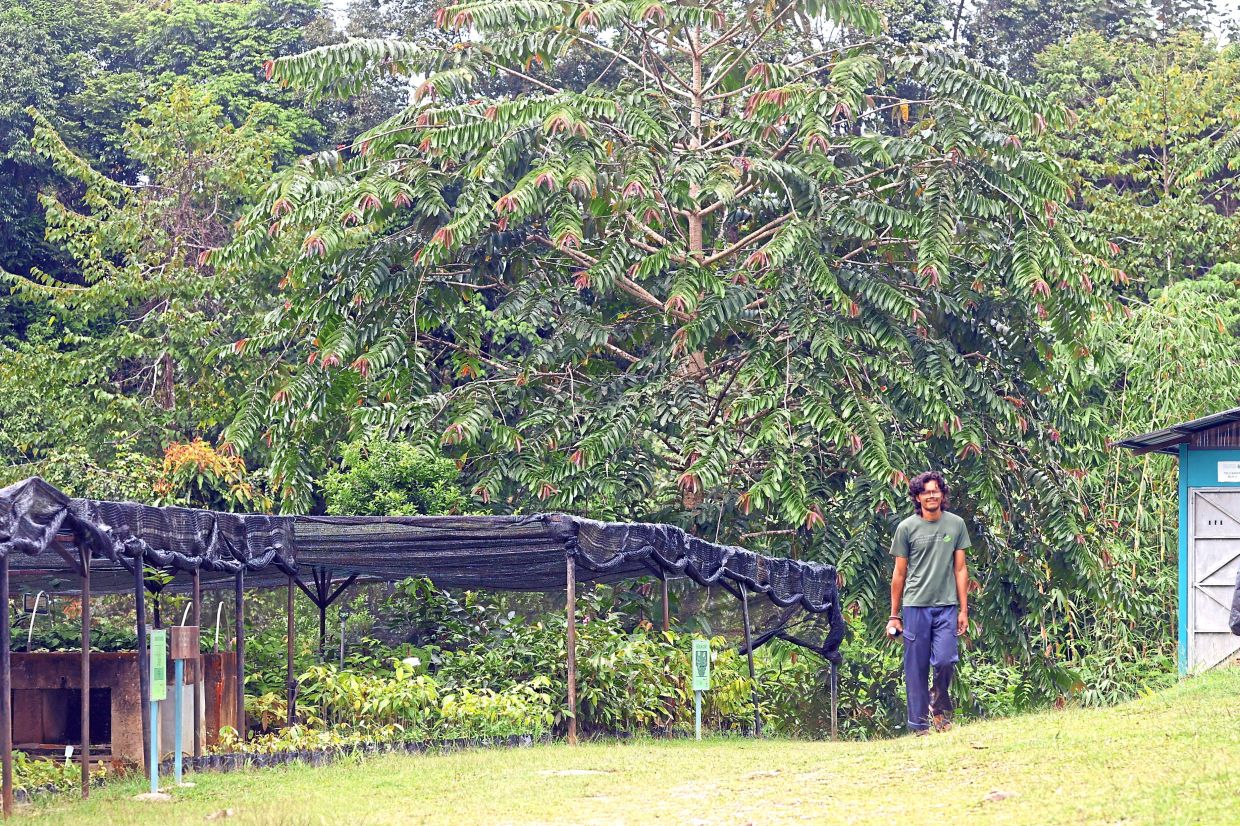
“That’s the hard part about conservation. It’s not something that happens overnight,” she said.
According to Intan Syafiqah, planting is not as easy as just “throwing seeds into the forest and letting them grow”.
“Even if they do grow, anything could happen such as an elephant walking through the site.
“It takes time. We are also subject to factors out of our control,” she said.
The replanting efforts also aims to support the wildlife around it through creating wildlife corridors.
Intan Syafiqah advised the younger generation to learn more about Malaysia’s rainforests, even if they have the slightest interest.
“You don’t have to go big right away but start on a smaller scale.
“The most important thing is taking the first step and learning about Malaysia’s natural heritage,” she said.
For their noble efforts, TRCRC is named as one of the 10 winners of the Star Golden Hearts Award (SGHA) 2025.
SGHA is an annual award by The Star that honours everyday Malaysian unsung heroes.
For details, visit sgha.com.my.