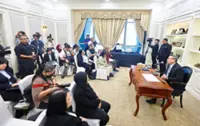
GEORGE TOWN: The judiciary is looking into alternative solutions to ease case backlogs, says Datuk Seri Wan Ahmad Farid Wan Salleh (pic).
He said more Judicial Commissioners are being appointed to meet demand, alongside other measures to reduce congestion.
Justice Wan Ahmad acknowledged the severity of the problem, sharing that a Johor judge handles about 800 active cases.
He said this is triple the recommended load.
“It is humanly impossible for a judge to hear 800 cases. A normal caseload should be around 200 to 250,” said Justice Wan Ahmad.
“We know what the problems are, and we are addressing them,” he added.
He spoke after launching the revival of Court of Appeal circuit sittings across Peninsular Malaysia in Penang.
The event was held at the George Town High Court on Thursday (Nov 27).
He was responding to questions on significant delays in court proceedings.
Some matters have been pending for years without resolution, he said.
Justice Wan Ahmad said more judicial commissioners are needed.
He said the Judicial Appointments Commission is reviewing additional appointments of judges and judicial commissioners, adding that this alone will not solve the problem.
“It will still be firefighting and we do not want to be firefighting. Appointing more people helps, but it is not the only solution,” he added.
He said the judiciary is expanding court annexed mediation and other alternative dispute resolution initiatives.
“These are designed to divert cases from full hearings. They ease pressure on trial judges and help litigants reach faster outcomes, he said.
He added that this is work in progress, and added that there are other solutions we are implementing to reduce the workload,” he added.
In Penang, he said a weeklong circuit sitting is part of efforts to clear older cases.
“As it is ongoing we do not know the number of cases that will be resolved. So far, some have been withdrawn as well,” he added.
In Sabah and Sarawak, the judiciary plans to move beyond Kuching and Kota Kinabalu.
It will reach the outskirts to improve access, he said.
New circuit locations include Miri and Sandakan to serve rural communities.
These areas face difficulty accessing the courts, he said.
“We go to them. This is what we call access to justice,” he added.