Sime Darby Property is transforming degraded land into a living urban ecosystem
NATURE is not a place to visit. It is home. This sentiment rings true in the heart of Malaysia’s bustling urban developments, where green spaces can often seem squeezed between concrete and asphalt.
Amid this rapid urbanisation, Sime Darby Property (SDP) is championing a story of restoration, coexistence, and hope.
Central to this is the Elmina Urban Biodiversity Corridor (EUBC), SDP’s flagship restoration initiative of embedding biodiversity conservation within urban development.
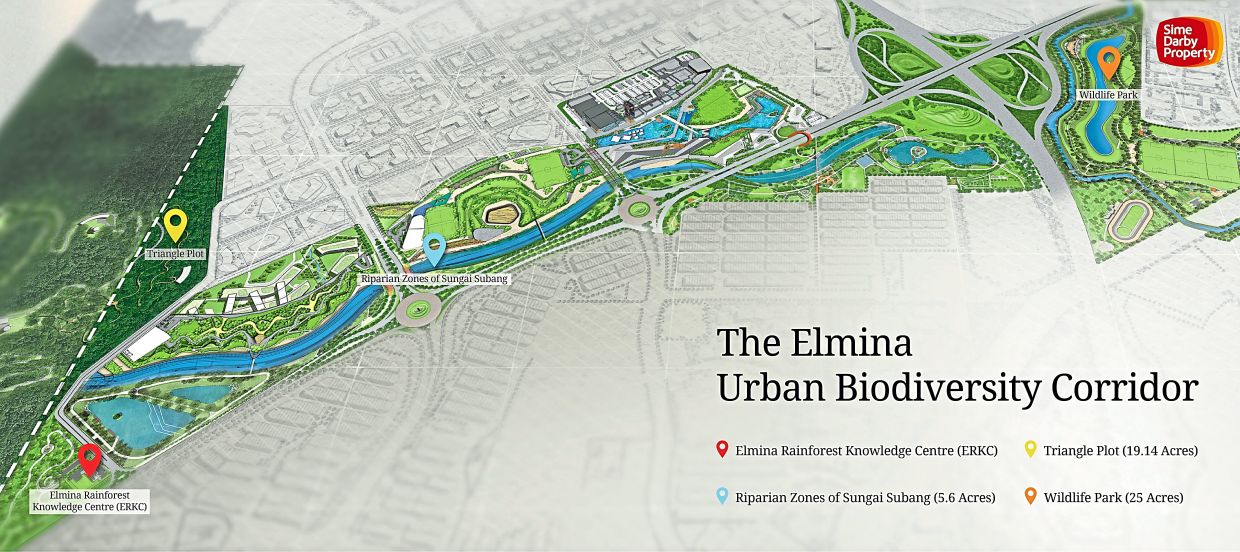
Spanning a five-kilometre stretch along Sungai Subang, the corridor reconnects fragmented landscapes, turning a once degraded, monoculture-dominated area into a vibrant ecological lifeline while setting a benchmark for nature-positive urban development in Malaysia.
Moving beyond aesthetics, EUBC promotes ecological connectivity between urban greenspaces, ensuring a more resilient urban ecosystem and rebuilding a living system.
From degradation to coexistence
The EUBC addresses the legacy of years of invasive species domination and fragmented habitats. What was once dominated by fast-spreading Acacia trees and broken up by development, offered little ecological value.
Now, through a science-led, carefully phased restoration process, it is being transformed into a resilient living system that restores biodiversity, enhances ecosystem services, and improves community well-being.
The benefits are far-reaching as it enhances urban biodiversity proliferation, stabilises soils, improves water filtration, supports carbon sequestration, and cools urban microclimates.
Importantly, the EUBC promotes safe coexistence between humans and wildlife in a rapidly urbanising area.
This is achieved by creating wildlife corridors that minimise encounters with macaques, snakes, and Malayan tapirs, allowing animals to move freely through designated and safe wildlife passageways without venturing into residential areas.
A collaborative approach
The EUBC is an ambitious project that is the result of a strategic partnership between SDP and the Tropical Rainforest Conservation and Research Centre (TRCRC).
The combined expertise between TRCRC and SDP’s technical teams, including its urban biodiversity unit, main infrastructure and landscape unit, has shaped the ecological restoration roadmap and continues to guide the project through a renewed Memorandum of Understanding, ensuring collaboration extends through 2030.
Together, they are restoring three key focus areas: the Triangle Plot, Riparian Zone of Sungai Subang, and the Wildlife Park (as shown in the graphical map above).
Science in action
Restoration efforts are methodical and science-based. Baseline ecological assessments inform species selection and planting designs, while multiple restoration methods are tested, including the Miyawaki method for dense microforests, and the Framework Species Method, which is a succession-focused planting of native species.
Rather than clear-cutting, SDP uses a phased tree removal and replacement strategy for invasive plants like Acacia, carefully replacing them with native trees.
To date, over 2,625 trees from 68 native and functional species have been planted, with ongoing community involvement. A further 2,600 trees will be planted by the end of this year.
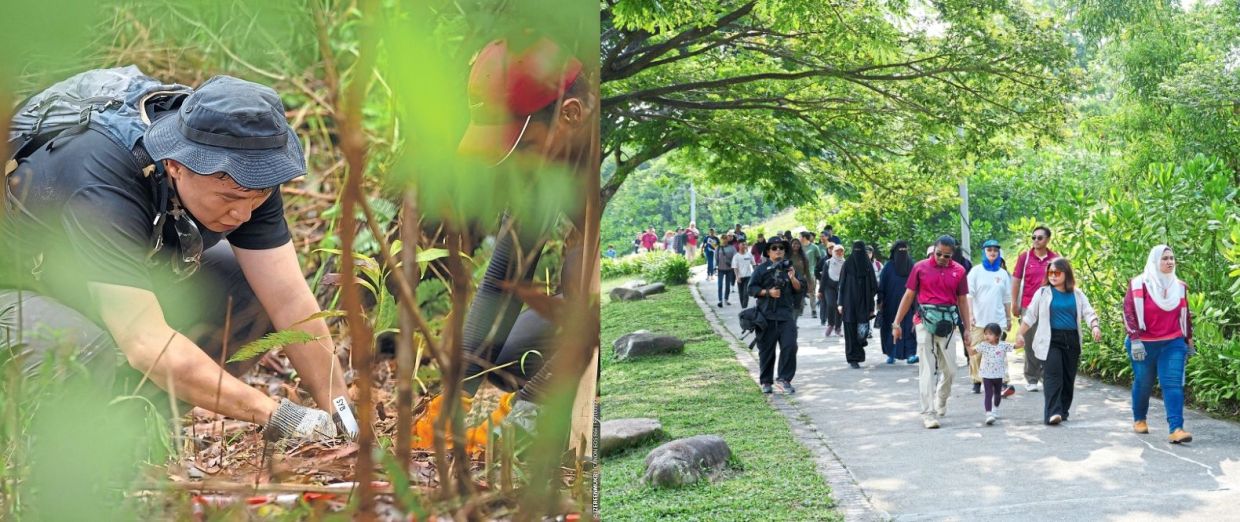
Community engagement is central. Residents, students, and corporate volunteers take part in planting activities, citizen science workshops, and biodiversity walks. These efforts foster a sense of stewardship and connection to the land.
Tracking progress, fostering stewardship
The success of the restoration is measured through rigorous monitoring systems such as the SDP Biodiversity Index and the Tree-to-Tree monitoring system, tracking faunal return, canopy cover, floral diversity, and soil health.
A vital hub within the corridor is the Elmina Rainforest Knowledge Centre (ERKC), the nerve centre for environmental education and urban ecology research.
It offers interactive exhibits, guided trails, and engagement platforms that nurture a new generation of nature advocate and provides spaces for volunteers to participate in conservation activities, making biodiversity restoration visible, inclusive, and ongoing.
Local community groups, including the Friends of ERKC, play an active role in long-term stewardship, ensuring the corridor remains a living, breathing ecosystem.
All in all, the EUBC integrates biodiversity into urban planning, using ecological restoration to strengthen ecosystems, support native species, and reconnect communities with nature.
SDP’s commitment positions biodiversity as essential urban infrastructure and the EUBC shows how science-based, cross-sector collaboration can create cities where people and wildlife coexist harmoniously.