



PETALING JAYA: Regular audits, safe construction methods and stiffer punishment are needed to better protect Malaysian road users against hazardous falling construction materials, say experts.
Assoc Prof Dr Law Teik Hua of Universiti Putra Malaysia said while there are laws that provide a safety framework for construction sites such as the Occupational Safety and Health Act 1994 and the Occupational Safety and Health Department regulations, they do not cover road user safety.
“The law available tends to promote the safety of the workforce on the construction site rather than traffic safety.
“A case can also be made about developing legislation that will address the safety of temporary structures hanging over the road,” he said when contacted.
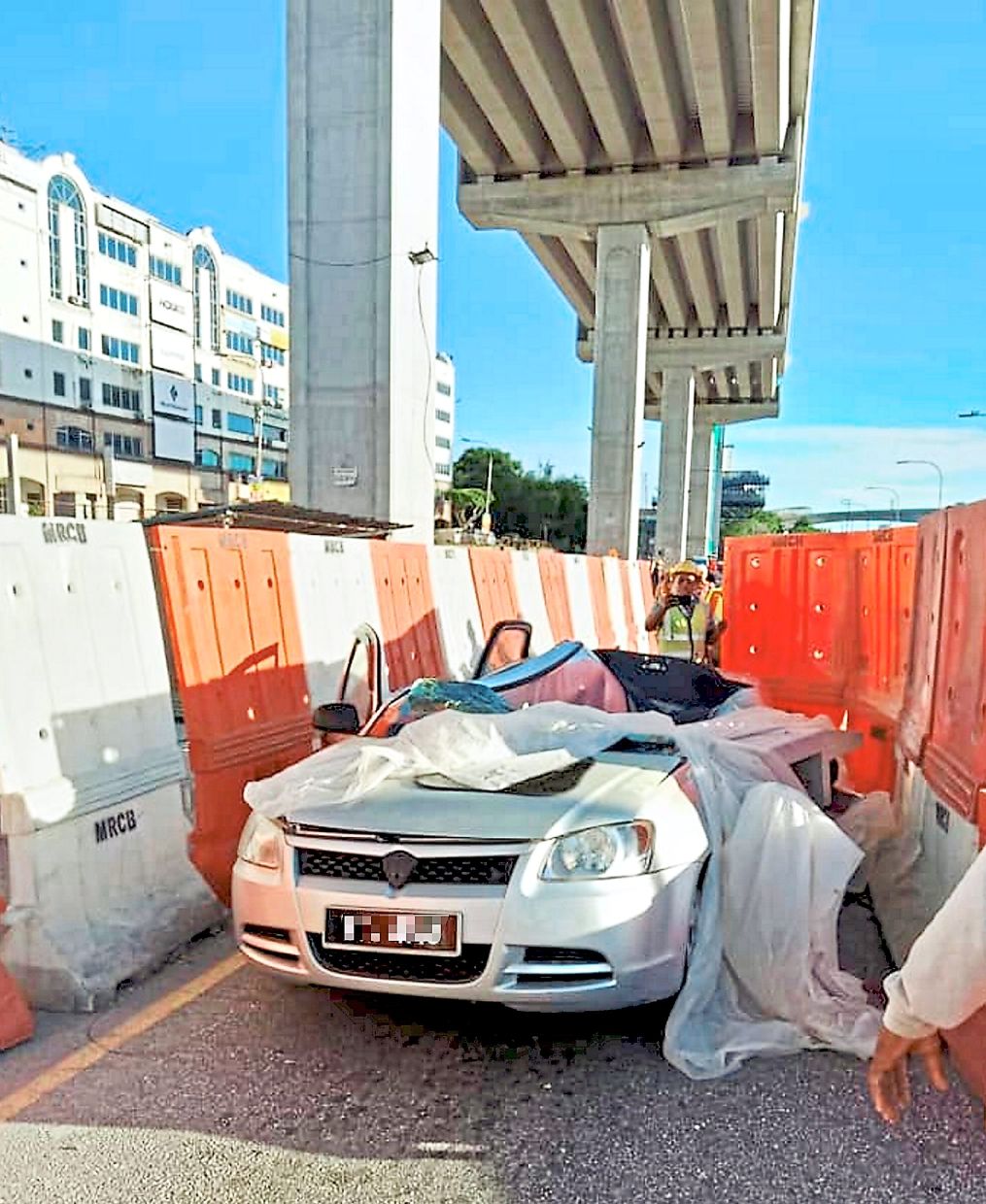
On Nov 18, a woman narrowly cheated death when her car was crushed by a temporary scaffolding pole at the East Coast Rail Link construction site on the Middle Ring Road near the Gombak toll plaza.
As for punishment, Law said most violations usually include fines and possible imprisonment but are deemed ineffective as a genuine warning measure, especially in large-scale development projects.
“To ensure accountability with regard to the law, the punitive measure has to be raised substantially and in direct correlation to the project’s value and the extent of the risk posed.
“More profoundly, the legal framework has to stop being squeamish about awarding custodial sentences to the management of guilty corporations regarding gross negligence over safety standards,” he added.
Law said a multi-pronged approach is needed to address the issue, which includes using the latest structural monitoring equipment for project sites.
Among ways to improve safety, he said, are using resilient protective netting against falling materials, protective “overhead shelters” or “tunnels” covering project site entrances and exits, and stringent safety practices when handling materials at elevated levels.
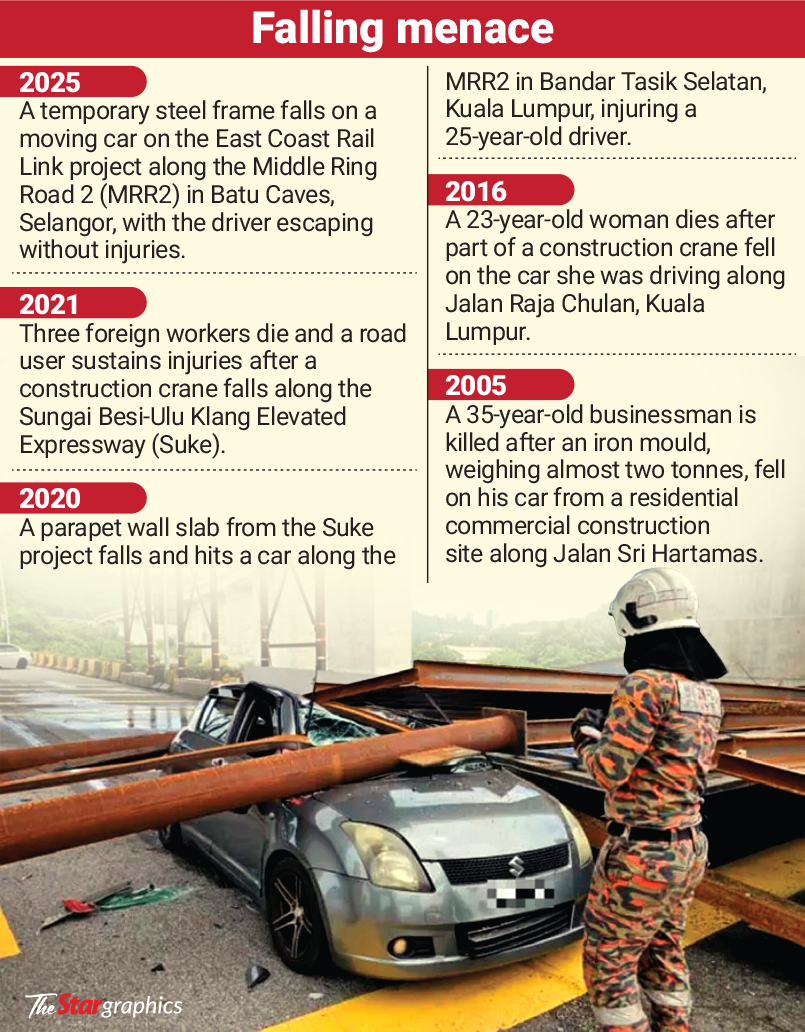
Road Safety Marshal Club founder and president K. Balasupramaniam said those involved in managing project sites should carry out regular independent safety audits.
“Preferably, checks should be done before work is carried out, especially involving temporary structures or large signboards,” he said.
Balasupramaniam said members of the public and non-profit organisations could also play their role in reporting potential danger at project sites to bodies such as the Construction Industry Development Board.
“Project developers must also be made to submit regular audit reports to the local enforcement authorities to ensure their site is safe not only for their own workers but also road users.”
Regarding insurance claims, he said victims could claim damages from project developers, regardless whether the mishap occurred on a public or private road with public access.
“Since 2007, after intervention by Bank Negara, the law is clear: Even if an accident occurs on a private road with public access, it is deemed a public road,” he said.
While supporting stiffer punishment, he said it should only be used as a last resort.
“We should take preventive measures. Don’t wait for something to happen and only then react and start pointing fingers,” he added.

