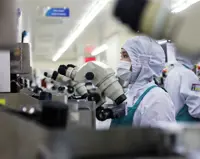
THE country is on the right track to achieve its target of producing 60,000 high-skilled talents in semiconductor sector-related fields by 2030.
Deputy Investment, Trade and Industry Minister Liew Chin Tong said the talent covers the fields of integrated circuit design, advanced packaging, research and development and wafer fabrication.
“To date, a total of 13,679 engineers and technical experts have been successfully trained, their skills certified and absorbed into various segments of the semiconductor industry,” he said during the question and answer session.
Liew was replying to Khairil Nizam Khirudin (PN-Jerantut) regarding the number of highly skilled engineers trained and absorbed into the semiconductor industry since the launch of the National Semiconductor Strategy (NSS).
He said the NSS, which was launched in May last year, has identified that the development of highly skilled talents as a critical thrust in ensuring the sustainability and long-term competitiveness of the country’s semiconductor industry.
“Among the universities and institutions involved in the effort are Universiti Sains Malaysia, Universiti Malaya, Universiti Teknologi Malaysia, as well as skills centres such as the Malaysian Institute of Microelectronic Systems Bhd and the High Technology Training Centre,” he added.
Under Budget 2026, Liew said several talent development incentives for the semiconductor sector were also announced, namely three million training opportunities with a focus on the high-tech sector, including semiconductors by HRD Corp.
“K-Youth and TVET programmes by Khazanah Nasional provides on-the-job training to 11,000 youths without degrees in strategic sectors such as semiconductors with an allocation of RM200mil.
“The Flagship IC Design Programme will also continue to train 2,500 world-class talents in the field of integrated circuit design with a value of RM340mil,” he said.
Liew added that several major multinational companies in the fields of chip design, fabrication and testing have been actively establishing strategic collaborations with public universities.
He said the collaboration involved the development of industry-based curriculum, the provision of high-tech laboratories, industry training support programmes and joint efforts in applied research, focused on new generation semiconductor technologies.