
SIBU: Sarawakians are being encouraged to have bigger families, with the state facing a decline in birth rates while moving rapidly towards having an ageing population.
Deputy Minister in the Premier’s Department (Corporate Affairs, Information and Ukas) Datuk Abdullah Saidol said Sarawak is now among the bottom three states in Malaysia in terms of birth rates.
He noted that most families have only one or two children.
"Sarawak's population stands at three million. It is among the bottom three states (when it comes to birth rates).
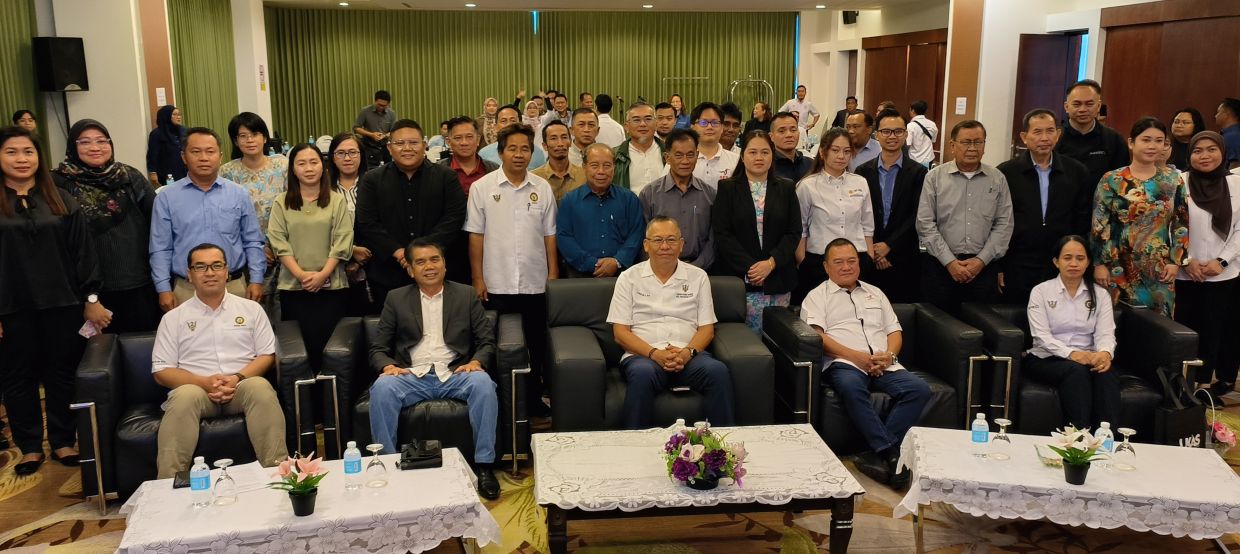
"From Lundu to Lawas, people only have either one or two children. So the younger generation, please, if you can help Sarawak in any way, (do so) by having more children," he said at the closing of a briefing on the Senior Citizens Health Benefit (SCHB) scheme here on Wednesday (Nov 12).
Abdullah said the state’s low fertility rate poses long-term challenges to economic growth, labour supply and social sustainability.
He cited statistics showing that Sarawak’s population is ageing faster than other states.
It is expected to reach the stage of having an ageing population by 2028, with 16% its residents categorised as senior citizens, according to a study by Universiti Putra Malaysia’s Malaysian Ageing Research Institute (MyAgeingTM) Sarawak.
Recognising this trend, Abdullah said the Sarawak government, through the Women, Childhood and Community Wellbeing Development Ministry, is formulating an action plan to address the challenges of an ageing population, in line with the Federal Government’s National Senior Citizens Action Plan 2025-2045.
Sarawak recently hosted the 2025 International Conference on Ageing (SICA) on Oct 28 and 29 in Kuching, themed "Ageing with Dignity: Policies for Rights, Inclusion and Social Protection".
The event aimed to strengthen policies and programmes to improve the welfare of senior citizens through local and international collaborations.
"At the same time, Sarawak is working with St Burns and the University of Technology Sarawak (UTS) to conduct a comprehensive study on the state’s ageing profile to guide future policy planning," Abdullah added.
Based on records from the Sarawak Social Welfare Department, he said 57,011 people in the state currently receive welfare assistance, 22,440 of them senior citizens – the largest group of recipients under the RM1.26bil allocation for elderly welfare in Budget 2026.
To support the elderly, the state government introduced the SCHB initiative on May 23 last year, providing outpatient treatment worth up to RM500 annually for senior citizens.
Abdullah said initiatives such as SCHB and the Kenyalang Gold Card (KGC) reflect the state government’s commitment to ensuring the welfare, health, and quality of life of senior citizens, as the state works towards becoming a high-income, developed economy by 2030.