PETALING JAYA: The government’s move to increase the monthly subsidised fuel quota for full-time e-hailing drivers to 800 litres reflects compassion, say experts and stakeholders. However, they emphasise the need for a long-term strategy.
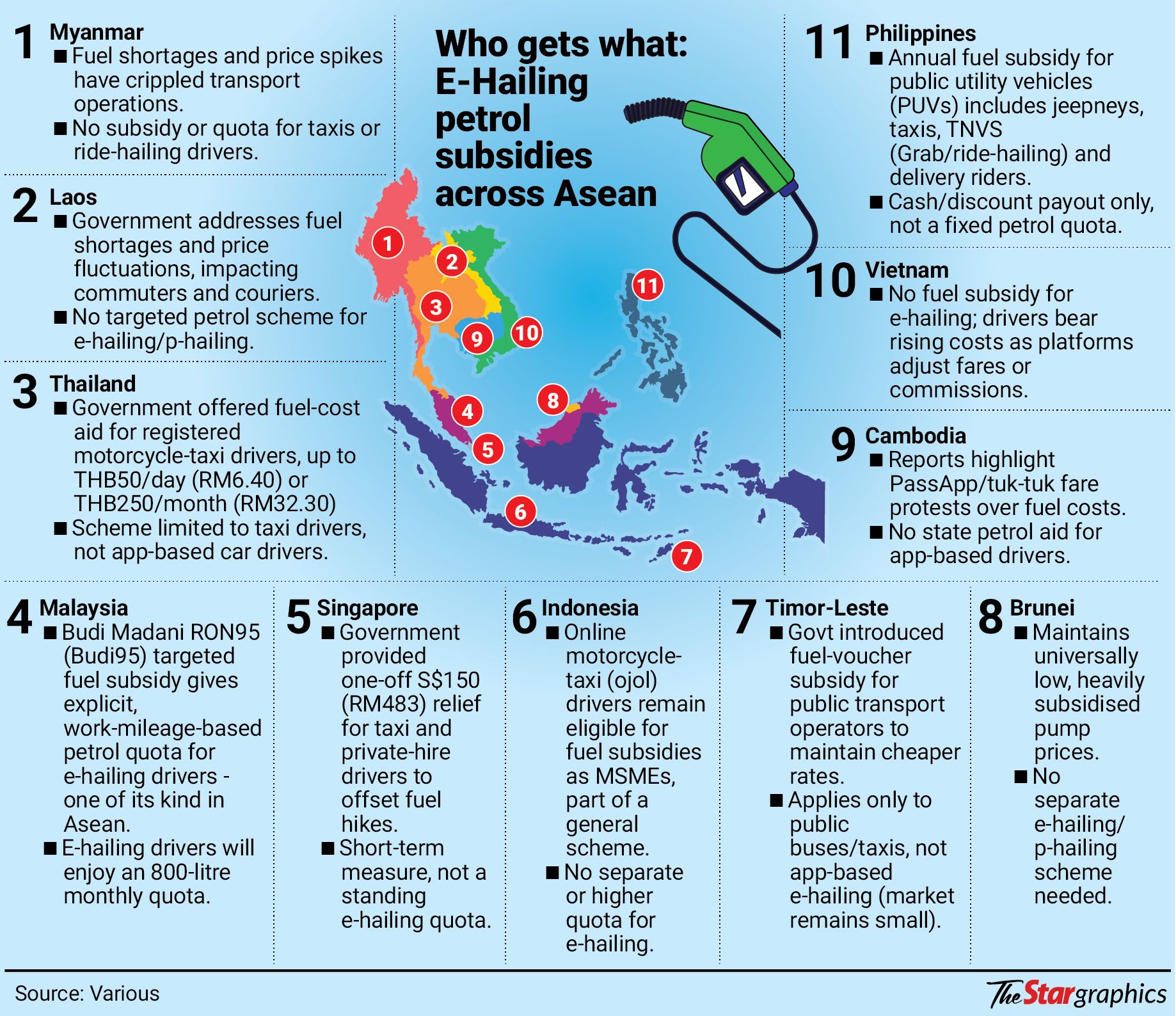
Economist Prof Emeritus Dr Barjoyai Bardai said in the Asean region, Malaysia’s approach stands out for offering a higher level of targeted support to e-hailing drivers compared to neighbouring countries.
“Compared with the Philippines and Indonesia, Malaysia has shown greater concern for e-hailing drivers.
“In the Philippines, support is extended to the wider public transport sector, including e-hailing, while in Indonesia, such initiatives fall under MSMEs (micro, small and medium enterprises),” he said.
Barjoyai said the higher quota reflects Malaysia’s sensitivity to the growing number of youths working in the sector, adding that the profession now covers more than three million households.
“The quota increase helps ensure e-hailing fares won’t rise; in fact, they may even drop as some cab fares are negotiable,” he said.
However, Barjoyai cautioned that subsidies are only a short- to medium-term measure.
“The government needs to look at how to manage the future of e-hailing, which currently serves as an interim profession for youths seeking stable employment or for workers looking to supplement their income,” he said.
He suggested that the 800-litre quota, designated for drivers who travel more than 5,000km per month, could be further adjusted to accommodate those covering even longer routes.
Federation of Malaysian Consumers Associations (Fomca) chief executive officer Dr Saravanan Thambirajah said the adjustment shows the government is responsive to feedback, adding the adjustment promotes equity, particularly for households relying solely on e-hailing income.
But he stressed that effective monitoring and transparency are essential.
“Ensuring the quota increase is administered fairly and remains targeted at genuine need will be crucial to maintain public confidence and fiscal sustainability,” he said.
He also urged continuous engagement with stakeholders and data-driven reviews so that the Budi95 scheme “remains effective, fair and fiscally responsible”.
Malaysia E-hailing Drivers Association president Daryl Chong said the increase in quota recognises the diverse operational needs of drivers.
“Different types of e-hailing drivers have varying fuel requirements, and this adjustment reflects an understanding of those needs.
“It helps drivers manage their costs more effectively while ensuring consistent service availability across all ride types,” Chong said.
Gabungan E-Hailing Malaysia described the government’s decision to raise the Budi95 fuel subsidy quota as a bold step aligned with the Ekonomi Madani vision of social justice and worker welfare.
Its chief activist Masrizal Mahidin said the Prime Minister’s announcement proved that the government is listening to the e-hailing community and recognising their vital contribution to the people’s economy.
However, he urged continued improvements to the scheme, including reviewing eligibility criteria to reflect on-ground realities and ensuring no drivers are left behind.