
Services provide access for remote and rural areas
A TOTAL of RM10mil has been allocated to expand mobile court services, including the Mobile Children’s Court and the Justice on Wheels van initiative.
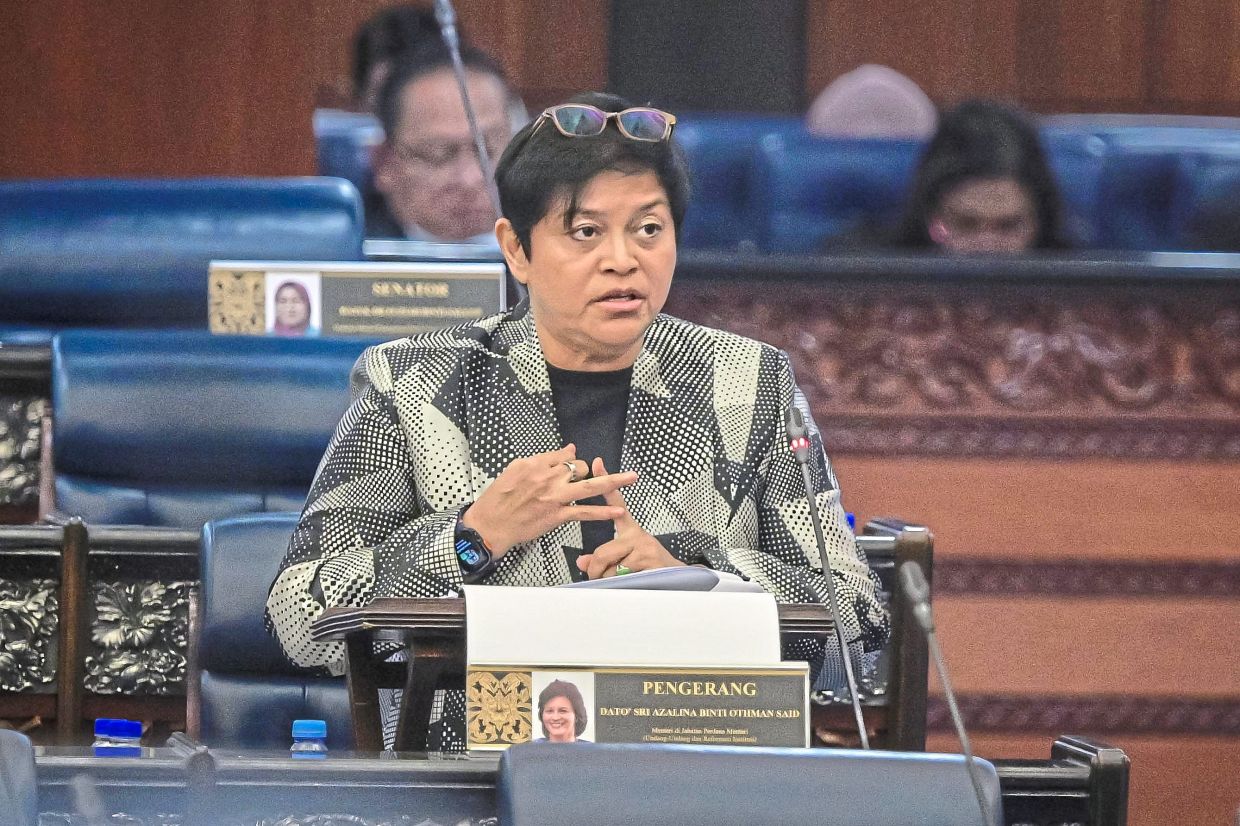
Minister in the Prime Minister’s Department (Law and Institutional Reform) Datuk Seri Azalina Othman Said said the allocation – part of the RM165mil provided under Budget 2026 for the development and maintenance of physical court facilities – reflects the government’s commitment to strengthening the judicial branch.
“Although Malaysia already has an extensive network of courts – from the Magistrates’ Courts to the Court of Appeal – access remains limited, especially in remote, island and rural areas,” she said when winding up the debate on Budget 2026.
Recognising this gap, Azalina said the government would continue expanding mobile court services equipped with child-friendly witness rooms and modified vehicles functioning as full-fledged courtrooms.
“This initiative shows that the government’s focus is not only on strengthening urban court infrastructure, but also on ensuring wider access to justice in rural and interior regions,” she said.
“The principle of ‘access to justice for all’ must be reflected in action – not where the people go to the courts, but where the courts go to the people.”
For 2026, she said the Justice on Wheels programme will be expanded through the Kembara Justice on Wheels Madani and Santuni Madani outreach initiatives, targeting rural communities and towns far from state capitals.
“These efforts aim to bring justice services directly to the people’s doorsteps and reinforce the principle of equal access to justice, regardless of geography.”
Azalina also noted that the initiative complements the newly passed Legal Aid and Public Defence Act, which expands access to legal representation, particularly for low-income groups.
“This Act ensures that no one is left behind in receiving fair legal representation,” she added.
Additionally, the Legal Affairs Division under the Prime Minister’s Department, launched the Special Guidelines for Handling Child Sexual Offence Cases 2025 on Oct 24.
Azalina said the guidelines reflect the legal and judicial system’s shared commitment to building a fairer, more inclusive and compassionate justice system for children.
“One of the biggest challenges in child sexual offence cases is obtaining testimony from children, who often feel anxious or fearful in a formal court setting.
“When testimony is recorded in a mobile witness van instead, children are calmer and more willing to speak. This is why the judiciary’s 2026 direction includes enhancing mobile courts, witness banks, on-site facilities and ICT-equipped vehicles to make the process more child-sensitive and effective,” she added.
She said studies have shown that many child victims withdraw from testifying as adults, which is why early, safe and accessible testimony collection is crucial to prevent cases from being dismissed due to insufficient evidence.