
Despite seeking less sweet drinks, M’sians’ sugar cravings remain strong
PETALING JAYA: More Malaysians are asking for “kurang manis” (less sweet) drinks, but the nation’s sweet tooth is far from cured.
Food and beverage services industry players say that while there is a growing trend of health-conscious consumers, particularly among young Malaysians, working adults and families, most customers still prefer their beverages on the sweeter side.
ALSO READ: Health Minister unveils Nutri-Grade system with ban on sugary beverage ads ahead
They believe the Health Ministry should step up public education on sugar content instead of placing more regulatory burdens on small operators.
Malaysian Indian Restaurant Owners Association (Primas) president Datuk J. Govindasamy said the shift towards “less sweet” orders reflects increasing health awareness, but balancing taste, cost and consistency remains a challenge.
ALSO READ: Health Ministry mulls grades for food nutrition
“There are alternatives like stevia, monk fruit extract and other low-calorie sweeteners, but they are expensive and can alter the familiar taste customers enjoy.
“Some operators use brown sugar or honey, but those still contain natural sugars,” he said.
Govindasamy was commenting after Health Minister Datuk Seri Dr Dzulkefly Ahmad said the ministry is developing a mandatory Malaysian Nutri-Grade system to classify beverages based on their total sugar content.
ALSO READ: INTERACTIVE: Ramadan sugar surge worries health experts
Under the proposed system, drinks with more than 10g of sugar per 100ml will be banned from being advertised on all platforms.
Implementation will take place in phases, starting with ready-to-drink products before extending to freshly prepared beverages.
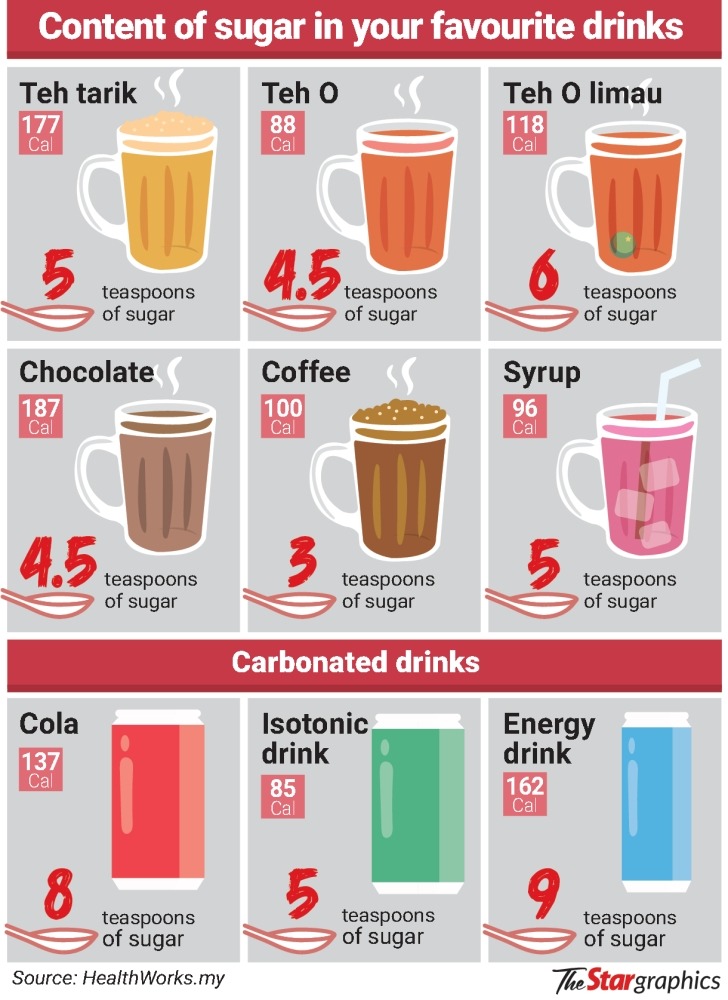
Govindasamy said operators might need to display the sugar grade, from A to D, or sugar content on menus and counters, urging the ministry to provide clear guidelines, transition time and training to help small businesses adapt.
“The mandatory labelling is expected to increase customer awareness and encourage ‘less sweet’ preferences. It will also motivate businesses to reformulate their drinks. Primas believes this is a positive step but hopes the ministry will collaborate closely with industry associations to ensure practical implementation,” he said.
ALSO READ: Malaysia's war on sugar: Hoteliers commit to displaying calorie and sugar content
Petaling Jaya Coffeeshop Association president Keu Kok Meng agreed that “kurang manis” requests are becoming increasingly common.
“Many now order drinks like teh si kosong or barley kosong. The preference for less sugar is clear,” he said.
However, Keu believes the Nutri-Grade system will take a long time to reach smaller outlets.
“If the ministry does implement it, it will mostly affect ready-to-drink products. Any additional manufacturing costs will be passed on to consumers,” he said, adding that Malaysia should not rush to follow other countries’ labelling systems without evidence of their effectiveness.
Pertubuhan Sahabat Tomyam Prihatin SeMalaysia adviser Che Mamad Che Mod said many Malaysians remain unaware of what goes into their drinks.
“That’s why it’s important for the Health Ministry to educate the public first, instead of burdening food operators,” he said.
“Most businesses are struggling to stay afloat.
“The ministry should run more nutrition awareness programmes rather than just carrying out enforcement. Many Malaysians have no idea how much sugar is in the global branded drinks.”
Che Mamad urged the ministry to first study the public’s level of nutritional awareness before rolling out policies.
“The minister’s view may be from an academic or professional perspective, but it doesn’t reflect what’s happening on the ground,” he added.