KUALA LUMPUR: Asean has launched three new initiatives that are set to represent the legacy of Malaysia’s chairmanship this year and to guide the regional group’s member states into the future, says Foreign Minister Datuk Seri Mohamad Hasan.

Mohamad said the initiatives are the culmination of months of collaboration, reflection and vision.
“Each, in its own way, prepares Asean for a changing world. Together, they affirm our collective determination to shape a future that is inclusive and sustainable,” he said in his opening remarks at the launching ceremony of the Asean Initiatives on Inclusivity and Sustainability yesterday.
According to Mohamad, the Mega initiative embodies the principle that economic transformation must begin at the grassroots, as micro, small and medium enterprises are the backbone of the Asean economy.
“These MSMEs will gain access to an education and training hub that will facilitate their transition to green, sustainable business models.
“By enabling all businesses to participate in the green transition, we are not only protecting livelihoods, but also preparing Asean’s economy for the realities of a low-carbon future.”
Mohamad said the second initiative, which is the Asean Ahead: Asean STI Ecosystem Foresight 2035 and Beyond report, aims to prepare Asean for the future.
“In this regard, foresight is not gazing into a crystal ball, hoping to predict the future, but about readiness,” he said.
He said the report identifies the trends, disruptions and opportunities that will define science, technology and innovation in the next decade and for Asean’s collective prosperity.
“Through this, we will ensure that Asean’s progress is guided not by chance, but by choice. Grounded in knowledge, driven by innovation, and directed toward a future that is inclusive and sustainable,” he said.
As for the book Asean in 2025: Shaping an Inclusive and Sustainable Future, he said it features contributions from over 30 of the region’s leading thinkers.
It gathers ideas across geopolitics, sustainability, trade, economics and technology, he said.
“These themes will define our shared destiny.
“This book reminds us that Asean’s centrality and relevance cannot be taken as a foregone conclusion.
“Rather, it demands continuous reflection, renewal and reinvention,” he said.
Mohamad said these three initiatives reflect Malaysia’s approach throughout its chairmanship.
“As we prepare to conclude our chairmanship, we do so with confidence that Asean remains strong, united and ready to face the future.
“The work continues, but so does the conviction that together, this region can remain a beacon of inclusivity and sustainability for the world.”
Speaking to reporters later, Mohamad said the three new initiatives will guide leaders in the Asean Community Vision 2045.
“As a permanent driver, we want the next 20 years of the Asean Community Vision 2045 to be based on development so that we won’t lose track of things.
“We want development that is managed well,” he said.
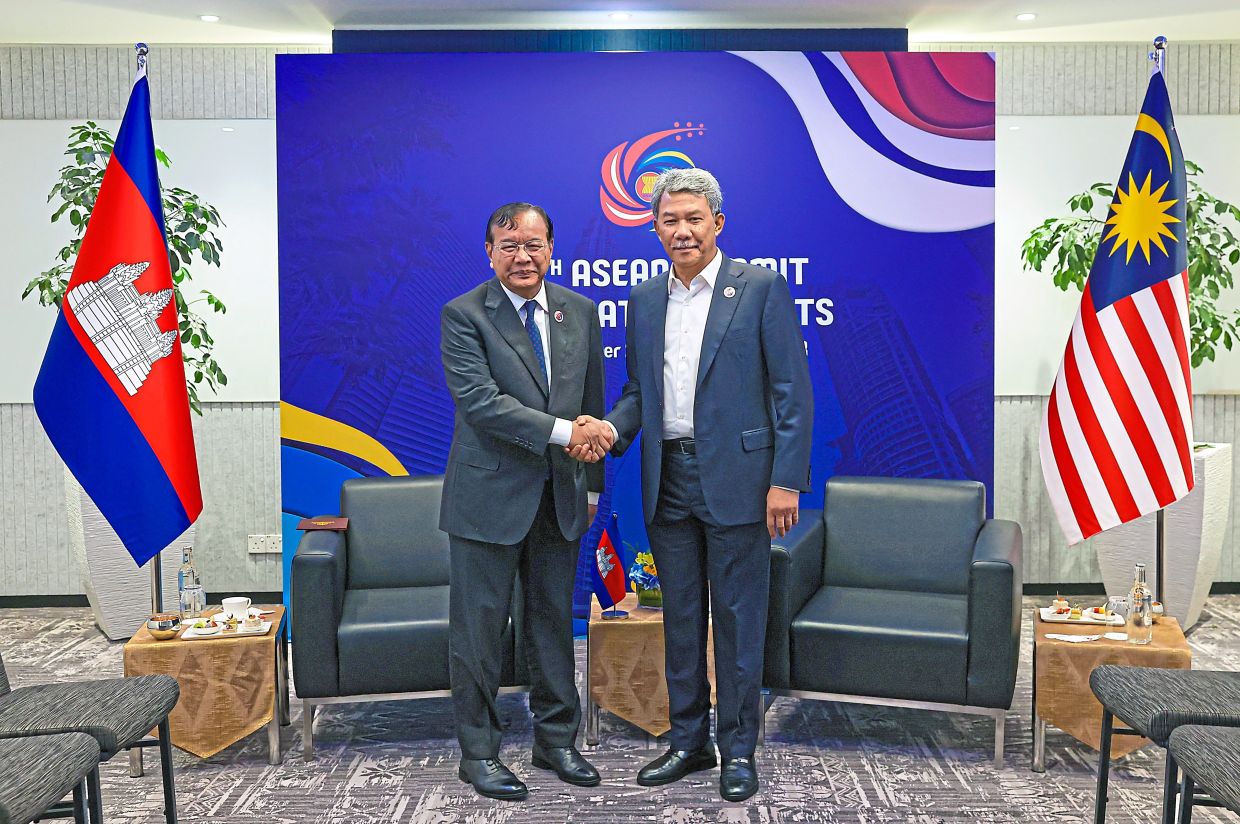
Meanwhile, Mohamad said Asean wants Myanmar to address the growing problem of transnational crime within its borders, as the issue has adversely affected many countries in the region.
He said the matter was among those raised by Asean leaders during the Extended Informal Consultation on the Implementation of the Five-Point Consensus yesterday.
“Transnational crime is an issue that has spread beyond neighbouring countries, involving nationals from across the region.
“We want the Myanmar government, and those responsible within Myanmar, to put a stop to this because it has become a regional concern, especially for Asean,” Mohamad told reporters after chairing the consultation.
He stressed that the regional bloc wanted elections in Myanmar, when they are held, to be free, fair, inclusive and transparent.
Mohamad also expressed disappointment that Malaysian humanitarian aid intended for Myanmar had not reached areas most in need, citing blockades that continued to disrupt relief deliveries.
“We are asking the Myanmar administration to allow humanitarian aid to reach the needy. This is one of the main pillars of the Five-Point Consensus,” he said.
The Five-Point Consensus, agreed upon by Asean in 2021, outlines a roadmap for peace in Myanmar.
The 47th Asean Summit and Related Summits will conclude on Oct 28.