




Malaysia recognised globally for its efforts in driving skills development and labour market reform
THE official visit to Malaysia by the International Labour Organization (ILO) director-general Gilbert F. Houngbo on Oct 21 marked a historic moment for the nation’s labour landscape since joining the global labour body in 1957.
In his opening address at the Global Skills Forum (GSF) 2025 in Kuala Lumpur the following day, Houngbo expressed his appreciation to Malaysia and commended Human Resources Minister Steven Sim Chee Keong’s leadership, describing him as one of the most dynamic and forward-looking labour ministers in the Asean region.
“I wish to express my heartfelt appreciation to the Ministry of Human Resources under the leadership of Minister Steven Sim whom I regard as one of the region’s most dynamic and visionary labour ministers,” he said.
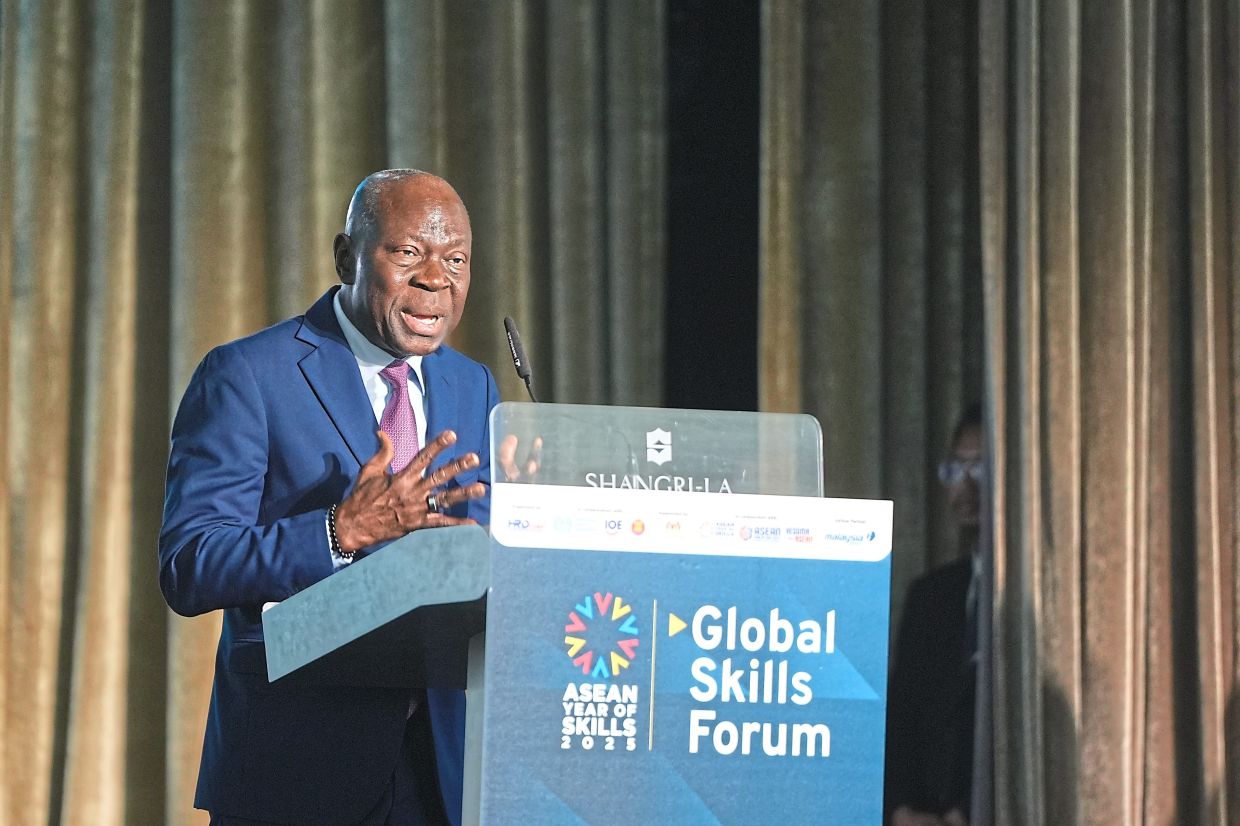
“His leadership in championing the Asean Year of Skills 2025 truly reflects Malaysia’s commitment to empowering our region’s workforce for the future.”
He also praised Malaysia’s role as a model of success in implementing skills and lifelong lear ing policies, aligning with the ILO’s strategy of building a future of work centred on humanity and social justice.
“Investment in skills is the best investment any nation can make. When governments, employers and workers collaborate, skills become the catalyst for innovation, productivity and social inclusion,” he added.
Forum drives Asean skilled workforce aspiration
The forum brought together representatives from the government, employers, workers and experts from over 50 countries, making Malaysia the hosting country for a vital global dialogue on how nations can prepare a workforce that is agile, skilled and humane in an era shaped by new technologies.
The forum this year plans to accelerate global efforts, by transform skills development through rethinking and revolutionising the role of the private sector.
In response to the ILO director-general’s recognition, Sim stressed that in pursuing economic progress, governments must not lose sight of the ordinary worker, as economic and technological advancement must go hand in hand with human development.
He said a worker’s dignity derives not only from protection but also from competence and opportunity.
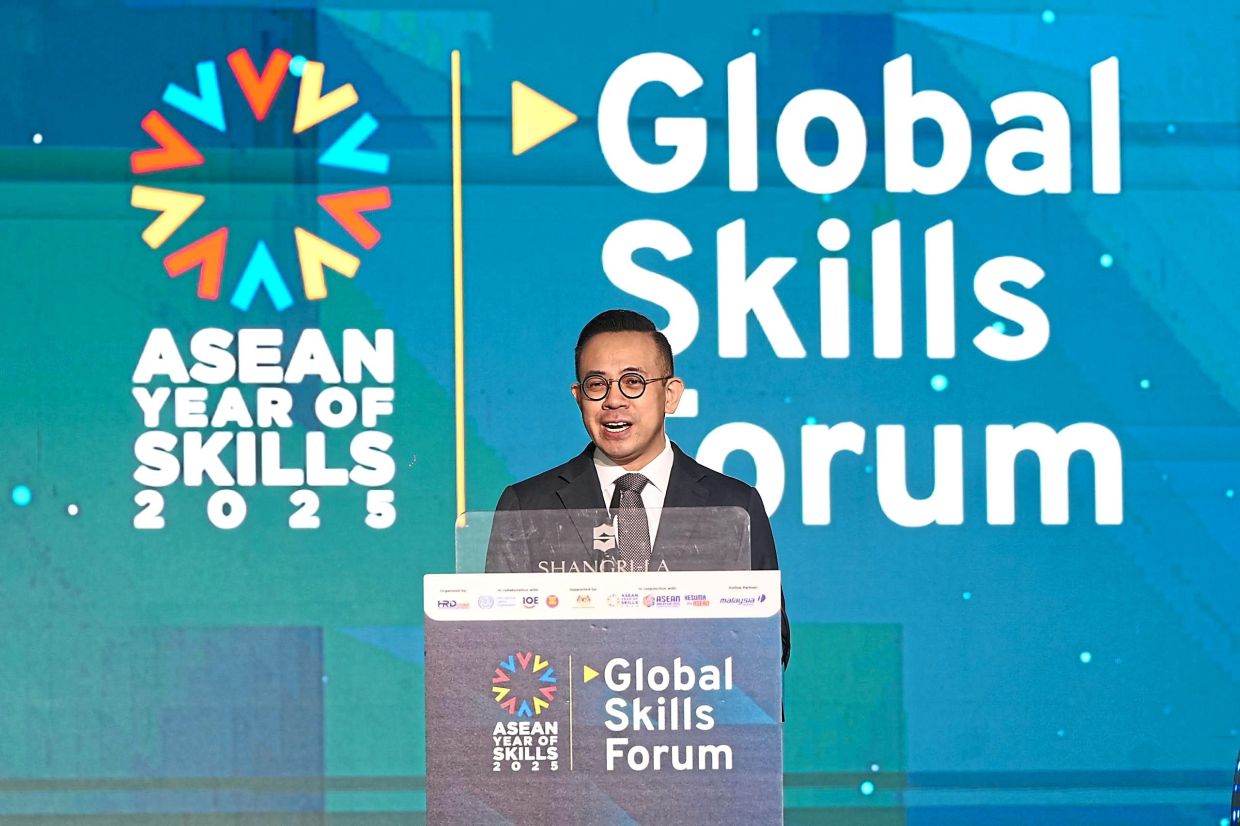
He further emphasised that in today’s rapidly changing world, education and skills training for workers must embody three key characteristics: learning while working, learning through practice, and lifelong learning.
Such training, he noted, must be adaptive and responsive to the fast-paced transformation of industries.
To advance this agenda, the Human Resources Ministry (KESUMA) is developing a new training platform that will consolidate top-quality skills courses from both local and international providers, verified by industry experts and accessible to all.
This initiative builds on the strong foundation established through HRD Corp, where employers contribute a 1% levy from employees’ wages for training purposes.
From 2023 to August this year, RM5.77bil, or 94%, of the RM6.17bil levy collected has been utilised to train nearly four million workers nationwide.
He added that Malaysia aspires for Asean to become one of the most highly skilled regions in the world.
With a population of about 700 million sharing similar cultures, languages and traditions, regional labour integration for economic cooperation is more attainable.
“This is the core objective of hosting the Global Skills Forum – to build a regional workforce that is skilled and globally competitive,” he said.
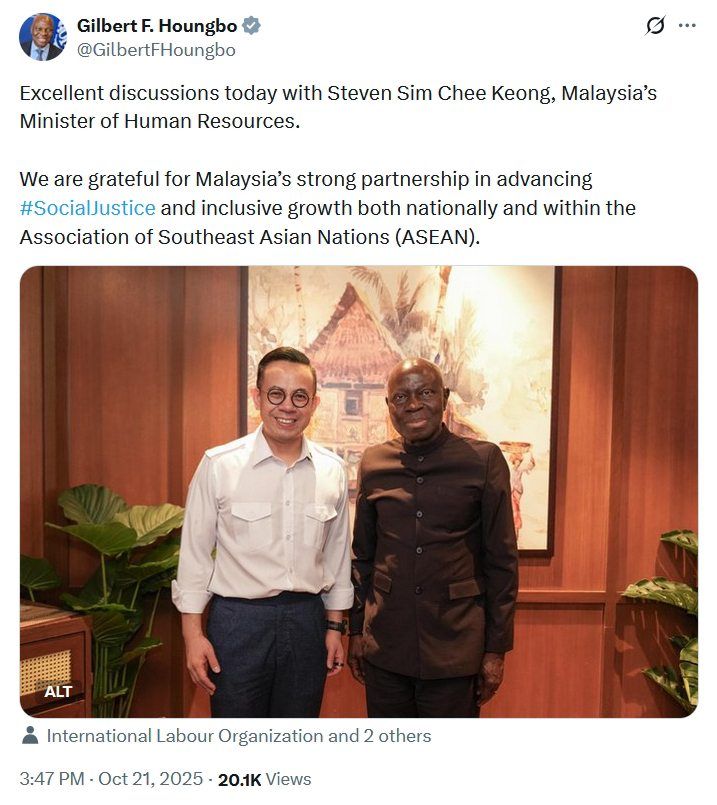
Following the forum, Houngbo posted on social media X (formerly Twitter) on Oct 21 that he “held excellent discussions” with Sim.
“We are grateful for Malaysia’s strong partnership in advancing #SocialJustice and inclusive growth both nationally and within the Association of Southeast Asian Nations (Asean)”, he wrote.
Deputy PM emphasised human-centred future
In his officiating speech, Deputy Prime Minister Datuk Seri Ahmad Zahid Hamidi highlighted the world is facing major transformations driven by artificial intelligence, the green transition and new global dynamics – making human skills increasingly crucial in shaping the economic future.
“The rise of AI and digital transformation compels us to re-evaluate the true role of human beings in the modern economy,” he said.
“Our economy is built first and foremost by our people and their skills.
“If we bridge opportunity gaps and strengthen human capital, we will create a future defined by progress, not greed.”
He further stressed that successful skills development cannot be achieved without close collaboration between governments, employers and workers, consistent with the tripartite spirit underpinning this year’s GSF theme: “The Role of the Private Sector in Skills Development: Driving Innovation and Impact.”


