
PETALING JAYA: Malaysia is expected to become an “ageing population nation” in 2030, with more than 15% of its population over 60 years old – and the welfare of senior citizens has become a crucial issue.
Many are now calling for a possible Maintenance of Parents Act to ensure the young take care of their elders.
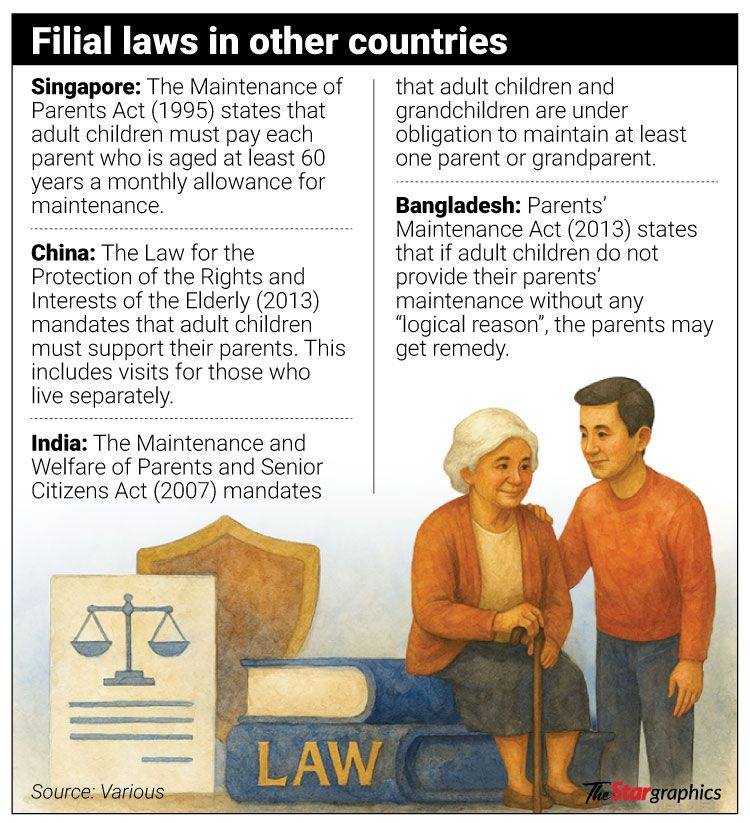
“It should be made a must for adult children to support their ageing parents,” says Association for Residential Aged Care Operators (Agecope) president Delren Terrence Douglas.
However, he adds that it should be fair and not punitive. Children should not be punished if they genuinely cannot afford to pay.
Delren also questioned how the law would address cases where elderly individuals have no family support.
“If there are no children, is the next of kin legally obligated? How about single, unmarried elderly without siblings – will the government step in?” he asked.
Delren pointed out that Agecope has long called for a framework similar to Singapore’s Maintenance of Parents Tribunal.
“Agecope has actually been asking for this,” he said, adding that the system must be transparent and fair to protect seniors while not punishing children who are struggling or who have experienced past abuse.
He warned that bureaucracy and fragmented policymaking continue to hinder progress.
“The government is too slow, too tied up in bureaucracy,” he said.
Malaysia, he said, only has eight government-run elder care centres under the Social Welfare Department, while most private or charity homes operate without proper licensing due to red tape.
“Even if the children do pay – do they pay to legal centres? Or pay to stay at a home where they are abused? Who cares for them?” he asked.
The shortage of caregivers and nurses remains a critical issue.
“As the elderly get older, many will need nursing care, but our country lacks nurses, too.
“The Home Affairs, Human Resources, Housing, Health and Women ministries, along with Agecope, need to be under one roof, under one leader who can cut away all the red tape,” he said.
Malaysia Coalition on Ageing chairman Cheah Tuck Wing agreed that such a law was needed, but said it must be part of a broader ecosystem of elderly support.
“There must be legal aid and clear grounds for claims, and children should be allowed to appeal if they suffered parental abuse or neglect,” he said.
Overly strict enforcement could strain family relationships and be difficult to manage.
“Tracking down non-compliant children and assessing financial status can be a bureaucratic nightmare.
“It can also be unfair to struggling middle-income families ‘sandwiched’ between supporting young children and ageing parents,” he said.