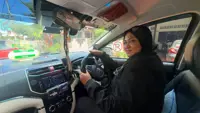
PETALING JAYA: The omission of sports utility vehicles (SUVs) as approved vehicles in the latest licensing regime for e-hailing by the government is leaving nearly 10,000 drivers worried over their livelihood.
Confusion continues to swirl within the e-hailing community as drivers and associations report that they have not yet received official clarification regarding the use of SUVs for e-hailing purposes.
Gabungan E-Hailing Malaysia (GEM) and the Malaysian E-Hailing Drivers Association (Mehda) have expressed concern that both the Road Transport Department (JPJ) and the Land Public Transport Agency (Apad) have remained unresponsive when approached for clarification.
GEM chief activist Masrizal Mahidin said drivers using SUVs have encountered issues when attempting to update their e-hailing permits.
“I tried to get info from both JPJ and Apad, but we have yet to receive any updates,” he said, adding that the impact is substantial due to the number of vehicles impacted, while well over three million Malaysians are licensed to be in the e-hailing trade.
Malaysian E-Hailing Association president Daryl Chong said there has been “nothing in black and white” so far, despite reaching out to Apad.
He said that some 2,000 of its 9,000-odd members operate using SUVs.
“This can affect the nation’s mobility ecosystem and jeopardise Malaysia’s image among visitors,” he added.
When contacted, Grab Malaysia also confirmed that its driver- partners had recently encountered restrictions when attempting to register SUVs for e-hailing.
“We are actively reviewing this situation and engaging with the relevant authorities to find solutions, and we will share updates as soon as we are able,” it said.
The matter came to light after an undisclosed number of new SUV e-hailing drivers who were in the process of applying for their public-service vehicle (PSV) licence were disallowed from registering their vehicles.
Others similarly affected were existing e-hailing drivers who had switched from non-SUVs to SUVs.
Apad’s e-hailing guidelines issued in 2018 allow for the use of SUVs along with compact cars, sedans and multi-purpose vehicles (MPVs).
The president of the Grab Drivers Malaysia Association (GDMA), Mohd Azril Ahmat, suggested that the issue may have arisen from a “classification mismatch” between the systems of JPJ and Apad.
“JPJ created a new category for SUVs but did not inform Apad of the change.
“JPJ’s new category led to a glitch in Apad’s system, which prevents certain SUVs from being registered for e-hailing,” he said, adding that three models – the Proton X50, Honda HR-V and Jetour VT9 – were known to be affected for now.
Consumer groups warn of wider repercussions if the matter remains unresolved.
Federation of Malaysian Consumers Associations (Fomca) chief executive officer Saravanan Thambirajah said the uncertainty has also affected passengers who want larger vehicles for various reasons.
“The uncertainty over SUV eligibility for e-hailing is concerning. Families and tourists often depend on larger vehicles for space, comfort and safety, and the lack of clarity creates confusion for both consumers and drivers,” he said, adding that restricting SUVs could lead to fewer available vehicles, longer waiting times and higher fares.
“With Visit Malaysia 2026 (VM2026) approaching, this issue could affect Malaysia’s image as a travel-friendly destination.
“Tourists expect convenient and reliable transport, and any restriction could send the wrong message,” he said.
As the country gears up for VM2026, both driver and consumer groups agree that clear coordination between JPJ and Apad is urgently needed to safeguard livelihoods, other than to ensure convenience for millions of passengers.
When contacted, Apad said it “will not be issuing any statement at this time”, while JPJ did not respond.
It is learnt that these two agencies under the Transport Ministry are currently in discussions to iron out the matter.