
Malaysia to explore clean, stable energy
PETALING JAYA: Energy security and baseload supply are among the reasons Malaysia is further exploring nuclear energy, says Chang Lih Kang.
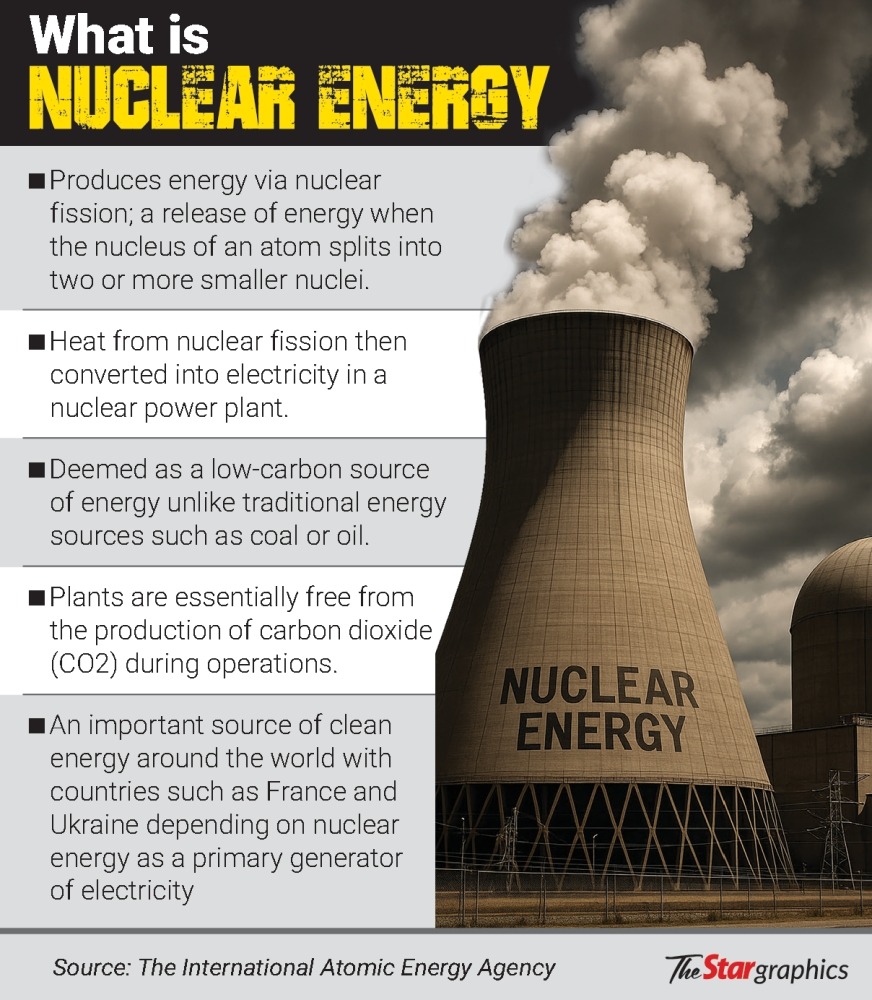
The Science, Technology and Innovation (Mosti) Minister said Malaysia depended heavily on fossil fuels, noting that nuclear power was a cleaner way to provide large amounts of energy around the clock with less greenhouse emissions.
ALSO READ: Experts back it for price stability and energy security
“Once operational, nuclear plants have long lifespans and relatively predictable fuel costs, which can help hedge against fossil fuel price fluctuations,” he told The Star.
Chang said a pre-feasibility study conducted between June and December last year found that nuclear energy was technically viable and had “strong potential” to provide a stable, clear and reliable power source for the country.
Malaysia, he said, was exploring nuclear energy both in Peninsular Malaysia and Sabah, which may have different hydrological and geological contexts.
ALSO READ: Groups concerned Malaysia not ready to adopt nuclear energy
He added that six technical task forces had been proposed, with three falling under the ministry.
Those led by Mosti focus on technology and industry development, development of nuclear competence and expertise, as well as the legal and regulatory framework.
“The remainder falls under the purview of the Ministry of Energy Transition and Water Trans- formation (Petra), dealing with other aspects of integration into the energy sector,” he said.
As part of regulatory and legal preparations, Chang said that amendments to the Atomic Energy Act (Act 304) were approved in Parliament on Sept 8, bringing Malaysia into compliance with international instruments on atomic energy, such as agreements, conventions, treaties and protocols.
He added that the Department of Atomic Energy (Atom Malaysia) was the country’s regulatory body for supervising the regulation and control of atomic energy under Act 304.
“Its responsibilities cover nuclear safety, security and safeguards to contribute to radiation protection in dealing with atomic energy,” he said.
Besides Atom Malaysia, Chang said there were several other existing nuclear-related bodies in Malaysia.
This includes the Malaysian Nuclear Agency (also known as Nuklear Malaysia) and MyPOWER Corporation.
Nuklear Malaysia is responsible for conducting research and development in nuclear technology, while MyPOWER Corporation, under Petra, coordinates the preparatory work for Malaysia to consider embarking towards nuclear power programmes.
“Several institutes and universities also conduct education, learning and research and development in nuclear science and technology,” he said.
Regarding the recent Johor earthquake scare and its implications for the safety and stability of nuclear infrastructure in Malaysia, Chang said steps could be taken to mitigate these risks.
According to Chang, this includes a robust site selection process that takes into account geological and seismic hazard mapping, hydrological studies and environmental impact studies.
Other measures include the use of advanced reactor designs.
“Stringent regulatory, safety, and emergency planning are also taken into account, which includes full environmental and safety impact assessments with public participation, emergency planning, evacuation plans, radiation monitoring, legal liability frameworks and more,” he said.
He said public transparency and involvement would also be implemented to ensure stakeholders were included.
“Data sharing and risk assessment involving input from local communities, especially those dependent on fisheries and agriculture, will be involved in decision making,” he said.