Concerns raised over transparency, homeowners’ rights in proposed URA
KUALA LUMPUR: There is no point tabling the Urban Renewal Bill for its second reading in Parliament as “the crux of the issue is not just about increasing the consent threshold to 80%”, says Datuk Seri Dr Wee Ka Siong.

“None of these aspects are clearly stated, and a lot of matters are not even ironed out.
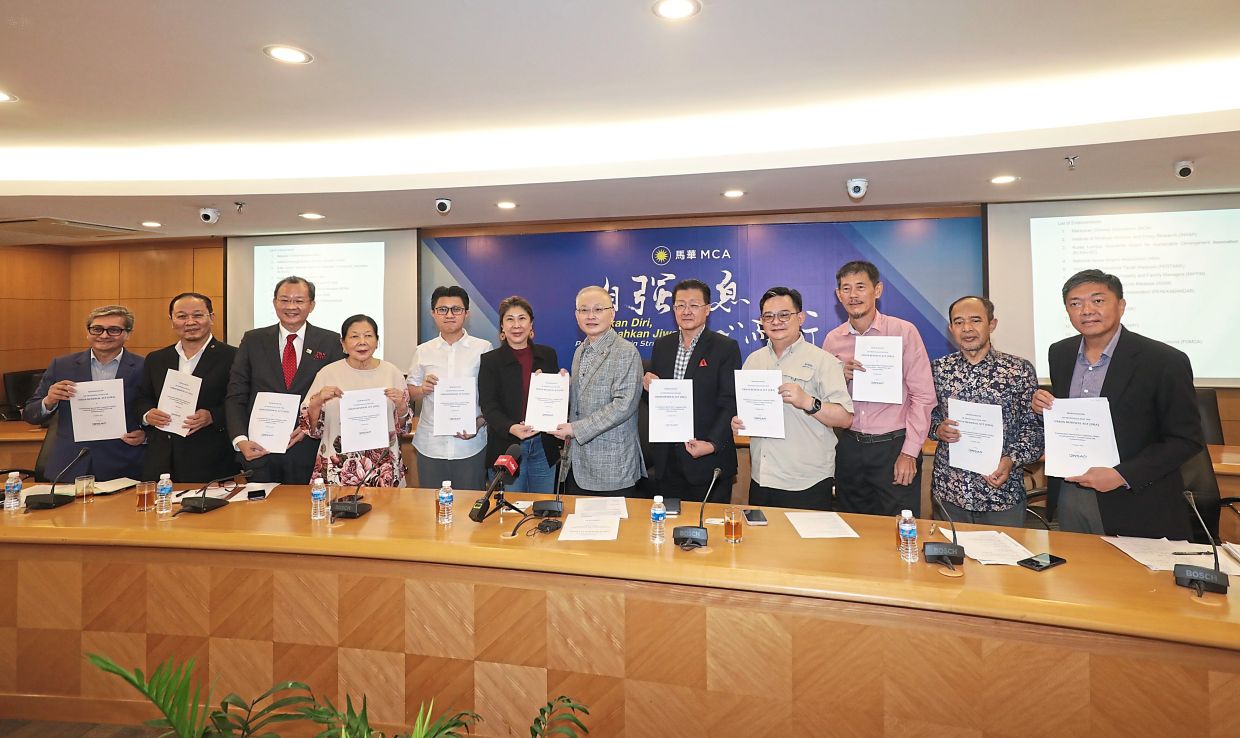
“It is clear that the Bill is not ready,” the Ayer Hitam MP said yesterday after a memorandum against the proposed Urban Renewal Act (URA) was handed to him by concerned stakeholders at Wisma MCA.
Pledging to raise the concerns with the Parliamentary Special Select Committee (PSSC) on Infrastructure, Transport and Communications, of which he is a member, Dr Wee said the stakeholders want the government to explore existing laws on urban redevelopment, regeneration and revitalisation.
“I want to be clear that we are not against urban redevelopment, but that it is better to follow existing laws.
“Redevelopment must always ensure the maximum benefit to the people, rather than create more problems for them,” he added.
Housing and Local Government Minister Nga Kor Ming presented the Bill in Parliament for its first reading on Aug 21.
The Bill aims to facilitate the redevelopment of old, dilapidated and run-down housing areas.
However, there has been mounting public backlash that the proposed new law will give project developers excessive powers to force home sales and evict those who refuse to move out once a set consent threshold is reached, thus eroding individuals’ property rights. The Bill’s second reading, originally planned for Aug 28, was postponed to Oct 6.
KL Residents Action for Sustainable Development policy adviser Han Jun Siew, who was among the stakeholders present, urged the government to impose a moratorium on the current 139 areas identified for redevelopment in Kuala Lumpur to prevent potential confusion among the public.
Even without the proposed URA in play, Han said some of these areas have already been approached by developers.
“Developers can always give their own versions of the redevelopment process, which can be inconsistent.
“This has caused a lot of miscommunication and, if allowed to fester, can potentially lead to mismanagement of the projects,” he said.
Royal Institution of Surveyors Malaysia past president Adzman Shah Mohd Ariffin said the government should look at resolving other property issues before trying to pass the proposed URA.
“There are so many existing problems still unsolved even after decades of being raised by the people, like the many abandoned projects scattered around the country.
“There are also the irregularities related to the sale and development of land as found by the Public Accounts Committee,” he added.
Malaysian Institute of Property and Facility Managers central committee member Low Han Hoe suggested that property management laws be reviewed to prevent the need to bulldoze dilapidated projects.
“In the first place, these identified properties could not have become dilapidated overnight. It shows that property management has become a very critical issue in the country.
“Some of these properties may not even need to be redeveloped; they may just need a fresh coat of paint, to fix some leakages or to upgrade their lifts and fire protection systems,” he added.
MCA Urban Affairs bureau chairman Tan Gim Tuan said a core issue of the proposed URA was that even new buildings were at risk of premature redevelopment as long as the 80% consent threshold is met.
“Under URA, any property under 30 years old can be designated for redevelopment so long as it meets the 80% consent threshold.
“This means buildings of a few years, even under one year, can be gazetted for redevelopment by the minister,” he said.
Other stakeholders who met Dr Wee included the National House Buyers Association, G25 Malaysia, and the Institute of Strategic Analysis and Policy Research (Insap).