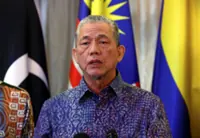
KUALA LUMPUR: Malaysia is keen to learn from the European Union’s (EU) experience in establishing a connected energy grid as Asean intensifies efforts to realise the Asean Power Grid (APG), says Deputy Prime Minister Datuk Seri Fadillah Yusof (pic).
Fadillah, who is also the Energy Transition and Water Transformation Minister, said the EU has a comprehensive model of cross-border electricity exchange, which could help Asean member states anticipate and address regulatory, financial and technical challenges.
“The EU already has cross-border energy exchange, and it is important for us to see what they have done, the problems they faced, and how they addressed them,” he told reporters after participating as a panellist on “Powering Asean’s Green Economic Growth” panel discussion at the Asean-EU Business Summit 2025 here yesterday, Bernama reported.
He said Malaysia is also looking to establish a dedicated workshop with EU counterparts to explore practical solutions for Asean, ranging from harmonised regulations to financing frameworks.
“These are the things that we can learn from the financial model, the technical aspects, how they harmonise rules and regulations and how they address challenges when exchanging electricity across borders,” said Fadillah.
He said he believes that Asean’s engagement with the EU could help fast-track a more integrated regional power grid, noting that Asean already has a pilot case of cross-border electricity trade through the Laos-Thailand-Malaysia-Singapore power integration project, which can serve as a foundation for wider connectivity.
“It is just about expanding it and seeing the differences in terms of standards, practices and rules among the other member states,” he said.
Fadillah added that a memorandum of understanding to enhance regional cooperation on the APG will be signed at the upcoming Asean Energy Ministers’ Meeting in two weeks.
“One of the areas that we want to focus on is interoperability, how to harmonise the rules, regulations and trading model,” he said.
He emphasised that aligning Asean’s energy framework with global best practices is also crucial to attract investments and meet growing demand for renewable energy as the region transitions towards greener economic growth.
“Asean needs to take a collective approach to ensure its energy systems are not only reliable but also sustainable. A connected power grid will be critical to this effort,” he said.
He said the cooperation between Asean and the EU will also enable Malaysia and its neighbours to adopt proven solutions while avoiding the potential pitfalls faced by others.
Fadillah was one of five panellists at the Asean-EU Business Summit 2025, which gathered regional leaders, policymakers and industry players to discuss pathways for generating Asean’s green economic growth.
The Powering Asean’s Green Economic Growth panel discussion also featured HSBC Amanah Malaysia chief executive officer and chief sustainability officer Raja Amir Shah Raja Azwa, Evonik Thailand managing director Dr Matthias Pascaly, European Investment Bank’s regional head for South-East Asia and Pacific Sunita Lukkhoo and Siemens Energy Malaysia managing director Azli Mohamed.