Slashing of medical benefits could lead to overburdened public hospitals
PETALING JAYA: Faced with shrinking company medical benefits, employees are increasingly turning to personal health insurance, spousal coverage and even part-time work to fill the gap.
Rising costs are at the heart of this trend.
According to Aon’s 2025 Malaysia Employee Benefits and Wellbeing Report, employers are facing annual cost hikes of 5% to 10%, driven by medical inflation and increased benefits use.

Mizi, a 33-year-old engineer who declined to give his full name, said his employer had slashed almost all health perks, leaving him with only RM500 a year for outpatient clinic visits.
“Previously, the company provided extensive coverage such as unlimited outpatient visits for staff and their families, unlimited hospitalisation, plus RM500 each for optical and dental care.
“All these benefits have been removed,” he said.
ALSO READ: INTERACTIVE: Worker health benefits under the knife as insurance premiums surge
To compensate, Mizi has taken up a personal insurance plan, while supplementing his income through freelance consulting and investment returns to prepare for potential medical emergencies.
Network engineer Ridzwan Mohamed said his employer removed outpatient health benefits earlier this year.
“There were also changes to inpatient coverage, where only certain hospitals are included,” said the 33-year-old.
To cope with the reduced coverage, Ridzwan relies on his spouse’s health plan.
“Fortunately, my wife’s employer provides benefits for dependents, so our family is making use of that,” he added.
A 35-year-old writer, preferring to remain anonymous, noted that while the company he works for has largely maintained its health benefits for both unionised and non-unionised staff, there are evident efforts to limit these perks.
“Management is reportedly considering pro-rating medical leave, which seems to target older employees who require longer recovery times.
“Though I’m not directly affected yet, older colleagues are feeling the pinch, often having to purchase additional insurance themselves.
“I may have to do the same eventually,” he said.
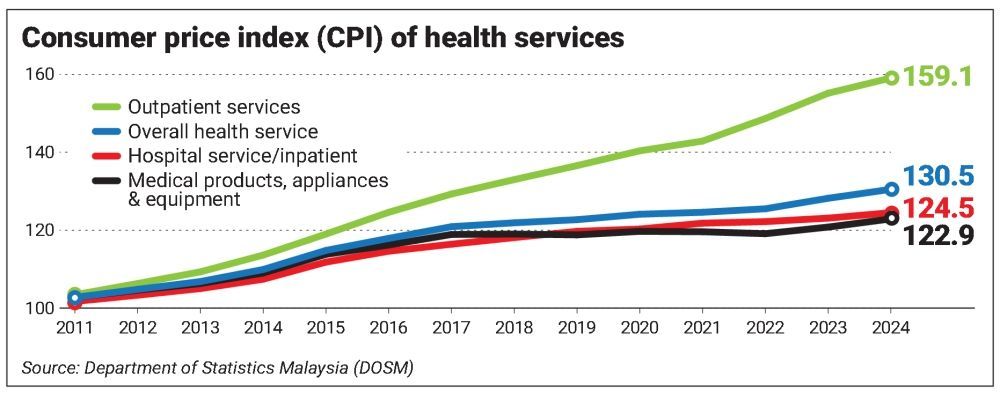
The concerns raised by employees mirror what industry and consumer groups describe as a growing strain on both businesses and the healthcare system.
Instead of cutting medical benefits for employees, they say companies, particularly micro, small and medium enterprises (MSMEs), could respond by rewarding preventive health measures, while the government should consider universal healthcare as a long-term solution.
Sunway University economist Dr Yeah Kim Leng recommends that MSMEs consider reducing health benefits only as a final option.
He said such actions can transfer the financial burden of healthcare onto employees, who may then rely more heavily on public hospitals for their medical needs.
This shift can lead to increased demand and strain on public healthcare facilities, potentially overwhelming their capacity and resources.
Yeah urged the government to promote affordable health plans for MSMEs, along with tax incentives, subsidies and co-financing to help maintain staff benefits.
HELP University’s Prof Dr Chung Tin Fah said MSMEs, being highly cost-conscious, often cap benefits or shift them into insurance plans.
He suggests employers integrate risk-prevention incentives into salaries, encouraging healthier lifestyles while cutting long-term costs.
“This creates a win-win situation by promoting healthier lifestyles among employees while reducing long-term costs for businesses,” Chung said.
Consumers’ Association of Penang president Mohideen Abdul Kader suggests universal healthcare as the best long-term fix, saying subsidies for the B40 are only temporary.
Since June, eligible Sumbangan Tunai Rahmah (STR) recipients have been able to receive treatment at private clinics registered under ProtectHealth Corporation Sdn Bhd through the Madani medical scheme.
Free treatment under the scheme includes consultation, examination, medicines, procedures and follow-up treatment, with a RM250 allocation for each family, RM125 for single senior citizens and RM75 for single STR recipients.