



PETALING JAYA: Road safety advocates are giving the thumbs up to the government’s intent to promote blind spot detection (BSD) technology in vehicles here.
“To be seen is to be safe,” said Road Safety Marshal Club founder and president K. Balasupramaniam when asked about the Malaysian Department of Standards’ call for public feedback on the use of BSD in vehicles, particularly to detect motorcycles.
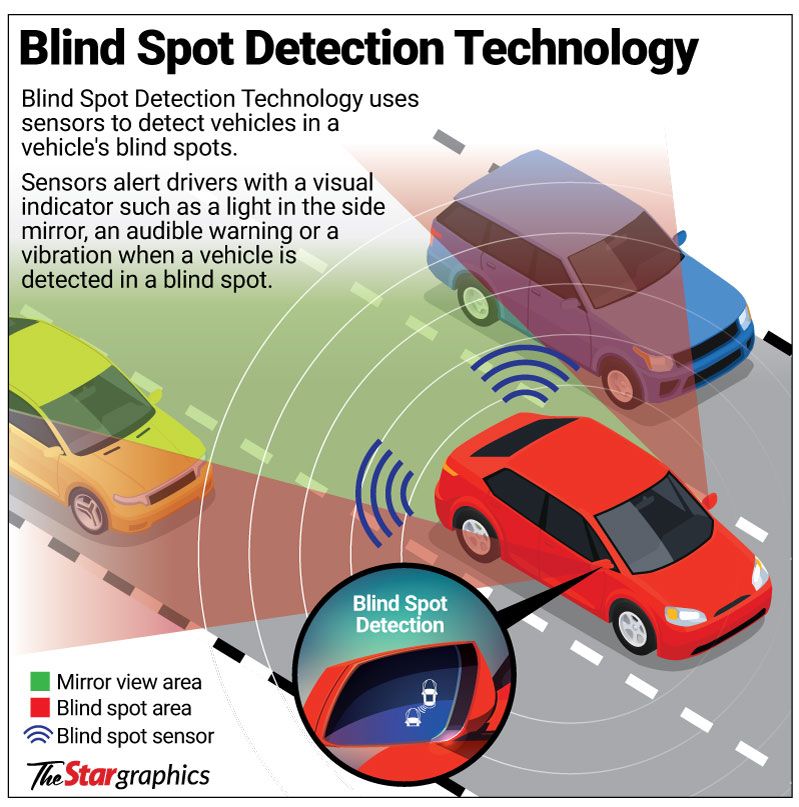
BSD technology is currently found in some cars and heavy vehicles, including superbikes.
“BSD technology will help drivers see you coming from a blind spot, which makes it safer,” he said when contacted yesterday.
Balasupramaniam, who is better known as Captain Bala, said the use of BSD could help avoid tragic accidents, citing a recent case where a mother was killed after her motorcycle was hit in a vehicle’s blind spot.
Vehicle BSD systems use radar or camera sensors to monitor both sides, and some even include the rear of a vehicle, alerting the driver with visual or audio cues such as flashing lights in the side mirrors or audible alerts if a vehicle is detected in the blind spot.
The flashing or chiming may become more intense if the driver activates a turn signal while another vehicle is in the next lane.
Although BSD technology debuted in Malaysia in 2017, its use is limited to higher end or premium models of vehicles.
Last December, Road Transport Department director-general Datuk Aedy Fadly Ramli said blind spots are among the five main causes of accidents involving heavy vehicles.
Based on police data, a total of 5,939 fatalities were recorded out of 585,729 accidents as of last November, of which almost 70% involved motorcyclists.
Assoc Prof Dr Law Teik Hua of Universiti Putra Malaysia said blind spots remain a serious contributory factor in road accidents, given that the busy roads are shared by motorcycles and heavy vehicles here.
“Unfortunately, present procedures for detecting blind spots have various flaws.
“Reporting accidents is inefficient with a lot of ‘damage-only’ accidents remaining unreported, leaving blind spot identification largely dependent even in serious injury accidents,” he said when contacted yesterday.
Law said BSD technology should be promoted or made mandatory for commercial vehicles as it would make a big difference for road safety.
“Even incentives for retrofitting blind spot systems to older fleets can be considered.
“While high-tech systems would be easier to access with newer vehicles, cost-friendly alternatives for smaller or older vehicles should be taken into account to facilitate wider accessibility,” he added.
Prof Dr Sharifa Ezat Wan Puteh of Universiti Kebangsaan Malaysia noted that newer and safer blind spot technologies would significantly help prevent accidents.
“The use of sensors, radar and cameras to detect vehicles in blind spots and alert drivers have been proven to reduce lane-change crashes by up to 14% according to some studies,” she said when contacted yesterday.
Dr Sharifa Ezat, who is an avid motorcyclist with the group Charity on Wheels, said accidents occur due to lane changes, highway lanes merging, overtaking abruptly and poor side vehicle detection.
“These accidents often result in side collisions, with motorcyclists and cyclists at particular risk due to their smaller size and inability to be easily seen by larger vehicles like trucks, lorries and tankers,” she said.
She suggested BSD devices be made locally and at a cheaper cost, with the products easily installed as “plug and play” devices.
Malaysian Institute of Road Safety Research chairman Prof Dr Wong Shaw Voon said BSD technology is currently being assessed, including detecting motorcycles under the Asean New Car Assessment Programme.
By establishing such Asean standards, he said BSD devices could be considered a mandatory safety requirement for all new vehicles in future.


