
PASIR GUDANG: Come Sunday mornings in Masai, the air is thick with the aroma of fresh produce while voices of Iban, Kadazan, Bajau and other East Malaysians blend together. This is Pasar Borneo Masai, where a piece of Sabah and Sarawak comes alive in Johor.
At a covered field in Taman Megah Ria, about 90 traders transform the space into a bustling market, offering everything from pucuk paku and umbut kelapa sawit (oil palm shoots) to tarap fruit, salted fish, laksa paste, sago grubs and mee kolok.
For East Malaysians living in Johor, it is a taste of home.
Sabahan Hamidah Omar, 48, had her hands full of grocery bags when met at the market.
The housewife has been living in Johor for more than three decades but still makes the trip at least once a month.
“I usually come here for genjer, which is hard to find anywhere else in the peninsula. It’s delicious stir-fried with belacan and it reminds me of my hometown,” she said, adding that her children enjoy traditional Sabahan dishes too.
Hamidah said the produce here is fresher and more affordable than other markets.
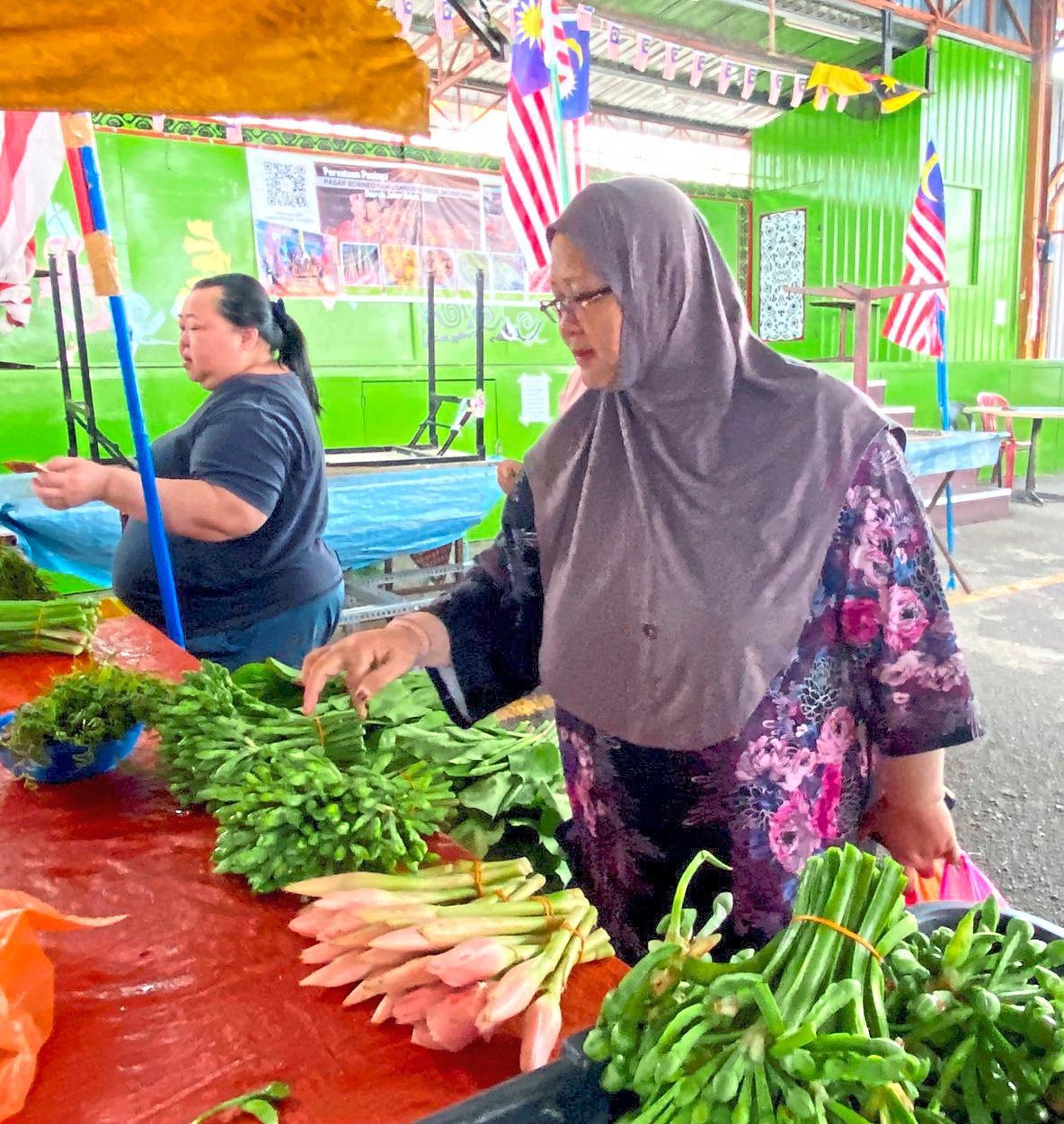
“The greens are young and tender, and a fresh bundle is just RM3,” she said.
Among the traders is Sarawakian Josephine Jimbai, 52, who has been trading at the market for 20 years.
Her stall bursts with a variety of produce like kundang, dabai, tarap and cabai, alongside Sarawak laksa paste and sambal.
“This stall has helped me support my family while my husband works abroad,” said the mother of four, who also chairs the Johor Sarawak Hawkers Association.
On good days, she takes home more than RM1,000 in sales.
What sets Pasar Borneo Masai apart, she said, is its authenticity.
“Almost everything here comes from East Malaysia. That’s what makes this market so special.
“This market thrives on diversity, with customers ranging from Malays and Chinese to Sabahans, Sarawakians and even those from Kuala Lumpur,” Josephine added.
Another familiar face at the market is Lemba Anak Dangan, 46, who carefully arranges bundles of midin (wild fern) and pucuk paku at her stall.
Lemba and her husband moved from Sarawak to Johor in 2008 and she has been trading at Pasar Borneo ever since.
“On average, we earn about RM1,000 a week from sales, and we occasionally return to Sarawak to replenish supplies.
“When travelling home isn’t possible, we rely on small-scale farming here to keep our stall stocked,” she said.
For Lemba, Pasar Borneo Masai is more than just a marketplace, it is also a community hub that keeps the culture of East Malaysia alive while introducing its flavours to others.
“Beyond business, the market symbolises unity. It shows how Malaysians can respect, support and celebrate each other,” she said.
The place also embodies the spirit of muhibbah as vendors work side by side, often sharing stalls and helping each other despite their different backgrounds, she added.
Looking ahead, Lemba hopes small traders like her will receive better facilities, training and assistance to help them grow.
“Small markets like this are more than economic platforms, they’re also cultural bridges, bringing the richness of Borneo closer to the peninsula,” she said.
For her, the message of Malaysia Day is simple: “Unity is not something to celebrate once a year. It should be embraced as a way of life.
“When Malaysians live in harmony and stand together, the whole country will prosper as a place where everyone shares equally in its progress.”