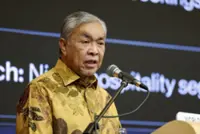
KUALA LUMPUR: Malaysia is spearheading efforts to establish a World Halal Development Council (WHDC) as a new global platform to align trade, investment and innovation in the halal economy, says Deputy Prime Minister Datuk Seri Dr Ahmad Zahid Hamidi.
Ahmad Zahid, who is also the chairman of the Malaysian Halal Industry Development Council, said WHDC would begin with a small but strategic membership aimed at accelerating capacity-building, research, and development, and delivering a tangible economic impact.
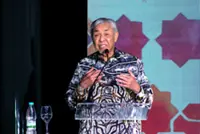
"The council will build a coalition that is dynamic and market-oriented,” he said in a speech at the Grand Dinner in conjunction with the Global Halal Summit 2025 here on Wednesday (Sept 17) night, which was delivered on his behalf by Minister in the Prime Minister’s Department (Religious Affairs) Datuk Mohd Na’im Mokhtar.
Ahmad Zahid said Malaysia also proposed Halal+ 2030, a global movement to integrate halal with environmental, social and governance (ESG) and ethical consumer trends, as well as accelerate digital halal through artificial intelligence (AI), blockchain and the Internet of Things (IoT) for full traceability.
"Halal+ 2030 is an invitation to bring your expertise, your investment, and your ideas, so that halal is not only certified but dignified; not only recognised but respected,” he said.
Ahmad Zahid said Malaysia sees several key opportunities where collaboration is urgent and possible through this movement, including small and medium enterprises (SME) Upgrade Pathways, which aim to create much easier and faster pathways for SMEs to get certified.
"Today, duplication and delays hold us back. We must expand recognised certification bodies and more importantly, move towards official mutual recognition across countries, so that halal becomes seamless for exporters and consumers alike,” he said.
Both proposals - the WHDC and Halal+ 2030 - reflect that the halal economy is not only about markets and profits but also involves diplomacy, influence and leadership, he added.
"It is Malaysia’s way of showing the world that a Muslim nation can uphold the principles of Shariah while embracing the realities of a modern, global economy.
"Over the years, halal has become one of Malaysia’s strongest forms of soft power. Through our certification, Islamic finance, halal education and halal tourism, we have built credibility and trust. And trust, once earned, becomes influence,” he said.
Meanwhile, Ahmad Zahid noted that the global halal economy, currently valued at more than USD3 trillion, is projected to grow to USD5 trillion by 2030, spanning food, pharmaceuticals, cosmetics, tourism, logistics, finance and the digital economy.
For Malaysia, he said halal is already a significant pillar of the economy, contributing 7.5 per cent of the gross domestic product (GDP) as of today, with the figure projected to rise to 11 per cent by 2030.
"Our halal exports amount to around USD8 billion annually, accounting for more than five per cent of our total national exports,” he said.
Ahmad Zahid further noted that Malaysia’s halal exports reached USD13.1 billion last year, a 15 per cent increase from the year before.
Under the 13th Malaysia Plan, the Madani government aims to raise this to USD17 billion to make halal a cornerstone of GDP growth. – Bernama