
In Malaysia, shared culture isn’t just kept in the arts and history books – it lives in the everyday things we do.
Reminders of national unity are found in simple acts of gathering and spending time together, which reflect the nation’s spirit.
From teh tarik at a 24‑hour mamak restaurant to family picnics in public parks, the Malaysian identity is deeply rooted in togetherness and community.
The busy chatter and laughter at local hangout spots, paired with the delicious aroma of freshly cooked roti canai and nasi goreng, is a familiar scene to many Malaysians.
That same atmosphere filled a restaurant in Cheras, Kuala Lumpur, where patrons of diverse ages, races and backgrounds gathered around tables.
Among them were 24‑year‑old Sheryl Anne Richard and 26‑year‑old Shaid Shaqqiq Suhaimi, university students who frequent the eatery.
“I feel like no other country has anything quite like our mamak ‘culture’.
“It’s a place with really good food, heavy meals and light snacks; it’s also where you gather with friends, it’s open 24 hours, and it hosts screenings of sports games,” says Sheryl.
For her, this uniquely Malaysian tradition is about more than just food.
“It’s the feeling of being at home. I remember watching a badminton game at a mamak once and everyone was on the edge of their seats or up on their feet.
“We were all glued to the screen, and when Malaysia scored a point or won a round, the whole place – Indians, Chinese, Malays – stood up and cheered together,” she recalls.
Sheryl notes that the menu itself reflects inclusivity.
“When you go to a mamak, there’s always something for everyone. You have Indian and Chinese food, and also Malay dishes. So I feel this specific culture we have is what ties Malaysians together so well,” she adds.
Shaid Shaqqiq agrees, saying these eateries are just one of many major spaces that unite Malaysians.
“It really interweaves racial unity and, most importantly, our love for food,” he says.
“As a university student with a multiracial circle of friends, being able to be together at a simple place like this makes me feel that Malaysian spirit.
“Beyond the mamak restaurants – whether at Dataran Merdeka, parks or even a pasar malam – these places are where traditions are shared.
“Seeing people spend time and enjoy each other’s company even late at night shows that these spaces house our very own unique Malaysian heritage.”
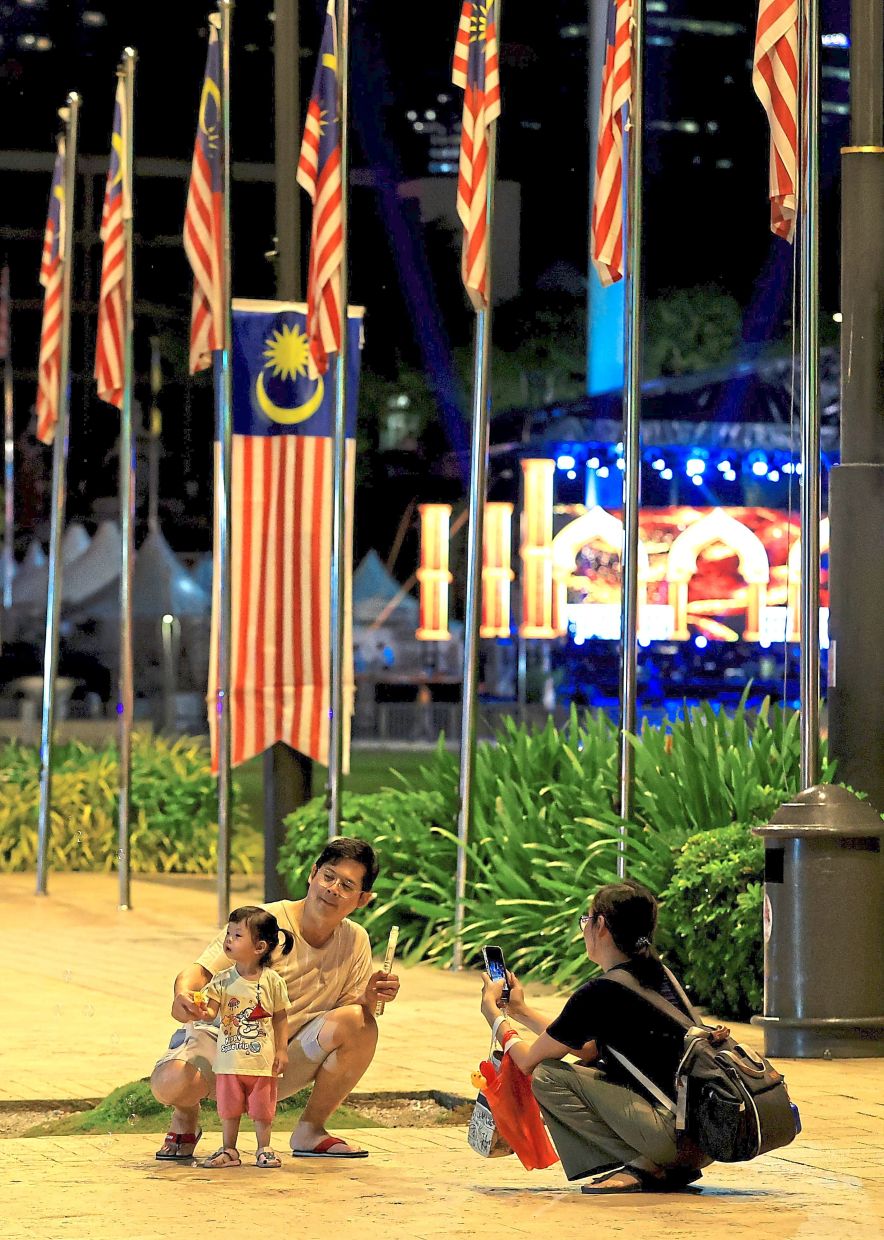
Across town at Dataran Merdeka, the heartbeat of Kuala Lumpur carries late into the night as families spread out across the field, enjoying the cooler air and city lights.
Sakuntala Madurai, 41, says these outings are an essential part of her family’s routine.
“Treating your family with care and spending time with them is something families really prioritise.
“It’s never just me and my children; my siblings, nieces and nephews are always with us too.
“We gather so that our children can grow up with that tight‑knit connection,” she says.
Sakuntala adds that outings at public places also offer a chance to expose her children to Malaysia’s diversity.
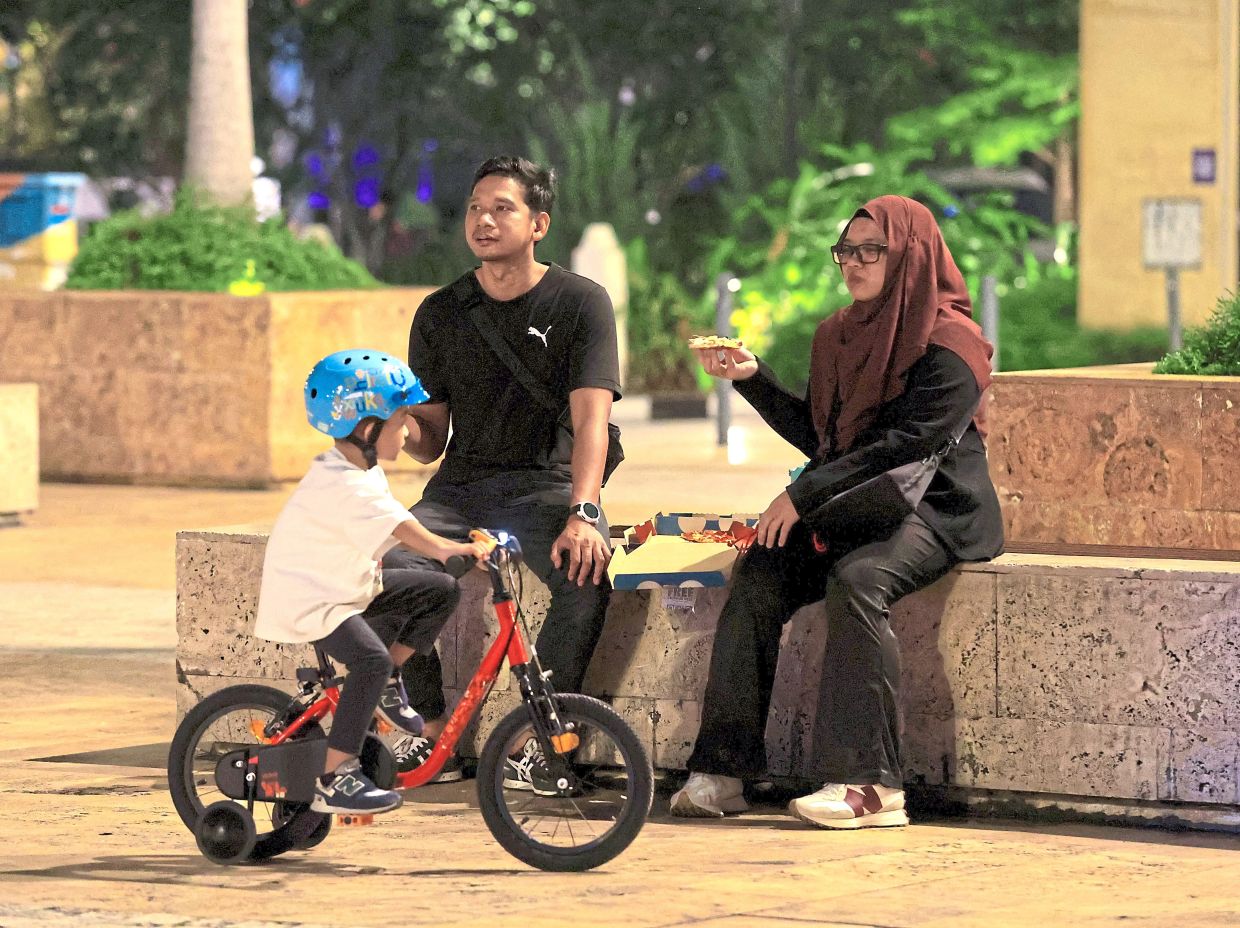
“When we’re constantly out like this, our children can meet and interact with people of different religions and cultures.
“They’re not confined to knowing only their own culture. It’s a Malaysian community out here, and we can experience a lot of different things,” she says.
For 26‑year‑olds Ruth Bintang Kanyan, an office administration officer, and software tester Gideon Pengiran Edward from Sarawak, these shared spaces showcase Malaysian heritage at its best.
“At night, people of all races and cultures – even tourists – gather together, and when there are events, you see Malaysians from different backgrounds working together.
“It makes me proud that people from outside the country can experience the culture, food and unity,” says Ruth.
“There’s something new almost every week here at Dataran Merdeka. It’s always changing.
“And even when the city feels too crowded sometimes, we have other options like Putrajaya, where the scene is very vibrant and chill,” Gideon adds.
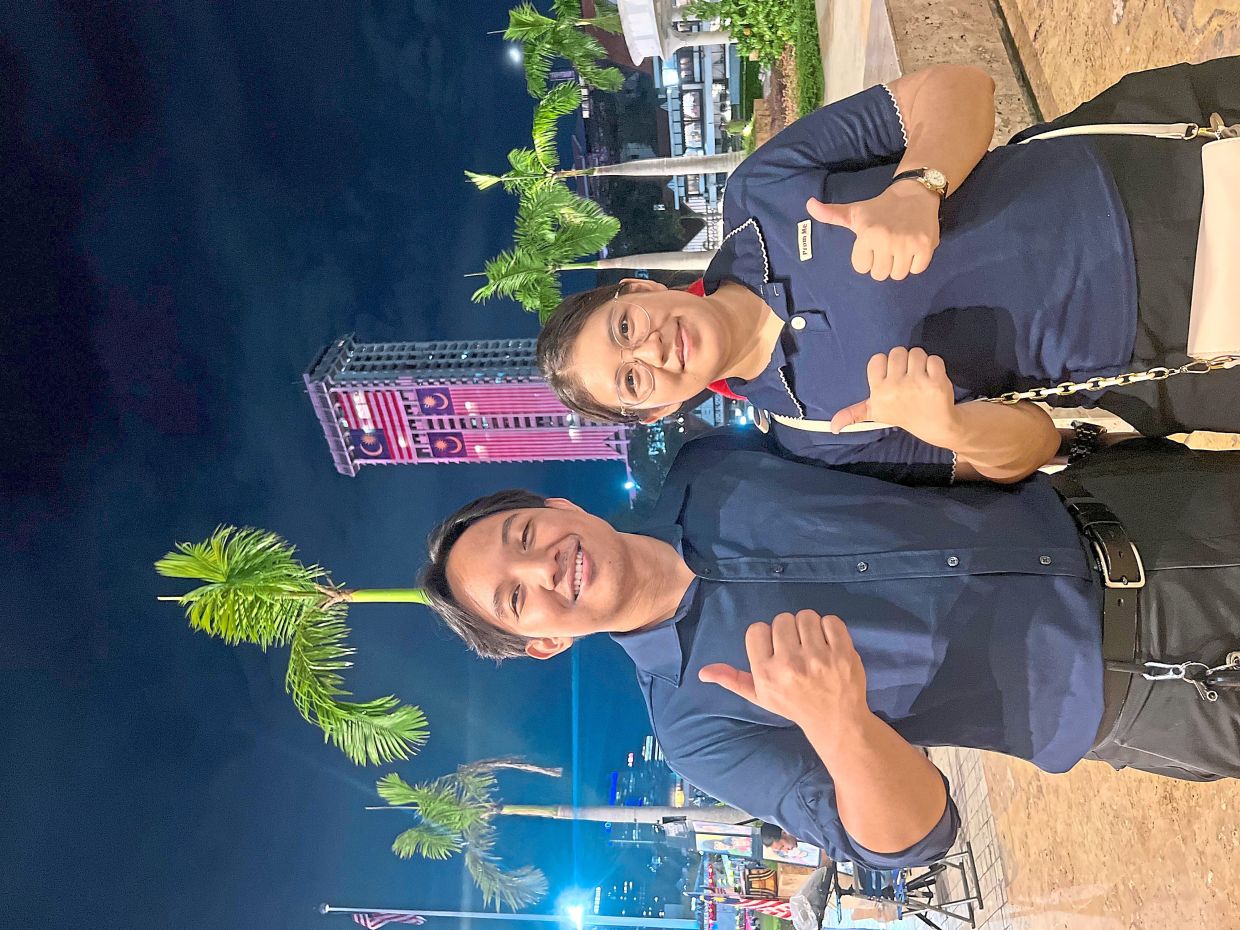
Late nights, for them, are about appreciating the accessibility of Malaysian life.
“Even at midnight, food is available. There are food trucks with Malay dishes, Indian food and Chinese snacks.
“The mamak is also an automatic destination for us. You sit down and already know what to eat and drink – it’s comfort food.
“After a long day, every Malaysian feels the same when you need time out. Automatically, the plan is, ‘Let’s go mamak’,” says Gideon.
From a plate of roti canai to a night under the city lights, these everyday rituals show how Malaysia’s strength lies in togetherness – a heritage built on the simple joy of communities spending time side by side.
Click here to read more StarSpecial stories.