



Transparent enrolment ensures opportunity for bright underprivileged students
PETALING JAYA: Growing frustration with the enrolment system at public universities has prompted lawmakers to support the need for an independent committee to address allegations of bias and recommend reforms to ensure transparency.
They cautioned that the current process is denying bright students, particularly those from underprivileged backgrounds, a fair opportunity in higher education.
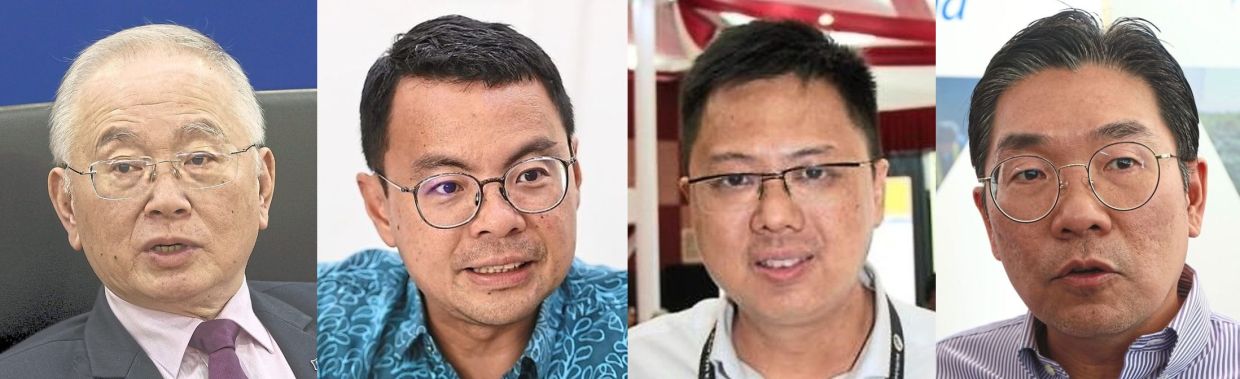
MPs representing Petaling Jaya, Raub and Ayer Hitam warned the government that a failure to act fast would cost Malaysia its brightest minds and weaken the nation’s future.
Petaling Jaya MP Lee Chean Chung said he was prepared to work with any party regardless of political affiliation on this issue.
“I would be happy to work with anyone who is like-minded, including Dr Wee (Ayer Hitam MP Datuk Seri Dr Wee Ka Siong) and like-minded backbenchers. We need to explore solutions that not only reflect meritocracy, but also ensure affirmative action for the underprivileged.
“We cannot be displacing our brilliant minds and destroying our STPM exam, which is gold standard. Let us tackle this together for the benefit of the nation.”
Last month, Lee had pointed out a disparity between the number of eligible STPM students and the declining admission to public universities through the enrolment system.
He had said that, although the study period of STPM was longer than matriculation, students who took it up were being denied a place in public universities.
Raub MP Chow Yu Hui, who backed the formation of a bipartisan committee, said the issue should not be politicised but treated as a matter of national interest.
“We have repeatedly raised this matter over the years.
“We welcome any party that supports the forming of an independent committee. This is about the future of our students. We need to sit down to find ways to reform the UPU (University Admissions Unit) system and come up with a new structure that will benefit our young students.”
In the past, Chow had urged the government to merge matriculation and STPM to allow students from national secondary schools of all ethnic backgrounds to sit for a standardised examination.
He pointed out that this would give fair opportunity to all students compared to matriculation students who are given priority admission for popular courses at public universities.
Yesterday, Ayer Hitam MP and MCA president Datuk Seri Dr Wee Ka Siong called on politicians from both sides of the divide to unite and form an independent committee to address setbacks in the direct entry system in public universities.
“An ombudsman is timely and will provide checks and balances. It does not matter whether it is comprised of politicians or otherwise. We can leave them out, but the committee must be independent and made up of only credible and competent individuals who can steer the issue in the right direction. Our best talents must remain here for the benefit of our country,” he said.
Earlier this month, Dr Wee had called on the government to set up a Royal Commission of Inquiry (RCI) to examine flaws and ensure transparency of student admissions to public universities.
“If an RCI can’t be formed, then go for the ombudsman or set up the independent committee. Any approach can be done, just as long as the commitment to address weaknesses is made into reality.”
Dr Wee is championing for public universities to remain steadfast in their core duties – that is, to ensure the brightest of young minds are nurtured by providing them with university education.
While he accepts public universities are tasked with funding a portion of their income, Dr Wee said any revenue-generating measure should not be at the expense of making education expensive for students.
Bayan Baru MP Sim Tze Tzin cautioned that Malaysia is losing its brightest talents to other countries, particularly Singapore, which is eager to accept the nation’s top students.
He said education must be kept above politics, and matters related to it should be left in the hands of respected and capable academicians.
“It would be better if fewer politicians were involved. Otherwise, it will be politicised, and when there are differences, nothing will be resolved, or half-baked decisions will be made. An independent committee of top academic experts should be formed.”
Sim revealed last week that matriculation students were significantly more likely to achieve top points (CGPA 4.0), with their success rate being up to five times greater than that of STPM students, thereby placing the latter at a disadvantage.
He had called on the government to come up with solutions that would “dignify” STPM students, of whom almost 82% are bumiputra and the rest of other races.
