
ONCE cloaked in silence and stigma, youth mental health is now widely discussed, with the field increasingly shaped by visibility and activism.
At the forefront of this shift is youth-led mental health NGO, Nyawa Organisation.
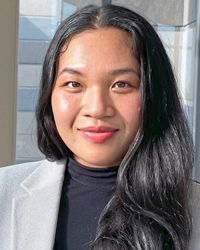
Nyawa’s diverse and multicultural team – director Farihin Ufiya Mohd Azeem, 29, from Sungai Petani in Kedah, who is of Malay-Chindian parentage; advocacy lead Jernell Tan, 32, a Hokkien Chinese from Butterworth, Penang; and clinical lead Nayli Bisnu, 27, who is a Kayan of the Orang Ulu tribe from Kuching, Sarawak – share how far we’ve come as a nation, the challenges ahead and the hope that drives their work forward.
Speaking out, stepping up
“Mental health has come a long way in our country, though progress isn’t always linear,” said Tan.
Until the 2010s, Malaysia’s mental health landscape was largely adult-led and clinical, and youth were often excluded from the conversation.
Over time, however, young people didn’t just speak out – they stepped up.
They have created peer support spaces, advocated for change and carved their presence into policy discussions that were once inaccessible.
Farihin Ufiya traces Nyawa’s roots to the height of the Covid-19 pandemic – a time when isolation and uncertainty triggered a surge in mental health issues.
“We saw the stigma surrounding mental health slowly giving way to openness,” she said.
“It wasn’t just a crisis; it became a catalyst.”
That national shift led to critical changes, like the decriminalisation of suicide in 2023, which encouraged people to seek emergency support without fear, and the establishment of the National Centre for Excellence in Mental Health by Health Ministry as the central point to control, coordinate and monitor mental health services.
Despite this, youth distress remains a major concern, noted Tan.
The 2022 Adolescent Health Survey found that one in four teenagers aged 13 to 17 experiences depression.
Rates of anxiety and suicidality remain high; what drives this rise in mental health issues is cause for concern.
Awareness, advocacy and early intervention are necessary, said Farihin Ufiya.
While genetics and life experiences played a role in mental health, she pointed out the broader mismatch between modern life and biological systems.
Farihin Ufiya believes the roots go beyond individual factors: “From constant social media comparison to sleep disruption and a diet of processed food, modern life often clashes with how our bodies and brains are wired. Today’s youth are overstimulated, undernourished and deeply disconnected.”
According to Tan, while more young people are speaking out, visibility is still unequal.
“Stigma silences many, especially those from marginalised, rural or stateless communities who have limited access to care,” she stressed.

Sanctuary and springboard
In this challenging landscape, Nyawa aims to be a safe space and a launchpad for change.
“Nyawa is my voice and everyone’s voice,” said Nayli.
“It’s a space where stories and struggles converge to create collective hope,” she added.
Farihin Ufiya described Nyawa as “fast-paced, creative and youth-driven”, while Tan highlighted its dual mission: “We drive structural change while also offering care.
“It’s where young people can question unjust systems and rethink mental health from the ground up.”
One of the ways Nyawa is doing that is through youth participation in policymaking.
For decades, mental health policies were top-down and adult-driven.
But in an age where challenges like digital addiction and artificial intelligence (AI) bias directly affect young people, their exclusion is no longer viable, said Tan.
“Embedding youth participation isn’t just progressive, it’s essential,” she emphasised.
Nyawa’s policy case competitions are one example. Young participants, many without prior policy experience, have crafted real-world proposals with expert guidance.
“What stood out wasn’t just the ideas: it was witnessing a self-sustaining, youth-led ecosystem in action,” said Tan.
Nayli leads Nyawa’s clinical and indigenous-focused initiatives.
She stressed the need for culturally-grounded mental health interventions.
Through Projek Sentosa, Nyawa works with Orang Asal and Orang Asli communities to build trust and co-create solutions.
“Indigenous youth carry strength deeply rooted in community.
“But when systems fail to reflect their realities, they often feel invisible, isolated and misunderstood,” Nayli elaborated.
“We must adapt mental health models to their lives and not the other way around.”
Access has improved through initiatives from NGOs and government agencies like the Orang Asli Development Department and Health Ministry.
Facilities such as the Gombak Orang Asli Hospital now provide mental health support.
Yet significant gaps persist, especially in remote areas.
“What we need is sustained, culturally respectful collaboration, where policy, practice and lived realities intersect,” said Nayli.
Another key element of Nyawa’s approach is holistic care.
Its Sepi Studio project – an art therapy studio – centres on nonverbal healing through art, movement and creative expression.
“Mental health isn’t about ‘curing illness’. It’s about fostering wholeness,” Nayli said.
She recalled a participant who had been through years of therapy but only found clarity through art.
“Sepi Studio allows them to access emotions that even words and psychology couldn’t reach. Healing comes not from fixing, but from expressing.”
This emphasis on diverse healing methods is especially relevant for a generation navigating constant digital noise and performance anxiety.
Freedom to heal
Nyawa’s outlook for the next five years is both bold and grounded.
“I hope we move past the idea that there’s only one right way to heal,” said Nayli.
“Healing can take many forms – through talk, art, movement and community.”
She dreams of a Malaysia where mental health support is diverse, accessible and free from shame.
Tan envisions mental health being integrated into every aspect of life.
“It shouldn’t sit in isolation; it should shape how we design society,” she opined.
“Whether in education, climate policy or the justice system, mental health must be central.”
Technology, often viewed as a double-edged sword, is embraced by Farihin Ufiya.
“AI isn’t a threat – it can be a tool for deeper connection. When used ethically, it can reduce administrative burdens and give clinicians more time for human connection and care.
“This National Day, let’s celebrate not just our freedom as a nation, but the freedom young Malaysians are creating every day – the freedom to feel, speak, heal and lead,” she said.