
PETALING JAYA: Decades after their combat days defending the country, three veteran Royal Malaysian Air Force (RMAF) pilots still carry vivid memories of flying into danger during the nation’s darkest hours.
As young men who answered the call of duty, their stories reflect resilience, sacrifice and quiet courage that helped secure the peace Malaysians enjoy today.
With the nation marking its 68th year of independence, the former airmen share their experiences and hopes for a united Malaysia.
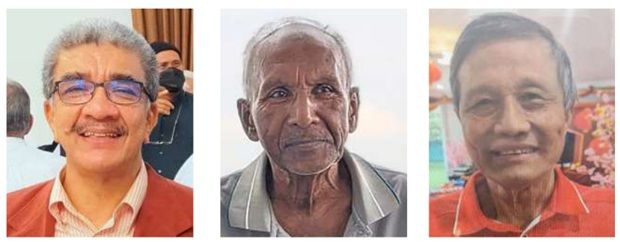
Major-General (Rtd) Datuk Ansar Ali Majeth, who flew his first combat mission before turning 20 in 1977, recalled providing air support to ground forces during the communist insurgency.
The 68-year-old, who piloted the Canadair CL-41G – locally nicknamed the Tebuan – said a successful mission required more than just flying skills.
“It demanded tactical awareness, judgement, timing, teamwork, adaptability and nerves of steel.
“We aerially bombed enemy targets marked by smoke grenades activated by our ground troops. Often, they were dangerously close to those targets.
“During other missions, our jets escorted helicopters heading to ‘hot’ landing zones to ‘sanitise’ enemy-infested areas,” said the airman, who completed 61 combat missions during his 41 years of service.
In his Merdeka message, Ansar Ali, who retired in 2016, urged younger generations to embrace the true meaning of independence, with emphasis on racial harmony, respect and tolerance.
“There have been scathing comments from certain quarters, even federal lawmakers.
“This is very sad. We veterans had contributed immensely to the well-being of the nation, and it seems as if it was for nothing,” he told The Star.
Lieutenant-Colonel (Rtd) Sam Munisamy Arumugam, 79, joined the air force in 1967 when he was 18.
He had piloted various helicopters, including the Alouette III and the Sikorsky S61A, better known as the Nuri, and taken on missions such as troop evacuations and combat.
He said helicopters were crucial not only for combat but also for non-military missions such as flood evacuations and transporting supplies.
What stood out most to him, however, was the comradeship within the force.
“We worked so closely together, and race was never an issue.
“There were missions fighting the guerrillas, retrieving our dead and wounded, yet no one ever asked if the casualties were Chinese, Indian, Malay or Orang Asli.
“We were united in spirit, fighting for the same cause.
“If it were not for compulsory retirement, I would have continued serving the air force until I breathed my last,” he added.
His voice broke as he recalled fallen comrades.
“Dozens never made it home. They perished on the battlefield for a better Malaysia. Yet today, it hurts when racial accusations are freely uttered, as though our sacrifices are forgotten and meant nothing,” he said.
Upon retiring in 1998 after almost 32 years of service, Munisamy works at private academies, training both military and civilian pilots.
He also played a key role in evaluating Russian Mi-17 helicopters for the Fire and Rescue Department during its procurement process.
Major (Rtd) Peter Yeow Chow Cheong, 78, also braved perilous missions during the insurgency.
He recalled with sadness the crash of a Nuri helicopter that was shot down by insurgents on April 26, 1976, near the Malaysia–Thai border while returning to Gubir, Kedah.
After crashing in the jungle, the aircraft burst into flames, killing 11 servicemen, including its pilots.
Yeow, then a young lieutenant, was tasked with the grim mission of recovering the remains.
Flying at dusk in helicopters not equipped for night operations, he and his team pressed on despite poor visibility and the threat of enemy fire.
They managed to return safely to Sungai Petani with the fallen.
In his Merdeka message, Yeow called for unconditional unity.
“Many lives were lost trying to realise this dream. However, we are appalled and fail to understand why certain parties are tearing our country apart.
“There is a place for all under the Malaysian sun. We can all share the cake without dissent,” he said.
Beyond military service, Yeow devoted himself to humanitarian efforts, delivering supplies and medical aid to remote Orang Asli settlements – a mission he continues today through Pertubuhan Komuniti Kasih Selangor, an organisation he founded.