



DRAWING on over 40 years of operational experience, PETRONAS Gas Bhd (PGB) combines proven engineering practices with a focus on community well-being, to maintain pipeline integrity.
At the heart of it all lies the Peninsular Gas Utilisation (PGU) network, a 2,675km steel backbone that delivers 2,300 to 2,400 million standard cubic feet of natural gas daily.
Stretching from Kerteh to Changlun, this network powers up to 42% of Peninsular Malaysia’s electricity grid and fuels key industrial clusters from Johor all the way to Kedah.
But beneath the surface lies a story few get to see – one that speaks to decades of engineering diligence, safety stewardship, and proactive risk management.
Safety engineered from the ground up
Since its first segment began operation in 1983 between Kerteh and Kemaman, the PGU network has grown into one of the country’s most critical energy infrastructures.
Today, it runs from Kerteh to Pasir Gudang, crossing the Straits of Tebrau into Singapore, and stretching along the west coast from Segamat to Changlun.
At PGB, safety is embedded from the ground up. Every pipeline under the PGU network is designed, built, and maintained to meet globally recognised codes, including ASME B31.8/B31.4, B31.8S, API 1104, NACE SP0169, and Malaysia’s own Petroleum (Safety Measures) Act 1984. These standards govern every stage – from design and construction to operation and inspection.
During route selection, population density, terrain, and future land use are carefully considered.
This was evident in the deliberate routing of PGU’s Right-of-Way (ROW) away from mountainous regions such as the Titiwangsa Range.
Geotechnical and soil studies inform pipeline material and coating selection, while cathodic protection and overpressure systems are incorporated to prevent degradation and ensure the pipeline never exceeds its safe limits.
Construction follows strict quality control: non-destructive testing (NDT) for every weld –verified by third parties approved by the Occupational Safety and Health Department (DOSH).
Protective coatings and slab foundations are applied to stabilise the line, especially in areas of high buoyancy.
Before commissioning, each segment undergoes a comprehensive pre-operational testing regime – caliper pigging to detect deformation, hydrostatic pressure testing at 1.5 times the design limit (witnessed by DOSH), and internal drying. Only after passing these tests does PGB secure the Permit-to-Operate (PTO).
Post-commissioning, intelligent pigging is conducted to capture pipeline integrity data. The results of the pipeline integrity assessment then determine the next inspection interval, which can range from two years to a maximum of 10 years depending on the pipeline’s condition.
These inspections not only support predictive corrosion modelling but also help validate a 10-year inspection cycle when minimal degradation is observed.
Complementing these internal inspections, external corrosion prevention measures include regular coating inspections and continuous cathodic protection.
For above-ground monitoring, the ROW is patrolled regularly, with some critical sites supported by drone surveillance.
Clear signage is maintained to raise public awareness, while intrusion controls are enforced.Ground stability is also monitored closely to detect and address risks early.
PGB has invested RM60mil in soil stabilisation efforts since 2022, with an additional RM100mil planned.
All third-party crossings, from roads to utility lines, undergo a structured, multi-stage process involving design vetting, permits-to-work, and final quality assurance before being allowed within the ROW.
This multi-layered, proactive approach underscores PGB’s commitment to safety, compliance and engineering excellence.
DOSH’s post-incident review of Putra Heights reaffirmed the structural integrity of PGB’s pipelines, underscoring the robustness of a network built not just to deliver gas, but to do so safely, for decades to come.
Lessons from Putra Heights
The Putra Heights incident revealed the unpredictable nature of deep subsurface changes, driven by anthropogenic activities.
In response, PGB is now strengthening its systems further through enhanced subsurface monitoring, advanced technologies, and closer inter-agency coordination. These efforts are an expansion of an already robust safety culture.
Recent Geopig and Electro-Magnetic Locator (EML) inspections conducted across over 90% of the PGU pipeline network have revealed, no other location exhibited similar subsoil risks, reaffirming the network’s structural soundness and rigorous monitoring.
Beyond its routine surface-level surveillance, PGB is now integrating deeper subsurface risk assessments using geopigging, EML tools, and exploring satellite imaging and infrared drones for early detection of ground shifts.
These upgrades reflect a layered, forward-looking approach to risk management, built on engineering precision, safety culture, and regulatory clarity.
At Putra Heights, PGB constructed a new bypass pipeline within its ROW, structurally separated from the original site.
To mitigate the risks of subsurface movement and soil instability, sheet piles were strategically embedded, to act as a physical barrier, significantly reducing the risk of soil movement impacting the new bypass pipeline.
Advanced sensors installed along the pipeline and sheet piles provide real-time alerts of any ground and pipeline shifts, enabling immediate response.
These measures ensure enhanced protection and resilience against subsurface instability while soil stabilisation continues at the original location.
In parallel with these technical efforts, PGB is also enhancing public preparedness by establishing emergency routes, deploying a notification system, and conducting joint emergency drills, to ensure communities remain informed, protected, and resilient.
A culture of safety and building trust
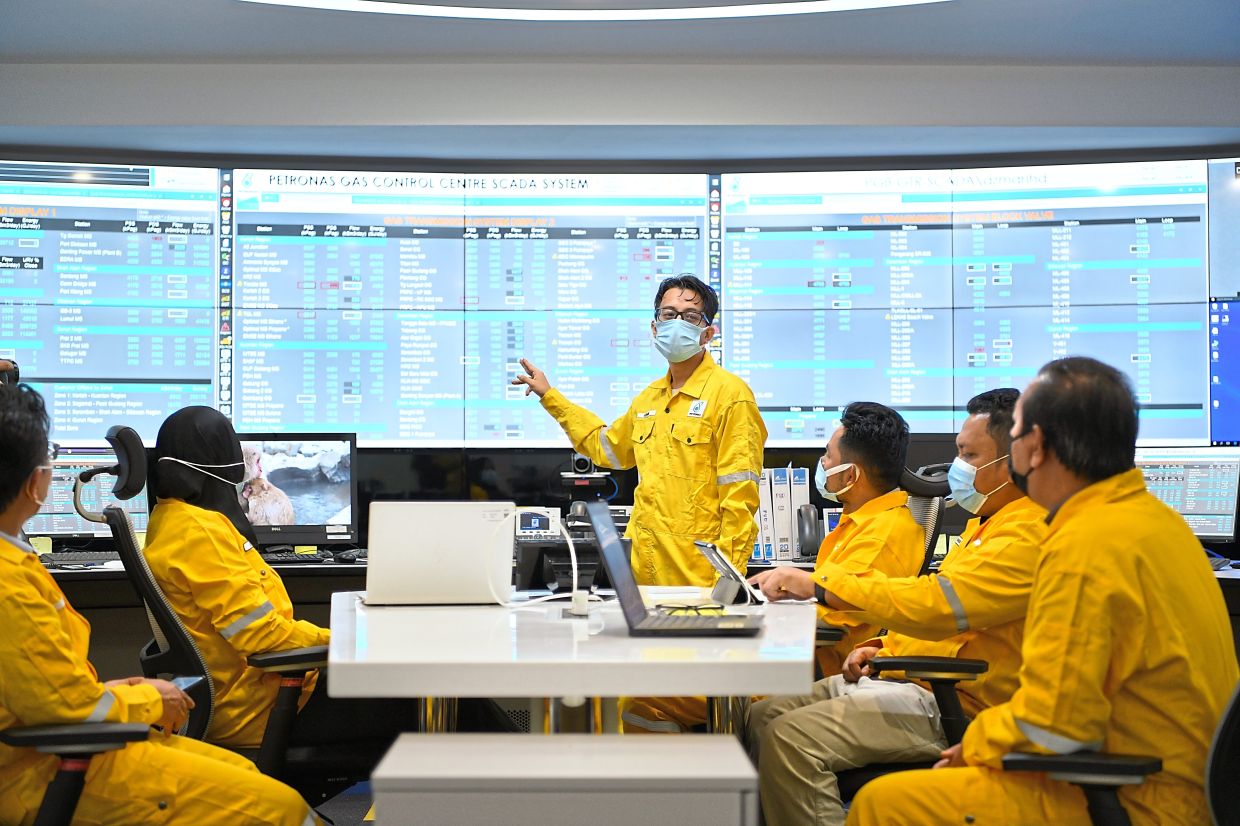
PGB’s PGU network is monitored around the clock from the PETRONAS Gas Control Centre (PGCC) in Segamat, supported by eight regional offices throughout the peninsula.
Every third-party crossing, from utility lines to road, undergoes stringent vetting, permitting, and inspection. Every slope, signage, and ROW border is maintained not just for regulation, but for peace of mind.
Beyond technical safeguards, PGB engages residents through awareness campaigns, emergency drills, and regular community-oriented activities, ensuring safety measures are both in place and is well understood.
PGB prohibits any form of encroachment within the ROW, as it poses risks to public safety, hinders maintenance operations, and may compromise the integrity of essential infrastructure.
The public and local authorities can assist in promoting awareness on the importance of preserving and respecting ROW and are urged to ensure these critical zones remain safe, accessible and protected for the benefit of all.
The Putra Heights incident highlighted the need for continuous learning and that even the most robust pipeline network and management systems must evolve.
It was also a reaffirmation that when issues arise, transparency and prompt, science-based actions are vital.
Looking ahead, PGB will enhance subsurface surveillance, deepen inter-agency collaboration, and continually raise the bar for safety.
From buried pipelines to advanced sensors, the focus remains on protecting people and building trust – pipeline by pipeline.
Because gas safety is not just about what lies beneath. It’s about what stands above –responsibility, resilience, and the silent promise that every time we switch on a light or power a factory, someone, somewhere, has already done the work to keep us safe.
