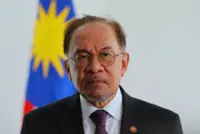
KUALA LUMPUR: Malaysia is planning to organise the Regional Comprehensive Economic Partnership Summit in October this year, said Prime Minister Datuk Seri Anwar Ibrahim.
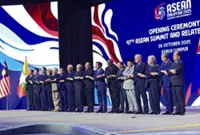
Anwar said the RCEP Summit, which will be the first of its kind in Malaysia, will be held in the same month as the 47th Asean Summit.
“As Asean chair, Malaysia intends to convene an RCEP Summit in October. The aim is to take stock, to accelerate implementation and to demonstrate that Asia can still lead the cause of openness even as others turn inward,” said Anwar.
Anwar made these remarks during his speech at the KL Roundtable on Asia-Pacific Regional Cooperation of the BOAO Forum for Asia.
Since 2009, China has been Asean’s largest trading partner, with bilateral trade volume reaching US$546.6bil in the first seven months this year.
Among the 10 Asean member countries, Malaysia, Vietnam and Indonesia were China’s top trade partners, with a turnover of up to 13.7%, 24.1% and 4.1%, respectively, according to statistics by the Chinese General Administration of Customs.
Anwar said RCEP remains the largest free-trade area in the world, covering 30% of the global GDP.
"But, RCEP must not remain just a legal text on paper. It must be renewed with political energy," added Anwar.
According to Anwar, Asean and China concluded negotiations for the Asean-China Free Trade Area (3.0) and it will be presented to leaders in October.
"It (Asean-China Free Trade Area 3.0) now embraces the digital economy, green growth, supply-chain connectivity, technical standards, and support for SMEs," added Anwar.
Anwar also said the Asean-China Free Trade Area 3.0 reflects new realities presently - that prosperity today is shaped not just by fair trade, but also by data flows, digital platforms, and sustainable energy transitions.
"For Asean, this FTA demonstrates that engagement with China can be rules-based, inclusive and future-oriented," he added.
While Asean’s middle classes are growing and digital economies are expanding, Anwar said fragmentation remains an issue with the regional grouping.
"Demographic headwinds in Northeast Asia, unresolved rivalries and across the region and the risk of polarisation all weigh heavily.
"If the Asian century is to be realised, it will require deliberate effort, not the least being cohesion as a region, coordination of policies and investment in shared resilience," he said.
Anwar said Asean, built on open, inclusive and non-exclusive regionalism, remains one of the few regional groupings where rivals can sit together in a dialogue.
"As this year’s Asean chair, Malaysia is determined to preserve that centrality, not as rhetoric, but as practice.
"That requires deepening the architecture of regional cooperation," he said.
Earlier in his speech, Anwar criticised the usage of tariffs, export controls, sanctions by global superpowers, saying that economic compartmentalisation can lo longer serve the complex and interdependent nature of geo-economics.
"Instead of advancing facilitation, energy pipelines, shipping routes and semiconductor supply chains have become instruments of unfair leverage.
"Payment systems and capital flows are deployed as tools of pressure," he said.
As a result, Anwar said it brought about uncertainty in the world and this will have profound security and geopolitical implications.
"History shows that when nations compete to build walls, prosperity declines and instability spreads.
"That is why we argue for sovereign interdependence," said Anwar.
According to Anwar, sovereign interdependence accepts that interdependence is unavoidable, but relations with other countries must be built on choice, resilience and mutual respect.
"It preserves openness while safeguarding dignity. It rejects both enforced dependence and enforced decoupling," added Anwar.
RCEP involves 15 countries and among the Asean member countries involved are Brunei, Cambodia, Indonesia, Laos, Malaysia, Myanmar, the Philippines, Singapore, Thailand, and Vietnam.