THE withdrawal of government subsidies for eggs and chicken has not disrupted supply or led to price increases.
Deputy Domestic Trade and Cost of Living Minister Datuk Fuziah Salleh said the decision to remove the egg subsidy with effect from Aug 1 has shown positive results.
“When the egg subsidy was removed, we found that there were no issues with supply or prices,” she said.
Citing an earlier example, Fuziah said similar action was taken with chicken in November 2023, when subsidies were ended and the ceiling price of RM9.40 lifted.
“Before that, we struggled to control chicken prices, even with subsidies and price caps in place. Consumers still had to pay extra, such as for cutting charges.
“But after the subsidy was removed, we tightened monitoring across the supply chain – from production costs and raw materials to distribution and retail.
“We recorded chicken prices daily to ensure the move was working,” she said.
As a result, she said that chicken prices have since stabilised, with some selling at lower prices than before.
Fuziah said the ministry has the authority under various laws – including the Price Control and Anti-Profiteering Act, Supply Control Act and the Competition Act – to monitor and control supply and pricing at every level of the supply chain.
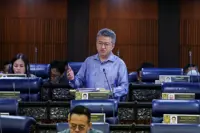
She was responding to Dr Taufiq Johari (PH–Sungai Petani), who asked how the National Action Council on Cost of Living (NACCOL) ensured that government interventions truly benefited the people.
“We want to show that our policies are working and having real impact on the ground,” she said.
The government officially discontinued the egg subsidy on Aug 1, after spending around RM2.5bil since February 2022 to support the industry.
These subsidies were introduced in response to the global disruptions caused by the Covid-19 pandemic and the Russia-Ukraine war, which pushed up prices of essential feed ingredients like soybean and corn.
The financial aid aimed to help local egg producers manage higher input costs, prevent supply shortages and shield consumers from drastic price hikes.
Fuziah said following three NACCOL meetings this year, several cost of living intervention measures have been implemented including in the health sector, requiring all types of medicines sold or supplied in community pharmacies and private health facilities to have price markings from Aug 1.
“Based on the outcomes of NACCOL meetings and development of the Cost of Living and Decent Basic Living Expenditure Indicator this year, we have begun advocacy processes for the public.
“Additionally, RM25mil has been allocated to implement the Madani Agro Sales,” she added.