
KOTA KINABALU: In Sabah’s east coast Sandakan district lies a somewhat secluded island where centuries ago, turtle eggs and flesh were commonly consumed.
This is the lesser-known Liba-ran Island, nestled close to Sabah’s Turtle Islands Park comprising Selingan, Gulisaan and Bakungan Kecil islands.
In early records, turtle eggs and parts of the animals’ bodies, such as their shells, were items of high-value trade.
Laws were enacted to grant certain communities exclusive customary rights to collect turtle eggs for commercial purposes.
Later, around 1952, some quarters attempted to preserve the quickly dwindling population of turtles but others argued that this was merely being done to protect the monopoly on the trade.
Authorities fought a losing battle against pirates and hunters from outside the borders looking for shells which were exported to foreign markets between 1951 and 1963.
However, slowly down the line of history, these ways of life changed and the very community that used to exploit this species became part of an initiative to co-exist with and preserve and conserve sea turtles.
When one asks who made this possible, the name that usually crops up is Alexander Yee, nicknamed the “Turtle Man”.
The journey for the now 57-year-old started sometime in 2010 when he was approached by a Sabah Wildlife Department (SWD) official in Sandakan, asking if he would be interested in a conservation-type tourism project.
“At that time, I thought I was going to receive full support from agencies and departments that were relevant to the cause. I was wrong,” he said in a recent interview.
Yee said that being a businessman, he felt this could be his corporate social responsibility initiative, but it soon turned into a lifetime commitment for him.
He recalled that during the earlier stages of the initiative, he faced financial constraints as well as obstructive policymakers.
“Another bigger hurdle were the villagers. They did not understand why I was protecting the turtles.
“The villagers were not fond of an outsider telling them what to do and what not to do.
“Even if they gradually understood, they were not interested in being part of what they called ‘a tedious but useless’ activity.
“For them, it was not wrong to harvest the eggs for food and to sell them for a living,” he said.
When Yee tried teaching them about keeping the beach clean and recycling, that did not sit well with the villagers either.
“They felt that it was too much work and such effort did not pay.”
He also faced difficulties in obtaining land to build a hatchery but was eventually successful, establishing what later became the Walai Penyu Conservation Park; subsequently, offices and lodges were added.
There were also problems with hiring workers, working with the authorities, dealing with red tape and other issues.
Yee had to use a lot of his own money to kickstart the hatchery, in addition to seeking technical, enforcement, manpower and financial support from government agencies.
“I worked with NGOs and local communities who understood my mission. We gradually increased awareness among and participation from villagers,” he said.
His dedication and perseverance finally paid off and through programmes such as “adopt a turtle” or “adopt a beach”, more people began to join his mission.
Memorandums of understanding (MOUs) were signed with various entities, one of the bigger ones being on a sea turtle conservation project with the SWD on June 27, 2013.
That MOU was subsequently renewed in 2018 and again in 2024 – each MOU with SWD has a validity of five years.
With the agreement, the hatchery released its 30,000th hatchling on March 2, 2018, five years after the first MOU was inked.
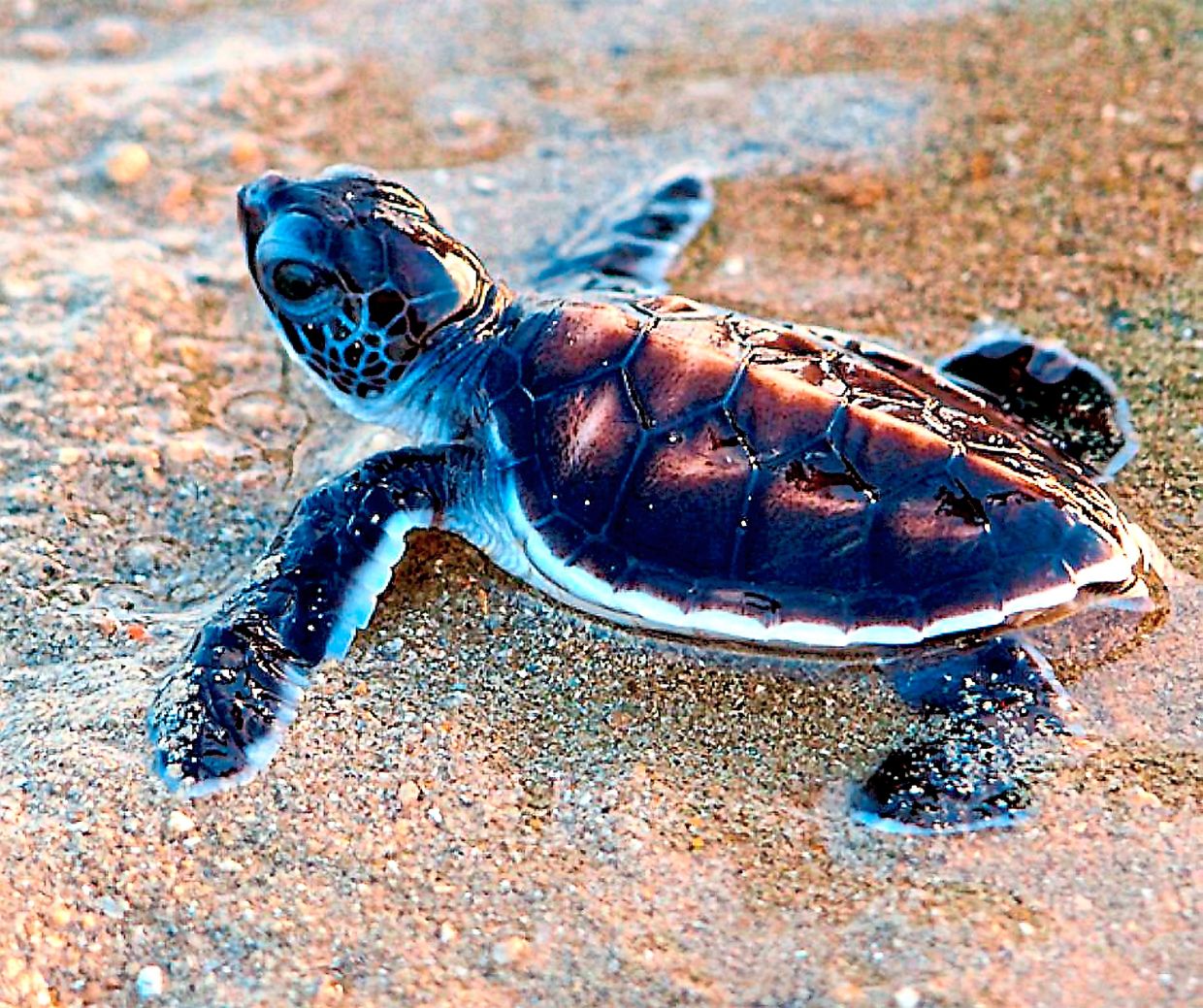
“As of July this year, we have released some 44,900 baby turtles,” Yee said, adding that these sea creatures have a very low chance of survival into adulthood after hatching.
He expressed hope to see more of them surviving with the concerted efforts of all parties.
The Star Golden Hearts Award (SGHA) returns with the 11th edition to honour everyday Malaysians like Yee whose compassion and selflessness have made a lasting impact on others.
With McDonald’s Malaysia as the new strategic partner, SGHA is poised to broaden its reach and deepen its impact nationwide.
This year also marks the debut of the McDonald’s Caring Hearts Award – a special recognition honouring individuals or grassroots groups whose heartfelt acts of kindness have uplifted lives in profound and lasting ways.
Since its inception in 2015, SGHA has honoured over 100 individuals and organisations whose efforts have inspired action, transformed lives, and strengthened communities nationwide.