




Bank Negara’s rate cut could turn savings into emergency funds
PETALING JAYA: Bank Negara’s interest rate cut offers Malaysians a chance to turn small savings from loan repayments into emergency funds, transforming immediate cash flow into lasting stability, say financial and consumer groups.
They said the recent 0.25% reduction in the Overnight Policy Rate (OPR) by Bank Negara could be seen as a golden opportunity for Malaysians to bolster their financial resilience.
“For typical RM300,000 and RM500,000 home loans on a floating rate, you’re looking at saving about RM43 to RM73 every month,” said Alex Tan, the president of the Financial Planning Association of Malaysia.
ALSO READ: Good news for SMEs with cash flow problems
“Over a year, these savings translate to over RM500 to RM900 that can be channelled into building an emergency fund or paying down higher-interest debts,” he told The Star in an interview.
Likening the additional liquidity to “a small bonus every month”, Tan said the key question is what we are doing with it.
“Transferring the difference to somewhere productive, like an emergency fund or a high-interest savings account, can significantly improve our financial situation.
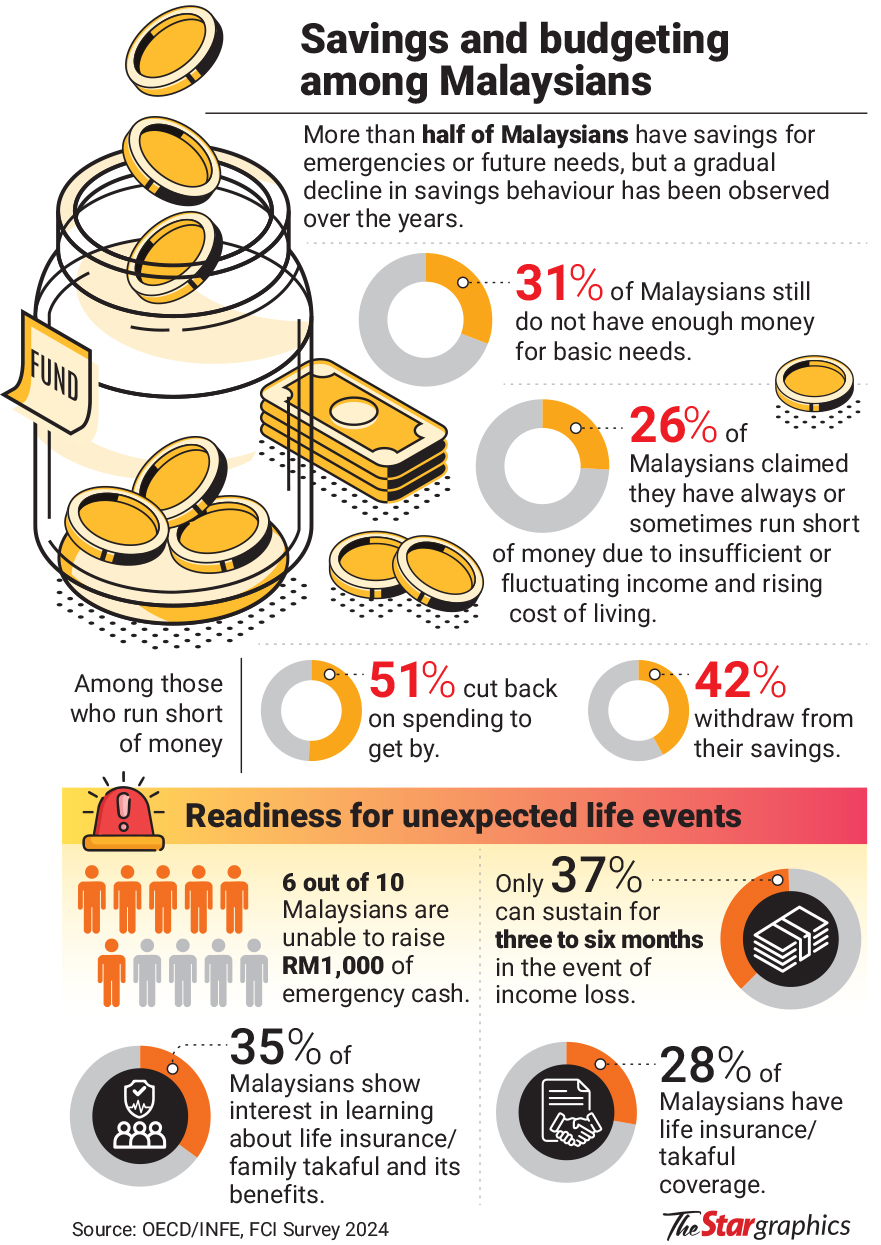
He advised Malaysians to build emergency funds that cover three to six months of living expenses for individuals, and six to 12 months for families with dependents.
“This isn’t extra’ money for spending; it’s an opportunity to strengthen our financial foundation.”
Tan also recommended starting with a self-financial audit to identify savings opportunities and using windfalls wisely to boost emergency savings.
“The families who resist the temptation of instant gratification and channel these savings strategically will be much better positioned for whatever comes next.
“It’s about changing your mindset from ‘I can afford more now’ to ‘I can secure more now’,” he added.
Licensed financial planner Rafiq Hidayat Mohd Ramli urged Malaysians to avoid the pitfall of lifestyle inflation.
“This is a moment where better choices can lead to better outcomes.
“Use the extra breathing room to build an emergency fund, not to upgrade your phone or splurge unnecessarily.”
While the savings may not seem much, he said, “for a 30-year mortgage, we’re talking about thousands of ringgit in total interest savings”.
He said emergency funds can be useful during costly unforeseen events such as job loss, medical emergencies or vehicle repairs.
To maximise the benefits of the rate cut, Rafiq advised consumers to “track and trim expenses to identify savings opportunities and automate your savings to ensure consistency.”
While interest rate cuts are temporary, smart financial habits are lasting, he said.
“With inflation and economic uncertainties still looming, now is the time to build buffers, not burdens.
“The goal is long-term stability, not short-term gratification. Let your savings serve your future.”
Federation of Malaysian Consumers Associations (Fomca) chief executive officer Saravanan Thambirajah said Malaysians’ financial preparedness remains alarmingly low, despite increased awareness about the importance of emergency savings.
“Many Malaysians still lack the funds to endure even brief income disruptions,” he said, citing surveys that show a significant number of adults couldn’t cover basic expenses beyond a month without their primary income.
He pointed out that short-term financial thinking and consumption-driven lifestyles are prevalent.
“Cultural pressures often equate success with material wealth, leading many to spend beyond their means,” he said.
Financial literacy gaps also persist, especially among youth, gig workers and rural folk.
“Without structured savings tools, people often end up saving nothing.”
Saravanan urged consumers to use the recent interest rate cut wisely and get educated on its benefits.
“Fomca publishes a bi-monthly magazine, Ringgit, to help Malaysians make informed financial decisions. Educating consumers is crucial to improving financial security,” he added.



