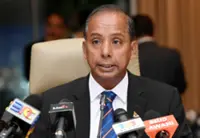
KUALA LUMPUR: The government has formally set up a feasibility study committee to explore the establishment of a Human Rights Tribunal in Malaysia, with findings expected to be finalised by October this year, said M. Kulasegaran (pic).
The Deputy Minister in the Prime Minister’s Department (Law and Institutional Reform) stated that the Feasibility Study Committee on the Human Rights Tribunal (JKKTHAM) was established in June, following an initial meeting chaired by himself on Nov 21, 2024, to discuss the proposal.
"This effort marks a significant step in institutional reform under the Madani government.
"The feasibility committee has been tasked with studying the practicality of setting up a Human Rights Tribunal and is now actively conducting the study," he told the Dewan Rakyat on Wednesday (July 30).
Kulasegaran mentioned that the committee is chaired by former Court of Appeal judge Datuk Mah Weng Kwai and includes representatives from the Asean Intergovernmental Commission on Human Rights, Suhakam, the Malaysian Bar Council, academia, legal practitioners, relevant government agencies, and civil society organisations.
"As of July 2025, the committee has convened five meetings, with preliminary findings presented by the research team on July 9.
"These covered the conceptual and theoretical framework, analysis of Malaysia’s existing human rights mechanisms, international comparative practices, and a proposed model for Malaysia’s own tribunal," he said.
A focus group discussion (FGD) with stakeholders was also held on July 17 in Kuala Lumpur, with more FGDs planned across the country, including in Sabah and Sarawak, he added.
Kulasegaran emphasised the government's commitment to ensure that the tribunal, if established, complies with the Federal Constitution, particularly Article 3, which upholds Islam as the religion of the Federation.
"To this end, we have included representatives from the Syariah Judiciary Department Malaysia and the Islamic Development Department (Jakim) in the committee, to ensure that any proposal is not in conflict with the Constitution," he said.
He noted that the tribunal may serve as an alternative and accessible justice mechanism for victims of human rights violations, potentially hearing cases such as those involving Teoh Beng Hock, Muhammad Adib, and baby Zara, though the specific framework and jurisdiction are still under discussion.
Kulasegaran also acknowledged concerns that Suhakam’s recommendations have often been non-binding, saying this issue is being carefully examined.
"It is important that Suhakam’s recommendations are not ignored but implemented meaningfully.
"This is being considered as part of the feasibility and legal review being conducted by the committee," he said.