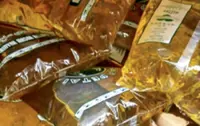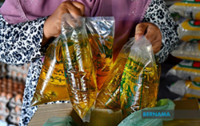
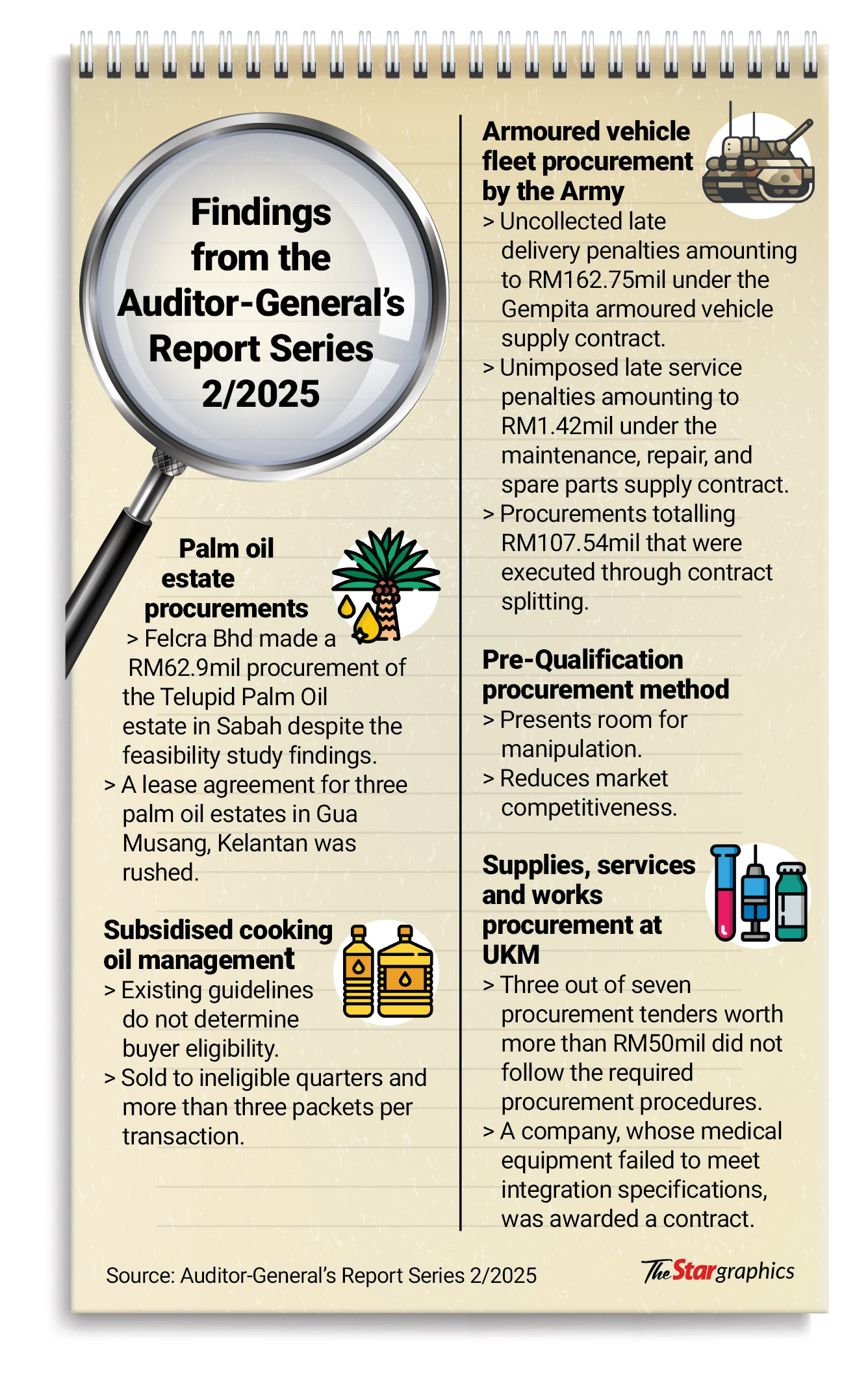
PETALING JAYA: Subsidised cooking oil meant for household usage has been sold in bulk to restaurants and caterers, with over 50 tonnes of the product diverted.
The Auditor-General’s report series 2/2025 revealed that as much as 55,167kg of subsidised cooking oil was sold to these quarters, in breach of official guidelines.
In the report published yesterday, it said this did not align with the standard operating procedures of the Cooking Oil Price Stabilisation Scheme (COSS) guidelines issued by the Domestic Trade and Cost of Living Ministry.
An audit at a Kelantan-based retailer last July found a business, which operated as a restaurant, had stored up to 204kg of subsidised cooking oil.
In 2024, the company had purchased 11,390kg of subsidised oil from five manufacturers.
An unrecorded sale of 561kg between the retailer and a manufacturer was also flagged.
In Terengganu, a wholesaler was found to have sold cooking oil to multiple caterers between January 2023 and June 2024.
Audit checks revealed 189 cash transactions worth RM77,647.50 involving subsidised oil.
A separate case in Miri, Sarawak, found that a supplier had distributed RM5,700 worth of subsidised cooking oil to unlicensed individuals for free between April and July last year.
The supplier claimed to represent an NGO.
Following these findings, the ministry confirmed that the Kelantan company’s controlled goods licence had been revoked and its eCOSS account deactivated to prevent further supply.
The unrecorded transaction will meanwhile be referred to the ministry’s enforcement division.
The wholesaler’s account in Terengganu has also been deactivated pending investigations.
The report also revealed cases of retailers selling more than three packets of subsidised oil per customer.
This includes a case in Selangor where a retailer sold 170 packets worth RM425 to a catering company, and a separate case in Terengganu where a trader made two transactions of subsidised cooking oil totalling RM57.50.
The report also revealed discrepancies in how subsidised cooking oil stocks were recorded and kept in the inventory.
“Lack of effective enforcement will open opportunities for companies to manipulate sales in their stock books,” the Auditor-General’s report said.
It also said there were no clear guidelines for managing spoiled cooking oil nor its sale, resulting in two companies storing 942kg of the product for sale to used cooking oil collectors.
The report said a total of 16 companies had been involved in repackaging subsidised cooking oil that did not meet the required weight of 1kg or had leakage in the plastic packaging.
To this, the Domestic Trade and Cost of Living Ministry said its COSS guidelines would be reviewed to include a procedure for this.
To plug leakages, the Auditor-General recommended that the COSS scheme be overhauled.
“There must also be targeted distribution schemes to ensure only eligible households can purchase the subsidised product, and limit it from being sold to foreigners and commercial entities.
“The purchase limit should also be reviewed,” it stated.
It said the COSS system must be used holistically to prevent any leakages.
The A-G’s report also proposed that targeted initiatives such as the Sumbangan Asas Rahmah (Sara) programme be expanded.