



KUALA LUMPUR: Diesel-powered minibuses are among the latest additions to Rapid Bus’ fleet serving the Klang Valley and Penang, Transport Minister Anthony Loke announced.
A total of 310 diesel buses will be deployed on selected high-demand routes to improve service frequency, he said.
This will also be the final batch of diesel-powered buses purchased by Prasarana in line with the government’s commitment to transitioning towards more environmentally friendly transport systems, Loke added.
“As the country’s main public transport operator, Prasarana has played a key role in delivering safe, efficient and reliable bus and train services.
“The diesel bus programme forms part of Prasarana’s long-term strategic plan to enhance its assets and strengthen operational capabilities,” he said during the unveiling ceremony of Rapid KL and Rapid Penang’s diesel buses here yesterday.
While manufactured by the Chinese company Higer, the components for the new buses are assembled locally in Johor.
Loke said this supports technology transfer and the development of Malaysia’s automotive sector.
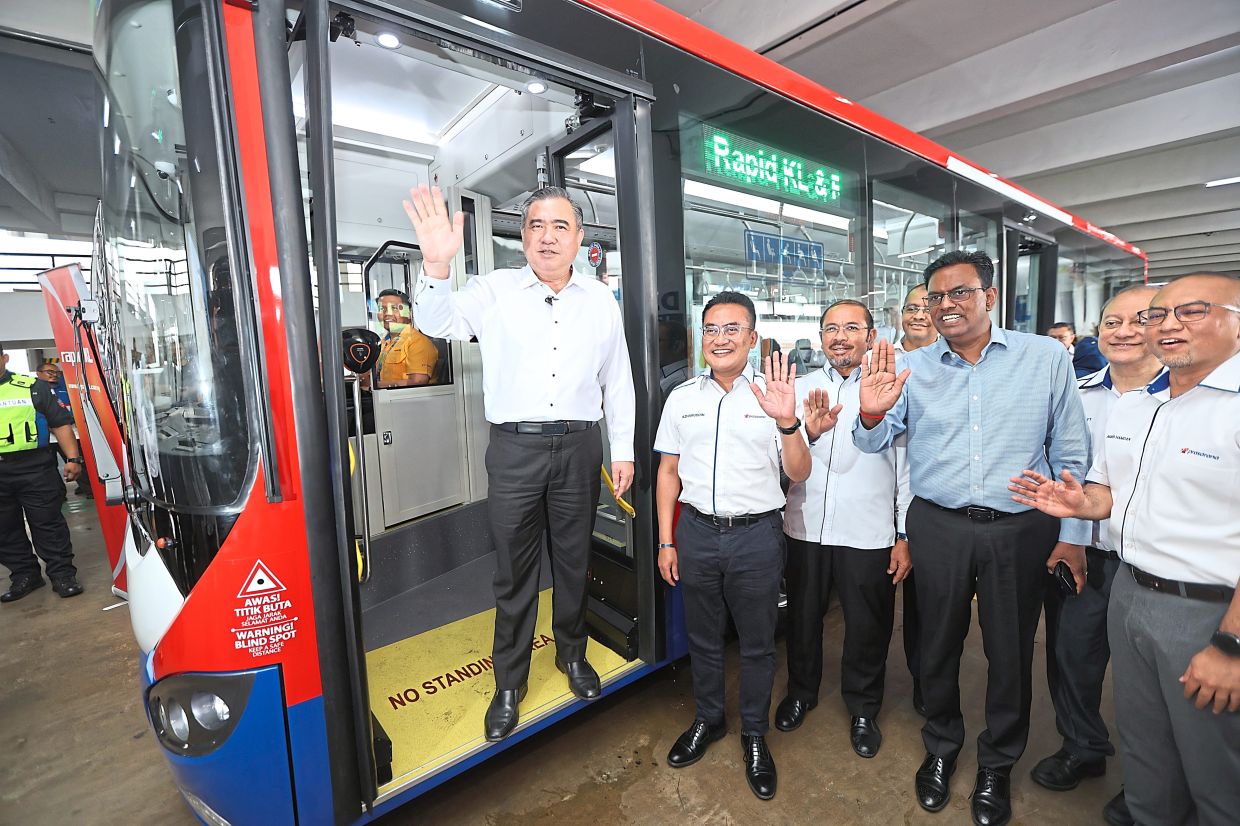
“These buses comply with Euro 5 emissions standards, which are among the strictest global benchmarks in regulating pollutants such as nitrogen oxide.
“This new fleet will help improve air quality, particularly in urban areas,” he said.
Of the 310 units, 200 are 9-metre minibuses designed to serve residential areas that are less accessible to standard-sized buses.
Of these, 70 will be allocated to Penang to further enhance first- and last-mile connectivity.
Looking ahead, Loke said electric buses are expected to be introduced by next year, with the tender process for their procurement already concluded.
“We are in the process of appointing a vendor.
“Delivery of the electric buses is expected to take around 12 months,” he said, adding that one of the tender requirements is for the buses to be assembled locally under a completely knocked-down model.
While foreign manufacturers are allowed to bid, successful tenderers must have local partners or be locally incorporated entities, Loke noted.
Separately, he revealed that Keretapi Tanah Melayu Bhd’s (KTMB) passenger services have yet to reach break-even.
However, he pointed out that the government-linked company’s freight services are generating profits.
“There is indeed a shortfall in operational spending. In terms of operations, we have not yet reached profitability or the break-even point,” he said, adding that the government continues to provide a funding gap allocation to KTMB to support operational costs.
In 2023, KTMB earned RM112mil from cargo operations, accounting for nearly a quarter of its total revenue.
