BEIJING: Amid intensifying global uncertainty, including the United States-China trade war, Datuk Seri Dr Wee Ka Siong says the media must rise to the occasion in shaping a more cooperative world.
The MCA president said the media must serve as a bridge to foster dialogue and cooperation among nations by sharing success stories and valuable lessons, particularly in critical sectors such as technology and trade.
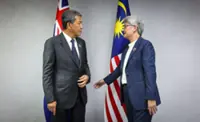
“This not only aids mutual growth but also fosters a better relationship between nations,” he said during a meeting with Liu Jianchao, Minister of the International Department of the Chinese Communist Party Central Committee (IDCPC) here yesterday.
Also present was MCA secretary-general Datuk Chong Sin Woon.
Underscoring the importance of press freedom, Dr Wee also called for balanced narratives and inclusive global discourse.
“Empowering media voices from Asia and Africa ensures that our perspectives are heard and respected globally.
“This is essential for maintaining peace and promoting a clearer understanding of the real needs of all nations in an interconnected world,” he said.
During the meeting, Dr Wee proposed leveraging media to voice grievances and promote deeper understanding of trade issues.
Citing Malaysia’s significant role in the global semiconductor supply chain, he highlighted the potential risks posed by rising global tariffs and stressed the need to protect national economic interests.
“To address these challenges, the media can play a pivotal role by airing our concerns and facilitating discussions that lead to positive outcomes,” he said.
He also emphasised the importance of educating and engaging stakeholders on trade through the media, ensuring all voices are considered in shaping future economic policies.
Amid the ongoing economic uncertainty, Dr Wee urged greater international cooperation and dialogue to address the complexities surrounding the US-China trade war and its ripple effects.
Dr Wee is on an official visit to China at the invitation of the IDCPC’s Contemporary World Magazine. He is leading a delegation of 23 media representatives from 12 Asian and African countries under the theme “Media Empowerment and Shared Prosperity”.
The delegation is visiting key sites and companies to gain deeper insight into the historical foundations of Chinese civilisation as well as the major achievements and global opportunities arising from China’s path to modernisation.
A highlight of the visit is the Ministerial Meeting of the Global Civilisations Dialogue today where Dr Wee and other delegates will engage with Liu and other Chinese leaders.
Dr Wee also echoed Liu’s call for the establishment of a Global South media group, a platform aimed at enhancing the collective ability to address global issues.
Liu stressed the need for increased solidarity among countries in the Global South and proposed a more structured forum for collaboration.
“We need to ensure that voices from Africa, Asia and Latin America are part of the global dialogue.
“We should create media forums to boost representation and cooperation,” he said.
He also pointed to the growing challenges posed by some major powers retreating from global responsibilities, saying it is now more important than ever for Global South countries to work together.
“The strength of the Global South comes from our unity and shared spirit,” Liu said, urging greater cooperation in areas such as technology sharing, digital innovation and economic development to counterbalance these challenges.
“China does not seek to colonise but to share.
“What we seek is common development and a shared future for all,” he said.
Liu added that China is willing to support and collaborate with its partners in the Global South, especially in navigating geopolitical complexities and addressing common issues.