KUALA LUMPUR: Timor-Leste’s accession to the South-East Asia Nuclear Weapon-Free Zone (SEANWFZ) Treaty by October will expand the geographical scope of a nuclear-free region, says Datuk Seri Mohamad Hasan.
The Foreign Minister said the treaty was a cornerstone of Asean’s security architecture and a key instrument in the region’s role in global disarmament efforts amidst a more complex security landscape.

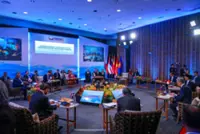
“Timor-Leste’s accession to the Treaty by the 47th Asean Summit will further expand the geographical scope of the treaty, compliment broader regional security architecture in shaping strategic norms and expectations in our part of the world,” he said in his opening remarks at the South-East Asia Nuclear Weapon-Free Zone (SEANWFZ) Commission meeting here on Tuesday (July 8).
Prime Minister Datuk Seri Anwar Ibrahim had previously said that Timor-Leste would be granted full Asean membership at the next Asean Summit in October.
During an exit press conference after the 46th Asean Summit and Related Summits in May, Anwar said Asean leaders have agreed to accept Timor-Leste as the 11th member of the association at the next Asean Summit in October.
Separately, Mohamad said Asean could take pride in being free of nuclear weapons and weapons of mass destruction.
He also said Asean has made significant strides in advancing the reuses of nuclear technology particularly in ongoing cooperation with the IAEA in the field of agriculture, medical diagnostics, food technologies, among others.
“This further reaffirms Asean’s commitment to harnessing the peaceful civilian application of nuclear science in accordance with the objectives of the SEANWFZ Treaty,” he said.
SEANWFZ, also known as the Bangkok Treaty, was signed in December 1995 in Bangkok by 10 Asean member countries. It came into effect in March 1997.
The protocol of the treaty commits nuclear weapon states to respect SEANWFZ and not contribute to any act that violates the treaty and its protocols; to not use or threaten to use nuclear weapons against states in the zone; and to not use or threaten to use nuclear weapons within the zone.