KUALA LUMPUR: The rising reliance on direct or open entry routes into public universities is drawing criticism for creating financial barriers that exclude deserving students, especially those from underprivileged and middle-income backgrounds.
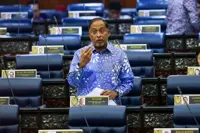
“We must re-evaluate this system when public universities begin to act like private institutions, moving away from their noble goal of helping bright students, particularly from underprivileged backgrounds, succeed,” MCA president Datuk Seri Dr Wee Ka Siong said at a press conference yesterday.
He said the issue now extends beyond Universiti Malaya (UM), as other institutions such as Universiti Sains Malaysia, Universiti Kebangsaan Malaysia, Universiti Putra Malaysia, Universiti Teknologi Malaysia and Universiti Utara Malaysia are also adopting similar practices.
Dr Wee said the way these open channels operate is concerning, as it prioritises financial capability over academic merit, undermining the foundational ethos of public education.
On Tuesday, Dr Wee highlighted UM’s sharp fee increase under its Saluran Terbuka Universiti Malaya direct admission channel.
For the 2025/2026 session, fees for medical and other critical courses soared by 67.1%, rising from RM299,200 to RM500,000.
In contrast, students entering via the government-subsidised UPUOnline channel pay only RM15,000 for the same programme.
Dr Wee noted that many parents had contacted him to share their concerns after he brought attention to the UM case.
“Their children applied through the UPUOnline system, only to receive an acceptance offer contingent on paying up to RM300,000 through the open channel.
“This financial burden is insurmountable for most families, turning what should be a joyous occasion into one of despair,” he said.
Dr Wee stressed that public universities are funded by taxpayers, with Parliament approving annual budgets to cover staff salaries and operational costs.
While acknowledging that the funding may not be sufficient for all development expenses, he said this should not come at the expense of deserving students who qualify through the UPUOnline system.
Citing a previous parliamentary reply, Dr Wee said 19% to 40% of public university placements now come from open channels, highlighting a systemic issue that could erode the very foundation of Malaysia’s public education system.
“I firmly believe that UPUOnline should remain the primary and most important channel for enrolment in public universities.
“This ensures admissions are based on merit rather than financial ability, thus promoting social mobility and allowing underprivileged students to transform their lives through quality and affordable education,” he said.
The current trajectory, he warned, risks turning the education system into an elitist one, where only the financially privileged can access quality education.
Dr Wee said the total cost of completing a medical degree at a public university has surged from about RM300,000 to over RM500,000, exceeding the fees charged by some private institutions.
“Similar hikes of 20% to 30% have been observed in other professional courses like law, raising questions as to whether public universities still prioritise talent development or have shifted towards a quasi-private model.
“While direct admissions can exist, public universities should expand their intake instead of using slots meant for UPUOnline students,” he said.
Dr Wee urged the government to establish a royal commission of inquiry to review these practices.
“We cannot allow financial capability to replace academic merit in determining university admissions.
“The government should intervene immediately to prevent further inequality in access to higher education.
“It should remain a public right, not a privilege,” he said, calling for the open channel intake to be halted.