

PETALING JAYA: When Moh Boon Leng dived in Tioman island last year, a glaring sight stood out – bleached corals.
Coral reefs, usually a splash of colour in the deep blue sea, were instead pale and dull.
“The bleaching was more apparent in the shallower areas, which were about seven to eight metres deep,” said the 41-year-old of his experience diving there in April last year.
But during a dive in Tioman about two months ago, he found that the situation was improving in the deeper end.
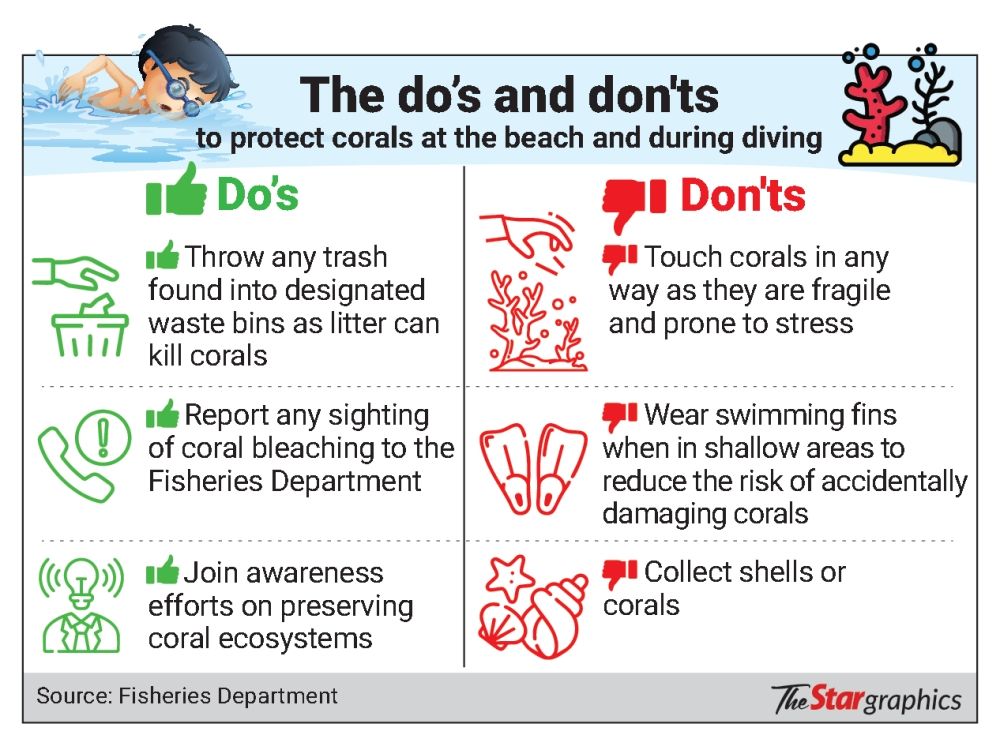
“While the shallower parts were still bleached, some reefs located about 15m deep were getting more colourful.
“It’s not by much, but noticeable. Hints of green and red were returning,” said the senior dive instructor with 20 years of experience.
The Fisheries Department when contacted, said that no coral bleaching episodes have been reported so far this year.
This is unlike last year when over half of Malaysia’s coral reefs were affected by bleaching between April and June due to higher sea surface temperatures.
Coral bleaching occurs due to high sea surface temperatures, spillover of fresh water which affects the salinity of seawater, sedimentation, overexposure to sunlight, pollutants, and coral diseases.
According to the Fisheries Department then, reefs particularly affected were the marine park islands in four states: Payar (Kedah); Perhentian, Redang and Tenggol (Terengganu); Tioman (Pahang); and Pemanggil (Johor).
It cited increased sea surface temperatures, with most affected reefs being in shallow waters less than 10m deep.
A report last year by non-governmental organisation Reef Check Malaysia discovered that live coral cover (LCC) in Malaysia’s coral reef sites had decreased by over 5% since 2022.
LCC is an indicator of the health of coral reefs.
A survey of 315 coral sites nationwide found that LCC declined from 50% in 2022 to 45.9% in 2023 and 44.7% last year.
Findings revealed that 63% of the areas surveyed saw a decrease in LCC with coral bleaching levels at nearly 90%.
It also stated that 83% of the surveyed areas were affected by discarded fishing nets and trash while 56% were impacted by damage from boat anchors.
The report found that indicators of marine life in these areas continued to be low compared to previous years, raising concerns that disruptive fishing practices like overfishing, poaching and dynamite fishing were still being carried out.
Also called the “rainforests of the sea” due to their vast biodiversity, coral reefs are a cornerstone of the underwater ecosystem.
“Coral reefs also play an important role in absorbing carbon dioxide from the sea, helping to reduce the effects of global warming,” said the Fisheries Department.
It added that corals can recover with both time and efforts to limit factors that can damage the marine ecosystem.
