
FOR Sarawak’s Dayak community, tuak is more than just a drink.
It’s a brew steeped in cultural significance, rooted in farming heritage and traditional beliefs, and contributes to social cohesion.
The traditional rice wine, which features prominently at the Gawai harvest festival and other celebratory occasions, is now reaching a wider urban market, thanks to commercialisation by innovative brewers. But it remains first and foremost an integral part of Dayak culture, symbolising their identity and hospitality.
“The Dayak community’s belief system is that the gods give all the blessings, the bounty of the land,” said Sarawakian tuak brewer Maynard Keyne Langet.
As such, rice has become closely associated with tuak, he added.
“The idea is that the rice is given by the gods. You process it into a liquid and give it back to the gods, so it’s like a full circle of life,” he explained.
Tuak is generally brewed from fermented glutinous rice, but Maynard said it can also be made from other grains and fruits.
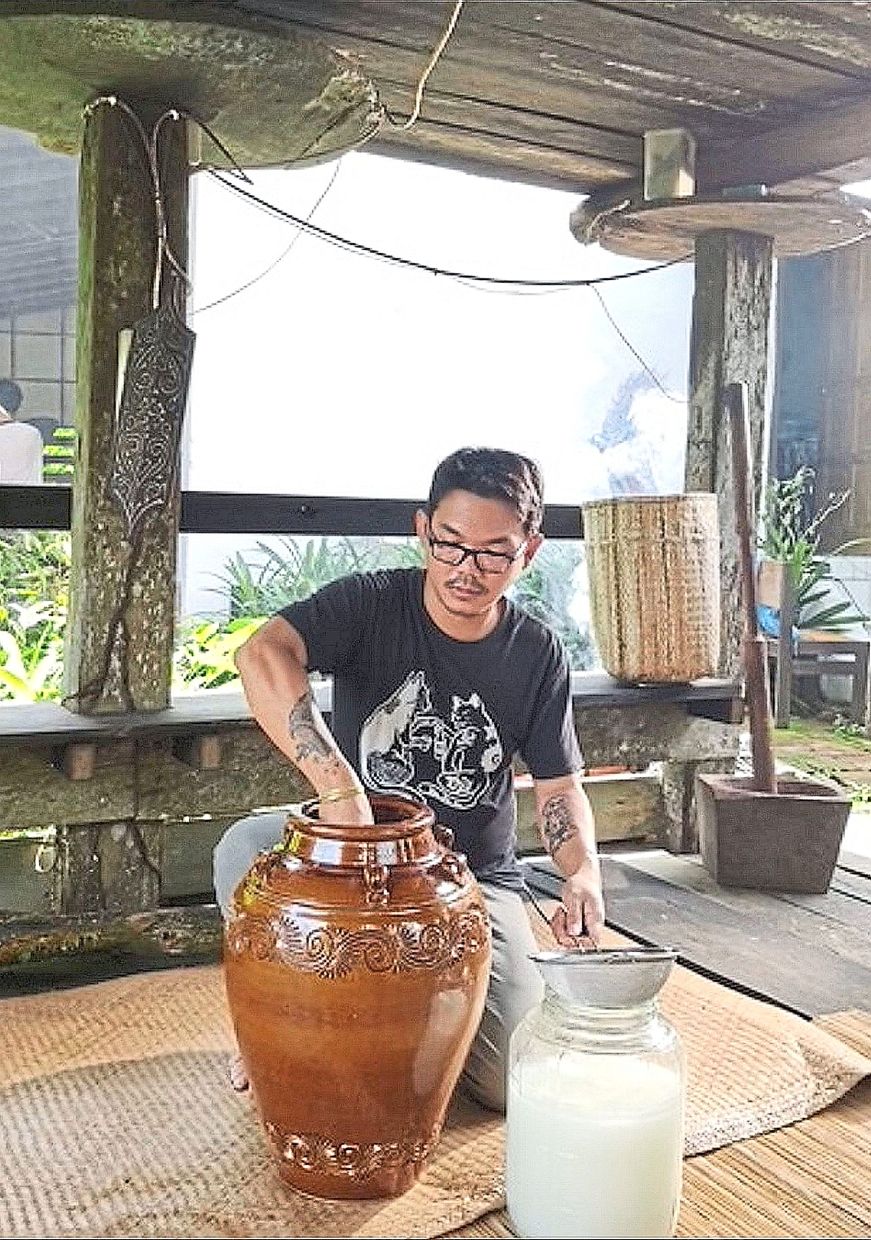
He noted that some communities in Sarawak don’t have rice tuak, such as a village in Bau that makes the brew from sugarcane only.
“Originally, before people settled down as farmers, they did shifting cultivation and collected fruits from the jungle. Those fruits were the first things that were made into tuak.
“Basically, tuak is anything that is fermented into a beverage that has alcohol in it. But if the beverage is made from palm fruits like sago or coconut, it’s not called tuak but ijok in Sarawak.”
According to Maynard, tuak’s significance goes beyond its use in ritual ceremonies. It also plays an important role as a social lubricant.
“In a kampung community, besides farming, hunting and taking care of the home, there’s not much else to do.
“So when there is a festive occasion, people consume tuak as a way to socialise,” he said.
Tuak was also a source of energy for farmers in the past when their lives were governed by the harvest cycle.
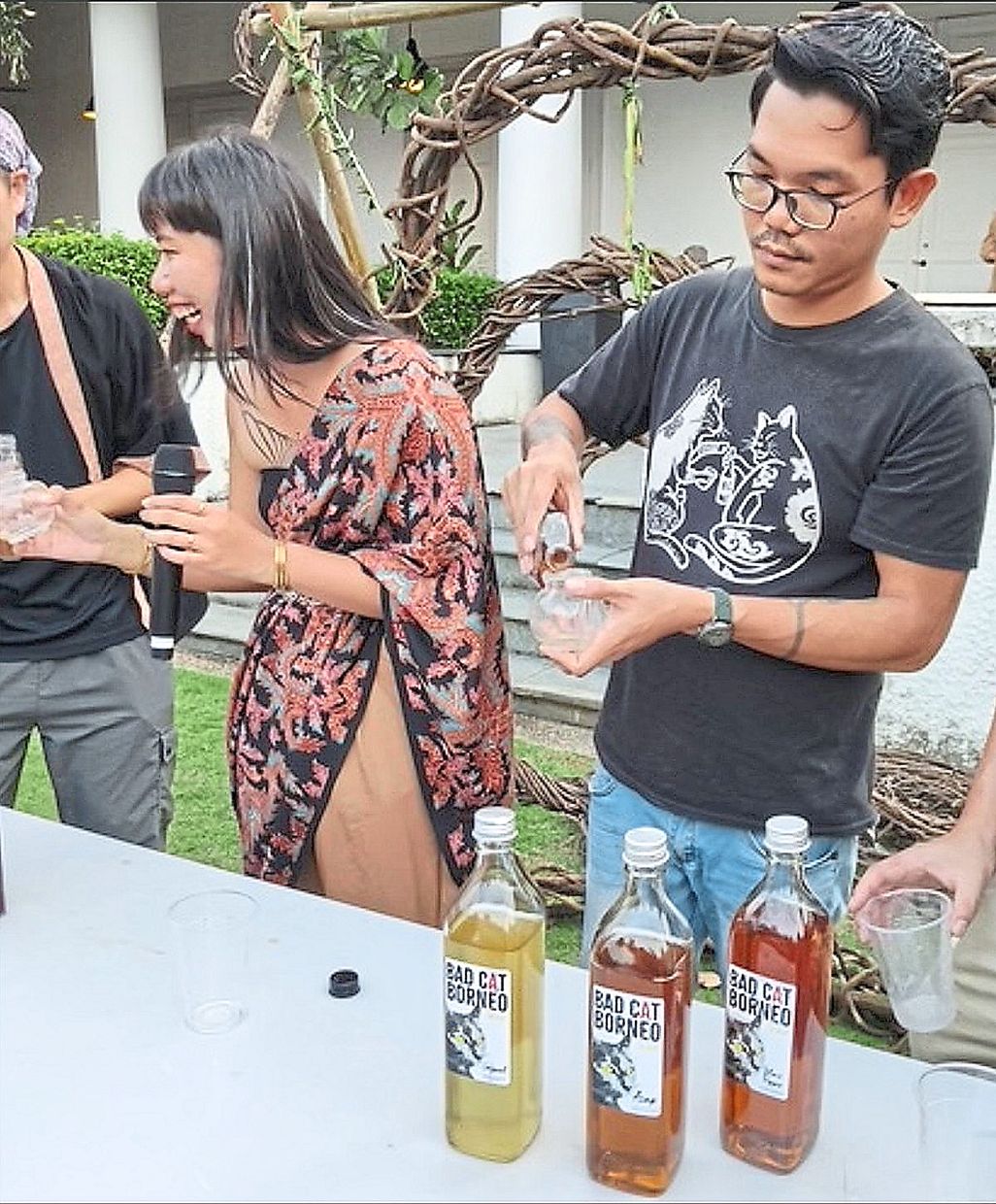
“They would drink just enough tuak to warm their bodies and for energy to continue farming.
“I’ve heard stories that farmers were given cups of tuak to drink when they had a break before going back to work. It was a source of easy calories.”
A former pastry chef, Maynard learnt to make tuak from his grandmother and mother when he returned to Kuching in 2018. What started out as a hobby eventually became a business.
Under his Bad Cat Borneo label, he makes two types of rice tuak and four non-rice varieties – apple, black pepper, roselle and pineapple.
Maynard said a newfound interest for the beverage in the urban market in recent years has contributed to its commercialisation.
“Tuak has always been there in the native communities. But in urban areas, people may not follow traditions closely anymore.
“So they want to find something that makes them feel like they belong, that helps them identify that Sarawak is where they come from.
“With tuak, they have a local product which they can call their own and have a sense of pride in,” he said.
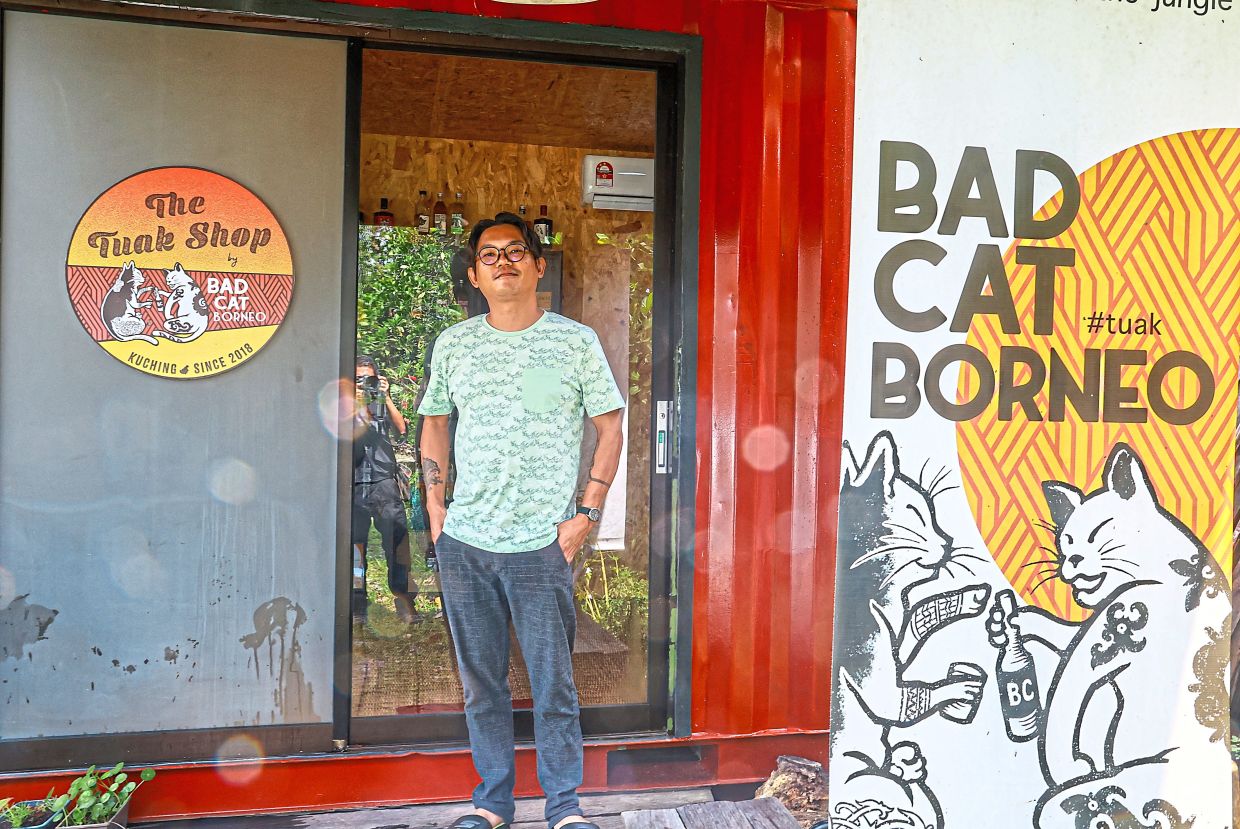
Maynard also said there were now new ways to consume tuak, such as mixing it in cocktails and adding flavours to make it more palatable to modern tastes.
“I think that’s fine. As long as you know the definition of tuak and its significance, then you can do whatever you want with it because you already have an underlying understanding of what tuak is.”
In line with this, Maynard tries to educate customers about tuak when they visit his showroom.
He also conducts tuak-making workshops, during which he teaches participants the history and sociocultural aspects of tuak and its relevance to the Dayak community.
“It’s all about understanding the story of tuak. People like stories, so they will remember it better,” he said.