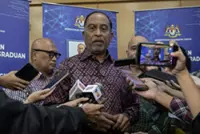
ISKANDAR PUTERI: The administration of Malaysia’s fifth Prime Minister, Tun Abdullah Ahmad Badawi, has left a profound and lasting impact on Johor, says an assemblyman.
Datuk Jefridin Atan (BN-Kukup) said numerous mega projects were implemented in the state during Abdullah’s tenure, particularly under the Ninth Malaysia Plan from 2006 to 2010.
Among these projects was the launch of the Iskandar Development Region, now known as Iskandar Malaysia, in Iskandar Puteri, formerly known as Nusajaya.
“This mega project turned Johor into one of the fastest-growing economic hubs in Southeast Asia, with major investments across various sectors including real estate, services, logistics, and education.
“Areas such as Johor Baru, Iskandar Puteri, Pasir Gudang, Tanjung Pelepas, and Pontian underwent remarkable transformation as a result of this project,” he said.
Jefridin made these remarks during a debate on the royal address by Johor Regent Tunku Ismail Sultan Ibrahim at the state assembly meeting at Bangunan Sultan Ismail in Kota Iskandar on Monday (May 19).
He added that the establishment of the East Coast Economic Region (ECER), launched in 2007, also included several districts in Johor such as Mersing and Segamat.
The initiative aimed to stimulate economic development in less-developed areas through investment in infrastructure, education, and industry.
He also highlighted the development of EduCity, which now hosts several internationally renowned universities and institutions of higher learning.
“The presence of EduCity has positioned Johor as a global education destination, offering opportunities for both local and international students in various professional fields,” he added.
Jefridin said the strengthening of agriculture and agro-industrial sectors under the new agricultural policy introduced during Abdullah’s time also benefited farmers and smallholders in Kluang, Mersing, Kota Tinggi, and Segamat.
“The focus was on modern agriculture that enhanced the nation’s food security and improved rural incomes,” he said, adding that Abdullah also emphasised human capital during his administration.
Jefridin noted that Abdullah placed strong importance on human capital development through the Education Development Master Plan (PIPP), launched in 2006.
“Key focuses included teacher training, the integration of ICT in education, and improving students’ academic performance nationwide.
“Under his administration, the country’s development approach was revitalised through the principle of ‘growth with distribution’, emphasising comprehensive and balanced development between economic and social aspects, urban and rural areas, as well as among regions and ethnic groups,” he added.
Abdullah, fondly known as Pak Lah, passed away at the National Heart Institute on April 14, at the age of 85.
He served as Prime Minister from 31 October 2003 to 3 April 2009, leaving a lasting legacy in national development through initiatives such as the Northern Corridor Economic Region, J-QAF programme, and the halal industry.