

Asean needs high-level task force, says Zafrul


DESARU: Asean needs to have a high-level task force to look at various scenarios with regards to the latest economic environment facing the world, says Tengku Zafrul Abdul Aziz.

The Investment, Trade and Industry Minister said it would not just cover economic tariffs but other issues as well.
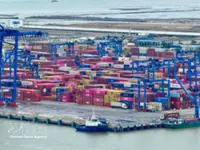

As the world's fifth-largest economic bloc, he said Asean needed to have engagement on issues such as strategic minerals, supply chain resilience and technology security.

"That is why we have agreed that a high-level task force together with a working group will look into and advise Asean economic ministers on the possible scenarios," he said at the close of the Asean Economic Ministers' retreat here on Friday (Feb 28).

Tengku Zafrul said Asean needed to be united in its views and engagements with other nations. "We agreed to work together to engage all relevant parties and look at new areas of collaboration with all countries, including the United States," he said, adding that Asean also needed to increase its intra-trade numbers, which was below 25%.

On the retreat, Tengku Zafrul said all 18 priority economic deliverables (PED) proposed by Malaysia covering an array of sectors and initiatives under the Asean Economic Community (AEC) were unanimously accepted and adopted. He said these included nine PED, which fall under the purview of the Asean economic ministers, signing of the 2nd protocol to amend the Asean Trade in Goods Agreement (Atiga), signing of the Asean-China free trade area and substantial conclusion of the review of Asean-India Trade in Goods Agreement (Aitiga).

Others included a joint declaration on economic cooperation between Asean and the Gulf Cooperation Council (GCC), adoption of the Asean Sustainable Investment Guidelines (Asig), development of policy recommendation and guidelines to support the Asean electric vehicle EV implementation roadmap, Asean centre of excellence for micro, small and medium industries (MSME) in green transition, Asean framework for integrated semiconductor supply chain (Afiss) and substantial conclusion of the Asean digital economy framework agreement (Defa) negotiations.

Tengku Zafrul said the other PEDs accepted were on areas such as climate financing, development of Asean capital markets, energy cooperation, agriculture, critical minerals, tourism, tech start-up, AI safety network and payment connectivity.

"As chair, Malaysia will like to thank all Asean member states for their support and commitment to ensure the timely implementation of the PEDs," he said, adding that they also discussed their plans and vision for the next phase of Asean economic integration post-2025, namely the development of the AEC strategic plan 2026-2030.

"This strategic plan is now on track for adoption by Asean leaders at the upcoming 46th Asean Summit this May, together with the overarching AEC vision 2045," he said. Developed from extensive engagements with a wide-range of stakeholders, he said the AEC strategic plan aimed to attain an action-oriented, sustainable, enterprising, adaptable, nimble and inclusive AEC.

"We also adopted several key initiatives of Asean, particularly the implementation of a roadmap for the Asean digital unique business registration numbers (Ubin), guiding principles for negotiations for the Asean framework agreement on intellectual property cooperation (AFAIPC) 2.0 and Asean pharmaceutical regulatory framework agreement(APRFA)," he said, adding that all these documents lay important foundations in different areas of work to create a more competitive economy as well as facilitate trade and business in the region.

He stressed that as the backbone of regional trade, the upgraded version of the Atiga shall elevate trade relations between Asean member states, especially against the backdrop of current global economic uncertainties.

"We encouraged the officials to continue their negotiations and reaffirmed our commitment to conclude negotiations within this year. We anticipate the signing of the upgraded Atiga to be held during the 47th Asean Summit On discussions on Defa, he described it as a landmark agreement and a new driver for socio-economic growth towards an Asean wide digital economy transformation. He added that they also had a productive discussion on Asean's economic relations with external partners.

"We also had a good exchange of views on how we could step up our economic engagement with them.

"Additionally we will also convene the inaugural Asean GCC-China Summit at the sidelines of the Asean Summit in May 2025.

"This is seen as a good way of engaging Asean's external partners, by forging new collaborations that will be able to open up new opportunities in driving our economy," he said. Earlier on Friday, Tengku Zafrul in his opening remarks said despite global economic headwinds, Asean's economic outlook remains optimistic with growth projected at 4.6% in 2024 and further increasing to 4.7% in 2025. He said while the figures seem modest at this juncture, it was seen as promising and a good indication of the region's evolving state of economy. He added that collectively Asean has showcased impressive economic resilience and has continued efforts to recover post 2020 and 2021 global pandemic.

"While some fluctuations were experienced in trade in goods which decreased by 8.3% in 2023, Asean total trade still recorded US$3.5 trillion (RM15.4 trillion) comprising US$1.8 trillion (RM7.92 trillion) in exports and US$1.7 trillion (RM7.48 trillion) of imports," he said.

Tengku Zafrul said that despite the overall trade slowdown, Asean maintained a trade surplus of US$96.7bil (RM425bil) in 2023, which potentially contributed to the region's economic growth. He added that foreign direct investment flows into Asean has also shown steady growth over the past decade, rising from US$129.9bil (RM571bil) in 2014 to US$229.8bil (RM1 trillion) in 2023.

"This shows Asean's continued attractiveness to foreign investors," he said, adding that in the face of global economic headwinds, mainly stemming from geopolitical influences and shifts, it was prudent for Asean to assess the dynamics of these situations and possess the ability to understand the eventualities that might significantly impact the regional economic landscape. Asean is the world's five largest economy after the United States, China, Japan and Germany. It is also the third largest regional economy in Asia. Asean is home to about 70 million micro, small and medium enterprises (MSMEs).


Follow us on our official WhatsApp channel for breaking news alerts and key updates!

Next In Nation

Man attacks ex-wife, daughter after fight over alimony
Floods: Pahang hit again, Johor see rise in evacuees
MyCC issues proposed decision against 31 childcare operators over alleged price fixing
Police record 18 witness statements over Nilai explosion
MACC records ex-minister's statement over alleged RM5 million bribe, supercar
Senior military officer in MACC probe warded in ICU
Selangor Ruler urges comprehensive flood solutions in New Year message
KTMB to terminate Southern Express service on Jan 1
Two killed, six hurt in Dungun MPV crash
Decomposing body found in Tawau shoplot

Others Also Read