KOTA KINABALU: Sabah is set to play a bigger role in Malaysia’s food security as the government pushes forward with initiatives to strengthen rice cultivation, livestock farming, and rural agro-food accessibility to increase local agricultural output while reducing reliance on imports.
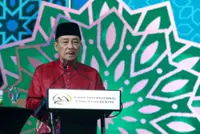
The Deputy Agriculture and Food Security Minister, Datuk Arthur Joseph Kurup, announced these initiatives during the 2025 New Year Mandate Ceremony with KPKM Agencies in Sabah at the Federal Government Administration Complex Sabah, here, on Friday (Feb 14).
He said the federal government has allocated RM150mil to support rice industry reforms, which include subsidies to stabilise production costs and incentives to encourage higher yields.
"This is the first step in showing that we have listened to the voices of paddy farmers and the rice industry. The government is committed to ensuring food security while also supporting farmers," he said, adding that the paddy purchase floor price has been raised from RM1,300 to RM1,500 per metric tonne.
The new floor price will be funded for six months, with a review planned to determine if further adjustments are necessary.
To ensure that rice farmers benefit fully from these incentives, the government is developing a new paddy granary in collaboration with Sabah and Sarawak. Productivity improvements, however, will depend largely on irrigation system upgrades, which Arthur said will be prioritised under the 13th Malaysia Plan.
"Paddy farming areas must be improved in terms of infrastructure and irrigation. This is one of the ministry’s priorities to ensure stable water supply across the country, including Sabah and Sarawak," he said.
Additionally, efforts are underway to revitalise idle paddy fields in Sook, Papar, and Tuaran, with RM5.82mil allocated for land rehabilitation.
Beyond rice, Sabah’s livestock industry will receive RM18mil in investments—RM15mil to Sawit Kinabalu and RM3mil to Desa Cattle—to increase beef production. The government aims to raise Sabah’s self-sufficiency rate (SSR) for beef from 7.57% to 25% by 2030, reducing reliance on imported meat.
"This initiative will continue so that we can strengthen Sabah’s role in food security and ensure long-term sustainability in beef production," Arthur said.
In a significant development, Sabah has been selected to host the National Farmers, Breeders, and Fishermen’s Day in August 2025—marking the first time in 30 years.
Arthur said the selection reflects Sabah’s growing role in Malaysia’s agriculture sector and presents an opportunity to showcase its progress.
"This is a historic moment. The last time Sabah hosted HPPNK was in 1995. I have set a high target for KPKM in Sabah to ensure this event benefits farmers, breeders, and fishermen," he said.
The event is expected to attract visitors from across Malaysia and the region, offering a platform for farmers and breeders to explore new market opportunities while also boosting local agro-tourism.
With climate change and limited farmland posing major challenges, Arthur said the government is turning to modern agricultural technologies to sustain productivity. He noted that unpredictable weather patterns and declining soil fertility make precision farming techniques more crucial than ever.
"To address climate change, we need to innovate in agriculture. Technologies such as AI, big data, IoT, and drones must be widely adopted to improve productivity and efficiency," he said.
Ensuring effective implementation of these initiatives is crucial, and Arthur urged KPKM and MAFFI personnel to remain proactive. He called on agriculture agencies in Sabah to ensure that policies lead to tangible benefits for farmers and the agro-food sector.
"We cannot let our plans and targets remain just that—plans and targets. They must be followed through with continuous action," he stressed.
The federal government, he assured, is fully committed to working closely with Sabah to strengthen agriculture as a key pillar of the national economy.
"With the strong team we have, I believe we can overcome any challenges ahead and continue making food security a national priority," he said.