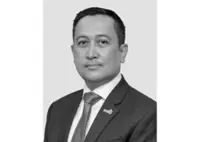
KUALA LUMPUR: Civil servants must take a united stance against corruption, starting with raising awareness and developing the ability to say "no" to bribes, says Rasuah Busters chief executive officer Nurhayati Nordin.
She emphasised that the key issue is not a lack of regulations, as laws to prosecute corrupt individuals are already in place.
"A more serious and coordinated intervention is necessary, not just to address coercion but also to equip civil servants with the skills to tactfully reject bribery attempts," she told The Star.
"Since these agencies operate as groups, the pressure—both internal and external—can be immense. A collective stance will help alleviate the burden on individuals, making it easier for them to uphold their integrity as a team."
Nurhayati stressed that effectively combating corruption requires cultural reform within key government departments.
"Simply enforcing rules is not enough. There must be a principled and unified approach to rejecting corruption," she said.
She also encouraged civil servants to document any threats or undue pressure they experience, as proper evidence is crucial for taking appropriate action.
Nurhayati was responding to a recent statement by Cuepacs secretary-general Abdul Rahman Nordin, who claimed that some civil servants were forced to accept bribes due to pressure from certain parties.
Abdul Rahman reportedly said this was among the complaints Cuepacs had received from public sector employees.
Nurhayati urged authorities to take these concerns seriously and implement strategic measures to address the issue.
"Encouraging whistleblowing is critical, and civil servants must be assured that they will be protected under the law," she added.
Meanwhile, Transparency International Malaysia president Dr Muhammad Mohan dismissed Cuepacs’ claims as an unreasonable excuse.
"If these civil servants were threatened, why did they not report it to the Malaysian Anti-Corruption Commission for protection? The Whistleblower Protection Act 2010 exists for this very reason," he said.
Muhammad argued that such reasoning was illogical and gave the impression that civil servants were seeking to legitimise corruption.
"Civil servants are there to provide good public service efficiently and protect taxpayers' money—not to engage in corruption," he added.
Centre to Combat Corruption and Cronyism (C4) chief executive officer Pushpan Murugiah described the admission that some civil servants were facing threats and being coerced into taking bribes as deeply concerning.
"The implication here is that, in certain sectors, decisions are being made under duress or bribery—likely benefiting those issuing such threats, such as criminal syndicates, rather than being based on proper considerations," he said.