



KUALA KUMPUR: The 100-odd crowd cheered, shared plates of food, prayed and danced outside the Syrian Embassy here.
Despite being more than 7,000km away, they were also celebrating the toppling of Syrian President Bashar al-Assad’s regime after a five-decade rule by the family.
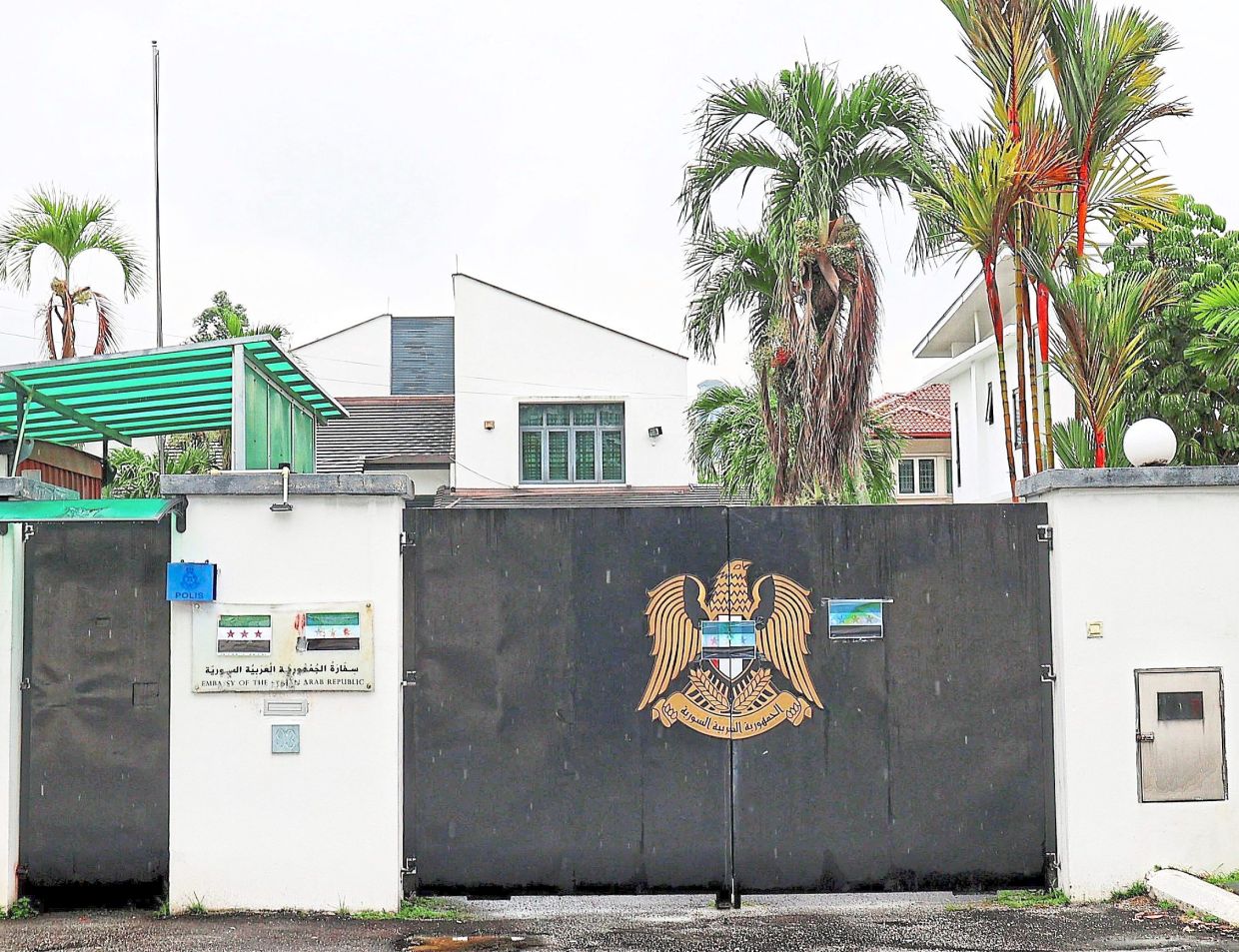
In a now viral video, dozens of Syrians gathered outside the Syrian Embassy off Jalan Ampang on Sunday and cheered the fall of Assad’s regime and replaced the national flag with the Syrian rebel flag.
The crowd also plastered handmade sheets of rebel flags over all Assad regime flags around the embassy.
The Syrian rebel flag features three horizontal bands in green, white and black, with three red stars set within the white band while the Syrian national flag, under the Assad regime, consisted of three horizontal stripes in red, white and black, but with two green stars in the white band.
While they celebrated by sharing food and praying together, many also expressed their joy at being able to potentially return to their home country which has been ravaged by civil war that began after Assad ordered a violent suppression of pro-democracy protests in 2011.
The video has since drawn mixed reaction from Malaysians online with some offering support for the Syrians while others raised concerns about the potential impact of a destabilised Syria.
“Congrats to them. Now they can go back to their own country,” wrote Facebook user AjYim Weng Fai yesterday.
However, others had different thoughts.
“A few hours after Assad was overthrown... the Zionist regime completely captured Golan Heights... even entering 5km into Syrian territory... something we need to be concerned about,” commented Facebook user Hadi Ibrar.
“Israel has already started entering Syrian borders.
“Hopefully, Syria can defend itself,” commented Facebook user Muhammad Suhaimi Hassan.
Bashar, who had ruled Syria since 2000 after his father’s death, has reportedly fled to Russia following negotiations for a peaceful handover of power, which Russia claimed he had ordered before stepping down.

His father, Hafez, had been Syrian president since 1971.
Assad’s police state was known as one of the harshest in the Middle East with hundreds of thousands of political prisoners held in horrifying conditions.
During the ensuing civil war, Assad’s forces and their Russian allies bombed many of their own cities to rubble which caused one of the worst refugee crises in the Middle East in modern times.
The conflict led to hundreds of thousands of deaths and displaced millions.
