



"If tomorrow never comes, will she know how much I loved her?" so croons Ronan Keating as he wonders what would happen to his lover if he were to die the next day. While the song deals with the thought of losing a partner, it can also be used to describe the relationships we have with our own family.
Despite the significant weight the three words carry, the L word is rarely heard of in our daily conversations, much less uttered in person. Instead, we hide the words behind phrases like "Have you eaten?", "Drive safely", "Take care" and more.
So how then do we know that they love us? Are we that shy to show affection? And what can we do to be more expressive to our loved ones?
For Haikal, a media practitioner, he believes that the situation is deeply entrenched in our culture.
"It has to do with our culture that we shy away from this expression," says Haikal, "because we are not as open to express our feelings openly."
"We should learn to be more receptive and open to learn new things and express our emotions freely," he says.

Citing his mum as his greatest inspiration, Haikal is one of the few whose family is not shy to articulate their feelings for one another.
"My mum is very expressive when it comes to saying 'I love you'. She will always say it – be it after a call or whenever she bids us goodnight," he says.
Meanwhile, for Nisha, she opines that we Malaysians were brought up mostly with tough love from our parents.
"I remember I scraped my knee when I was seven years old and my appa (dad) came up to me and said 'You'll be fine. It's just a scratch'," says the 24-year-old sales executive.
Describing his dad as a strong-willed individual with a soft spot for his daughters, Nisha says that her dad still made the effort to buy treatments to heal the wound at home.
"Thinking about it then, I wished that he would care more. But it's obvious to me now that care can be shown in many ways and not just through sweet words," she says.
When asked if her dad has a special way of showing affection to his children, Nisha quips that his love language is through food.
"Every time I travel back home, the fridge is 'magically' stocked with my favourite food and he would cook my favourite mutton curry as if intentionally, though he would never admit it," she continues.
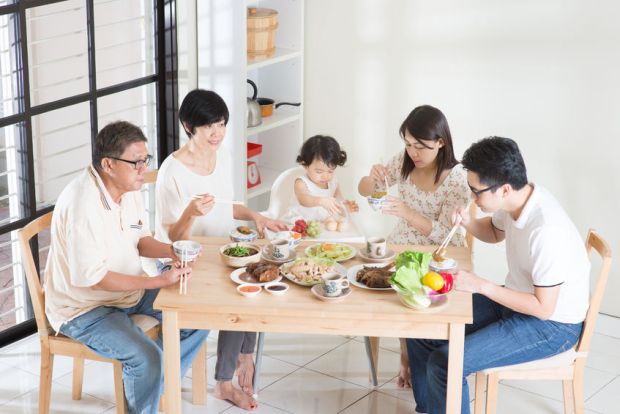
Not every experience is similar for everyone, however. Growing up in a stereotypical Chinese family, Darren aims to challenge the long-held perception that Asian families are cold.
"Both my parents are the typical Asian parent that doesn't say 'Wo Ai Ni' to anyone. So, food and money are their way of showing that they care,” says the freelancer.
"For me, the Chinese culture of 'Do more, talk less' makes us bad at expressing our thoughts and emotions. Truth is, love is meant to be told and that's what I believe in," he explains.
But change is easy to adapt to, as Darren later finds out.
"Eventually when I start to tell them 'I love you', I do get a reply back – although sometimes in an awkward tone."
Be it through words or action, it's important for us to act now and express our love and appreciation to our loved ones while we still can, than to live with regret long after they're gone.
"Death is unpredictable and losing someone will never be easy," says Nisha, "but we should appreciate our family members while we are still capable of showering them with love and care."
"We never know when we might lose them," she concludes.
This article is brought to you by Xiao En as part of their ongoing #ActNow campaign that encourages people to show their affection to their loved ones before it's too late. Join local celebrities and inspiring personalities as they share messages of love through a series of videos. To watch the rest of them, visit here.
Already a subscriber? Log in
Get 20% OFF The Star Digital Access
Cancel anytime. Ad-free. Unlimited access with perks.
