



WHEN a document calling itself a “peace plan” fails to even mention Gaza – the epicentre of Palestinian suffering – we must ask: what kind of peace is this?
The Trump administration’s so called “Board of Peace” initiative is not a peace plan by any measure. It is a property development proposal dressed up in diplomatic language, a blueprint for investment zones rather than a framework for justice. To call this “peace” is to strip the word of all meaning.
The manner in which this plan was raised betrays a profound ignorance – or deliberate disregard – of the fundamental issue in the Middle East.
US president Donald Trump and his advisers appear oblivious to the fact that the conflict is not about infrastructure or tourism projects, but about occupation, dispossession, and the denial of Palestinian self determination. To miss this point is to miss the entire essence of the Palestinian struggle.
How can a capitalistic “property development” approach resolve the core problem of Israeli occupation?
Roads, resorts, and investment schemes cannot erase checkpoints, demolitions, or the apartheid wall. They cannot substitute for sovereignty. The plan reduces a national liberation struggle to a real estate transaction, commodifying Palestinian land while ignoring the people who live upon it.
The insensitivity is staggering. Palestinians are sidelined altogether, excluded from the so called “board of peace.” There is no Palestinian representation, no voice, no agency.
In hindsight, perhaps this exclusion is fitting, because the plan does not even attempt to address the real issue: the oppression and subjugation of Palestinians under brutal occupation. It is easier to erase them than to confront the injustice they endure.
This disregard is not accidental. It reflects the image of Palestinians in the minds of Zionists and their Western backers: a people to be managed, bypassed, or silenced, rather than engaged as equal partners in shaping their destiny.
The plan embodies this worldview, treating Palestinians as obstacles to development rather than as a nation with legitimate aspirations.
The severity of oppression under apartheid and settler colonialism continues unabated under this plan. Far from dismantling structures of domination, it entrenches them. By offering economic carrots while ignoring political rights, the plan seeks to normalise occupation and make apartheid permanent. It is not a path to peace but a roadmap to deeper injustice.
The insult is compounded by the grotesque “riviera project” floated last year, a father-in-law- and-son-in-law fantasy of turning occupied land into a playground for investors.
Palestinians, dispossessed and besieged, are told to accept resorts in place of rights, leisure in place of liberation. This is not peace – it is mockery.
This is the reality Palestinians have faced since 1948: brutal occupation, apartheid, and the theft of land and identity. No other people in the world have been subjected to such sustained dispossession, and yet they are told to accept development projects as compensation. The comparison made by a local journalist in Kuala Lumpur recently, likening Malaysia’s situation to Palestine, was not only inaccurate but insulting to the depth of Palestinian suffering.
Last year I wrote of A Peace Built on Sand. That warning has now materialised. This “Board of Peace” is precisely such a construction: a fragile edifice built on denial, exclusion, and erasure. It cannot stand because it is not rooted in justice. Sand shifts, and so too will this plan, collapsing under the weight of its own contradictions.
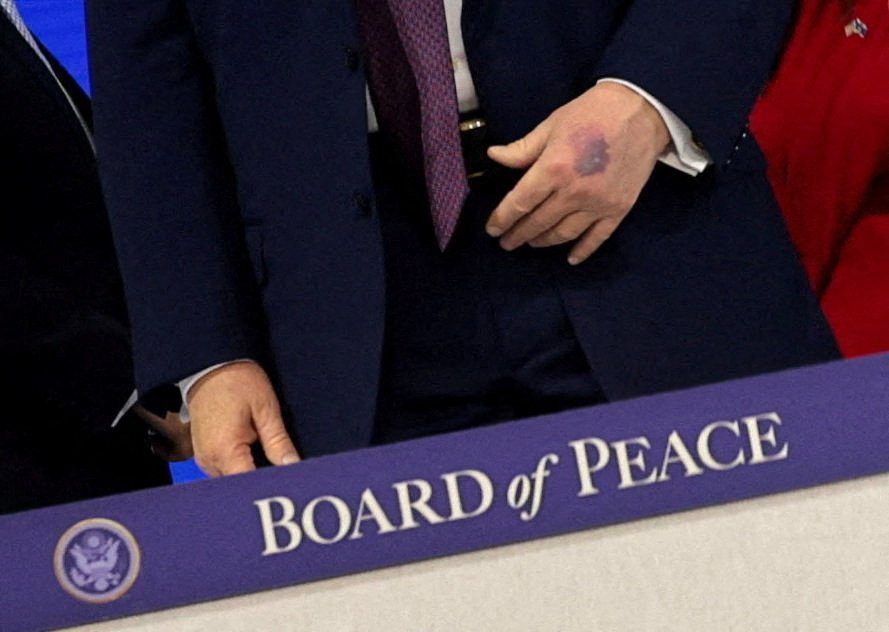
True peace requires confronting the reality of occupation, apartheid, and settler colonialism. It requires centring Palestinian voices, aspirations, and rights – not sidelining them. Until that happens, every “peace plan” that ignores Gaza, erases Palestinians, and commodifies their land will remain what it truly is: a plan for perpetuating injustice, not ending it.
And let us be clear: peace cannot be outsourced to developers or dictated by foreign powers who have consistently enabled Israel’s occupation. Genuine peace must emerge from dialogue with Palestinians themselves, rooted in recognition of their rights and their humanity. Anything less is not peace – it is colonial management dressed in modern language.
The world must reject such illusions. If the international community continues to indulge these hollow plans, it becomes complicit in normalising apartheid. The task before us is not to applaud cosmetic initiatives but to demand accountability, justice, and liberation. Only then can the word “peace” regain its meaning in Palestine.
Dr Abdul Latiff Mohd Ibrahim is head of the Research and Publications Division at the International Institute of Advanced Islamic Studies (IAIS) Malaysia. The views expressed here are solely the writer’s own.
