



WHEN Canadian farmer Simon Ellis first drove his combine into last year’s crop, he expected “catastrophic failure” after a season of flooding followed by drought.
But instead of shrivelled kernels, plump seeds of wheat, oats and soybeans poured in.
Ellis, 38, a fourth-generation farmer in Wawanesa, Manitoba, credits investments in costly systems including minimum and zero-till farming, tile drainage to prevent flooding, slow-release fertiliser pellets and advice from a professional agronomist on weedkillers.
“We are constantly making little tweaks,” he said. “That’s how we’re going to be able to keep fighting the changing climate.”
Across much of western Canada, farmers like Ellis are turning out strikingly better crops despite hotter, drier conditions – far above what would have been expected in better years, according to Canadian government data.
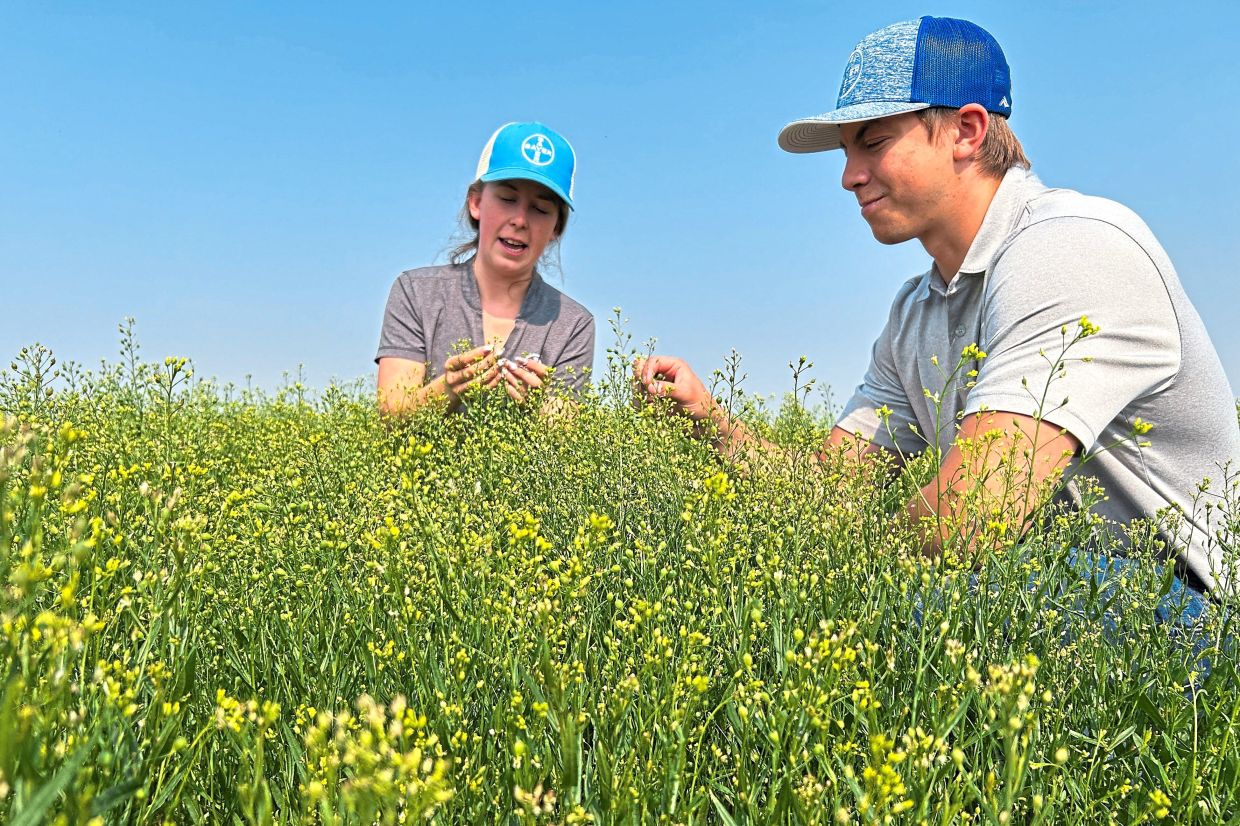
Widespread adoption of climate adaptation strategies is partly responsible.
While greater yields are depressing global grain prices, they are keeping many farmers in business.
Record harvests despite drought
Adaptation practices – often costly and reliant on cutting-edge technologies – have enabled many farmers to weather a drought that began in 2020.
Last month, the Canadian government announced record harvests of spring wheat and canola for 2025.
Most of these grains are exported, meaning these gains have significant implications for global food affordability. Australia, another major exporter, has also reported rising yields despite drier conditions.
The combination of methods and technology is helping Canadian growers not only cope with climate change but stay ahead of it, according to interviews with farmers, scientists and industry leaders, and a review of more than a dozen academic papers.
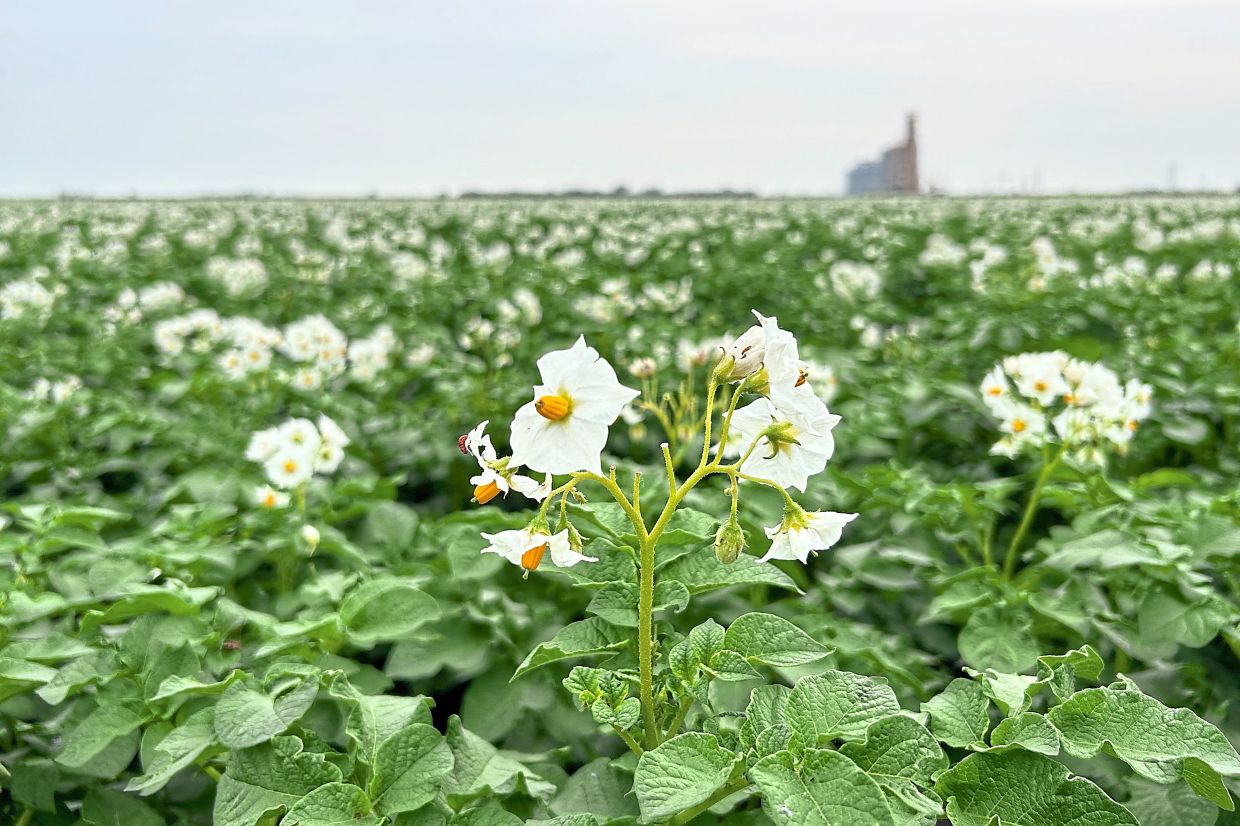
Spring wheat, used for high-quality bread, yielded 3.95 tonnes per ha this year, a 77% gain from 30 years ago. Canola yields nearly doubled, reaching 2.99 tonnes per ha.
“Back in the day, 30, 35 bushels an acre (for wheat) would have been a bumper crop,” said Rob Saik, a Canadian agronomist. “Now it’s an abject failure.”
A notoriously difficult region
Even before climate change, western Canada was a challenging region to farm. The central prairies receive roughly half the rainfall of Iowa and have a much shorter growing season.
Climate change has made matters worse. Environment and Climate Change Canada says the country is warming at twice the global average, with extreme events becoming more common.
Snowfall, a key source of spring moisture, has declined, while summer extremes of rain and drought have increased.
“Extreme events, like floods, heatwaves, wildfires and severe storms, are increasingly damaging to our economy, ecosystems and built environment,” the federal department said in a 2024 report.
Incremental gains, not miracles
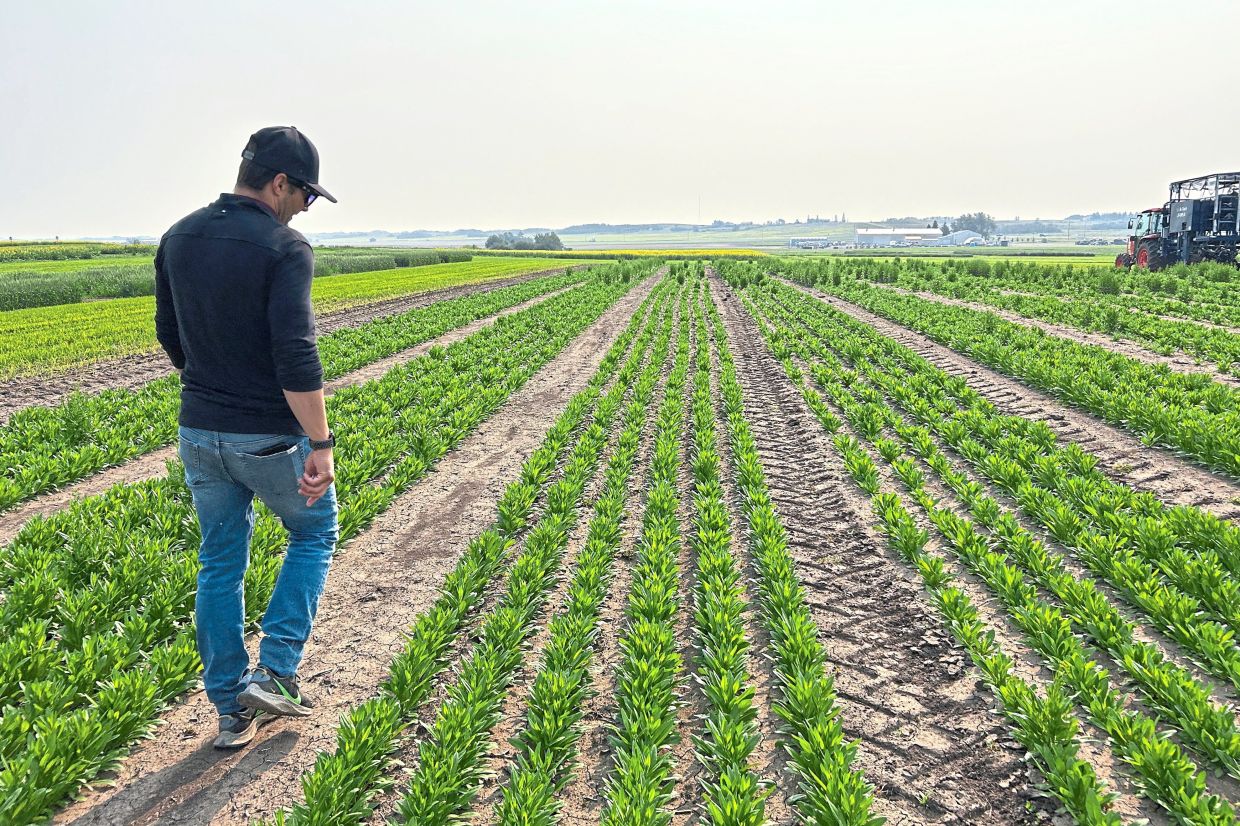
Experts say Canada’s gains are the result of steady, incremental progress with farming methods and inputs, rather than a single breakthrough.
Many seeds now carry insect, disease and weed resistance through conventional breeding and genetic modification.
Fertiliser is applied with minimal soil disturbance at the same time as seeding. Fungicides, weedkillers and nutrients help crops outcompete natural threats.
Some practices, like intercropping, echo pre-industrial techniques.
Automation, such as self-guiding tractors that apply fertiliser based on soil tests and satellite mapping, is also key.
One family’s adaptation evolution
The Mowbray family began adaptive practices four decades ago with tile drainage, directing water into the soil instead of across the surface.
Over the past 12 years, Scott Mowbray, 46, expanded the system to 325ha of his farm.
By 2010, the 810ha farm was entirely no-till, leaving stubble as a moisture trap and wind barrier.
The innovations allow the Mowbrays to “pull off yields twice what we used to with half as much rain,” Mowbray said, producing “incredible” volumes of spring wheat, peas and rye.
Technology’s steep price tag
Much of this progress relies on expensive equipment. A smart combine can cost C$1mil, while a high-speed-data-enabled tractor and seeding drill may reach C$2mil.
Kip Eideberg, senior vice-president of the Association of Equipment Manufacturers, said precision systems have saved farmers 9% on herbicide and pesticide, 6% on fuel and 4% on water.
“That’s money saved for farmers operating on razor-thin margins,” he said.
Many large-scale farmers have access to such technology, but older farmers often avoid digital challenges, while younger ones lack the funds.
Rural broadband remains a barrier; Mowbray cannot run a constant stream of data or call his farmhouse from a cellphone, relying instead on two-way radios.
Seed science — the invisible factor
Breeding genetically superior, drought-tolerant crops is another factor.
“We’re just starting down that path,” said Rick Mitzel, CEO of mustard seed organisation Mustard 21.
He highlighted new varieties that “come out of the ground quicker, develop roots quicker, get leafing faster”.
At the South East Research Farm in Redvers, Saskatchewan, crops like camelina – a candidate for sustainable aviation fuel – are being trialled for resilience and better yields.
Executive director Lana Shaw emphasised that adaptation will not prevent all losses. Some farmers will retire, some will fail, but others will thrive.
“Under pressure,” she said, “they can adapt very fast.” — Reuters
