CARVED by the dynamic Sungai Perak and cocooned between the imposing Bintang and Titiwangsa mountain ranges, the lush Lenggong Valley is home to some of the oldest archaeological and geological heritage of the region. In fact, it is the cradle of some of the world’s earliest evidence of ancient human settlement.
But today, it is the “living heritage’’ that is garnering attention – the residents of Lenggong and their intangible cultural heritage.
“Through the expanse of the area and its layers of history, all the way from 1.8 million years ago to today, Lenggong has been a point of continuous human habitation and seen a presence of diverse communities,” says Think City managing director Datuk Hamdan Abdul Majeed.
And this is what makes it unique, he adds.
“It is diverse with an assimilation of cultures like many parts of Malaysia, but because it’s also remote, Lenggong’s distinctive culture has remain protected. The local food culture is unique and it even has its own local language. In a way, because if you look at the Malay community here in particular, most are of Patani descent but they are also very distinct to this area.”
Since it introduced the Northern Region Archaeotourism Network Programme in 2022, Think City has been working with the local community in this northern small town of Perak not only to understand and appreciate the rich heritage, but also to learn to see and tap into it as an asset.
“We see the cultural sector as a new source of economic growth; one in which we can strengthen local economic development, especially through heritage-based activities, to improve the quality of living, enhance jobs and, at the same time, make it an interesting place for visitors to come to,” he says.
“But it also has to be community-led.
“We want the community to be the stewards of their heritage: to be the ambassadors, to celebrate their history, their culture, their places and traditions.
“So how do you get communities to have the capacity to interpret their places? How do you improve the quality of the experience of being in these places? How do you provide visitors with greater awareness of what these places can offer? How do you enhance the capacity of the communities to do the storytelling?
“That has been the broader picture of our efforts.”
To build further on community engagement, the organisation launched the Lenggong Community Centre last December.
“We’ve seen communities here move from learning about their heritage to taking greater ownership of it. The community centre supports the next phase of this journey by giving local groups the space to sustain and build on that momentum,” Hamdan explains.
Established in partnership with the Lenggong District Council, the Lenggong Community Centre is housed in a refurbished historical building in the town to create a shared space that will support local learning, collaboration, and heritage-based activities.
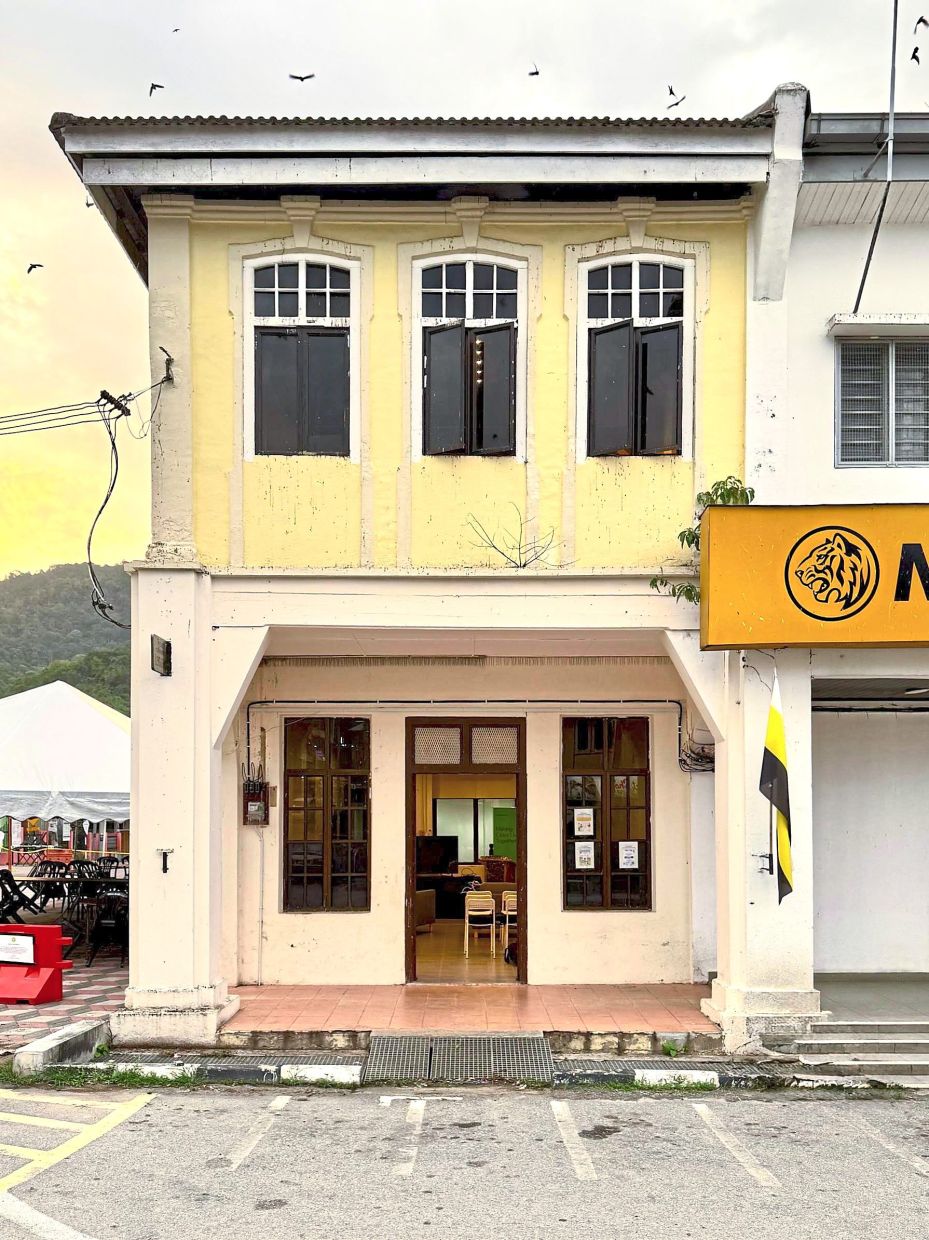
It is part of the Lenggong Valley Sustainable Community Development programme, a tailored capacity-building initiative supported by Yayasan Hasanah (under national sovereign wealth fund Khazanah Nasional Berhad).
Designed for everyday community use, the flexible, multipurpose community centre aims to provide a platform for residents, local groups, partners, and visitors to engage with Lenggong’s cultural, archaeological, and natural heritage. It is equipped to host heritage workshops, training sessions, and learning programmes while sustaining communal activities such as film screenings and arts and crafts workshops.
Keepers of local culture
It has been a long journey for Lenggong to become a heritage- tourism destination since it was awarded the Unesco World Heritage Site title in 2012 for its archaeological heritage.
For many of its residents, it was difficult at first to comprehend how their childhood home could hold value for visitors; for instance, how some “rocks” in a palm oil plantation in Bukit Bunuh can be valuable – they are remnants of a meteorite estimated to have hit the site some 1.83 million years ago – what more be a global attraction. Or how some of their caves bear evidence not only of the earliest human settlements but also geological and natural wonders that earned them a Unesco Global Geopark recognition in September 2025.
It has taken them even longer to see how their simple way of life and customs can be something to celebrate.
This is perhaps embodied best by Lenggong’s doyen of local cuisine Mak Ani, who runs Dangau Mak Ani in Kampung Chepor.
When first met in 2022, the affable aunty was shy about her homemade spreads.
“When I was first asked to prepare lunches for visitors and tourists, I felt shy – will people like what I cook? It’s just simple kampung fare; I have no meat, just these vegetables and fruits that I pick from the jungle and grow in my garden, and pekasam. But they actually love it,” she had humbly shared in Malay.
(Pekasam is a local specialty: fried fermented freshwater fish that has been leavened with roasted rice, tamarind, and salt.)
Three years on, Mak Ani glows confidently like the small businesswoman she is meant to be, saying, “Come, come, to my place when you can, it’s different now. We’ve expanded, the dangau [hut] is bigger, more space,” she beams proudly.
Lenggong District Council president Mohd Amzari Mohd Arzami concurs that the community in Lenggong has started to see the potential of generating income from heritage-based economic activities.
The district council has been entrusted with managing tourism in Lenggong since the National Heritage Department, under the Tourism, Arts and Culture Ministry, handed over the administration of the World Heritage Site to the Perak state government in 2023.
According to Mohd Amzari, based on data from local tourism operators, about 22,000 tourists were recorded staying in Lenggong in 2022, and this jumped to 154,000 people in 2024.
“So that is a huge number of visitors here, and until October 2025, we have had about 156,000 staying in Lenggong for the year,” he says, adding that they are fully prepared to welcome even more visitors during Visit Malaysia 2026.
“The number of visitors will have a spillover effect from their spending in the Lenggong area, which will further empower the community, with Think City’s help.”
Now the Global Geopark recognition is opening more avenues for the local community.
With the collaboration of Uni-versiti Teknologi Malaysia, the community centre can reinforce Lenggong’s identity as a Unesco Global Park through grassroots programmes, he says.
UTM will support the continuity of activities at the centre through its role as the UTM Geopark Satellite Research Laboratory, aligned with efforts to position Lenggong as a global geopark education hub initiated by Lenggong Member of Parliament Datuk Seri Dr Shamsul Anuar.
Activities at the centre will include learning programmes and short courses related to geopark management, planning, and conservation, complementing local knowledge and community priorities, says UTM’s Dean of the Faculty of Built Environment and Surveying, Prof Dr Kherun Nita Ali.
The Lenggong Geopark is also targeting three schools to implement a Geoschool Module this year to strengthen community development and education elements in the geopark ecosystem in this district. Shamsul Anuar, who is also Lenggong Geopark Management Geocommunity chairman, tells reporters that currently there is already one school carrying out the module, Sekolah Kebangsaan Sungai Raban.
“We already have a Geoschool for the development of the Geopark involving school students. We have one primary school and we hope to build two or three more that will also involve secondary schools.”’
Apart from education, the Lenggong Geopark is also focusing on the development of local entrepreneurship through the Geo-Entrepreneur programme, especially in the production of handicraft, weaving, and community-based products, he adds.
“We are planning a Geo-Entre-preneur programme to assist entrepreneurs to develop products. We also hope Think City can help promote the place so that tourists can come to visit. Besides visiting the caves, they can also buy souvenirs,” notes Shamsul Anuar, who is also Deputy Home Minister.