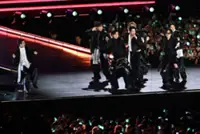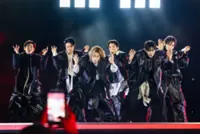
K-POP’S biggest-ever comeback tour, the return of the super boy band BTS, has been hijacked by a dating scandal. How the US$9bil (RM36.5bil) industry handles the excesses of superfan culture will have an impact on the way the genre extends its footprint globally.
The controversy that has fired up a small but vocal fandom centres on whether two of the industry’s biggest stars, Jungkook of BTS and Winter of Aespa, are in a relationship. To be clear: Nobody is accused of any actual wrongdoing.
But to some fervent devotees, dating is a crime. Idols are meant to stay single, at least publicly, to preserve the image of accessibility and provide blank slates for followers to project their fantasies – no matter how outlandish.
The unconfirmed rumours about Jungkook and Winter, dubbed Winkook, emerged months ago based on allegations the duo had matching bracelets and tattoos. The firestorm reached a crescendo in December, when some fans reportedly sent a “protest lorry” (an advertising truck carrying fans’ demands) to the Seoul offices of BTS’ agency, Big Hit Music, a subsidiary of Hybe, calling for Jungkook to leave the group. Aespa’s management, SM Entertainment, was subjected to a similar demonstration.
The protests are not a new phenomenon. Performers are held to exceptionally high standards and have been forced to apologise for being romantically involved. And, lest anyone unfamiliar with this subculture dismisses them as inconsequential fringe examples of the super fandom, many high-flying careers have been derailed by such revelations.
Bandmates HyunA and Dawn of Triple H were dropped by their agency Cube Entertainment in 2018 following the disclosure of their secret two-year relationship.
Fans turned against Exo’s Chen when the singer announced that he was engaged and having a baby. Former Super Junior star Sungmin is trying to rebuild his career after going on hiatus for a decade due to backlash because of his decision to marry.
Superfans’ reactions to “betrayal” by their favourite artistes are rooted in the business model of K-pop, which emerged in the 1990s in South Korea. To put it simply, the industry was built around sales of physical albums targeting a small but highly engaged fan base.
Rather than being famous purely for their talent and charisma, idols must connect emotionally with their fans in order to encourage the kind of parasocial relationships needed for sustained loyalty and album sales. Music companies have traditionally encouraged fans to buy multiple copies, sometimes more than 100, to have the chance to meet their idols in person.
But as the genre matures and gains traction abroad, things are changing. The popularity of Netflix’s KPop Demon Hunters has considerably broadened its appeal. The return of BTS on the back of a US$1bil (RM4.05bil) tour could push K-pop towards an inflection point in the original business model. Instead of being driven largely by albums, segments like concerts, streaming, and merchandise sales are growing in importance.
This is especially important as album sales in South Korea stagnate. Domestic sales grew by 30% annually in the two decades to 2023, according to financial services company, the Macquarie Group. However, that expansion likely peaked in 2024, with revenues falling by 19%.
While the home-grown audience remains important, superfans may no longer be able to maintain the same financial stranglehold on the industry and artistes. It’s especially true when it comes to names like BTS, with the biggest overseas fan bases – who wouldn’t punish their idols for anything as innocuous as dating. In fact, there’s nothing like a feel-good celebrity romance – think Taylor Swift and Travis Kelce – to boost goodwill and engagement.
South Korean record labels should take notice. Even when the Winkook scandal boiled over in December, the stars stayed mum. Eventually, both SM Entertainment and Big Hit Music issued warnings threatening legal action against those spreading “malicious” rumours. The reaction was intended to dial down the drama in an echo of the British royal family’s unofficial “never complain, never explain” motto. Hybe and SM Entertainment didn’t respond to requests for comment.
Saying nothing though was a missed opportunity. Many dedicated-but-not-obsessive fans were confused by the silence. They expressed frustration with the apparent refusal to confront what they believed was a toxic and unfair controversy over what two consenting adults might be doing.
Most BTS members are in their 30s. It seems ridiculous to be policing their personal lives. Most stans want happiness for their idols and more honesty about the situation.
A far better example of how to handle the scandal has already been set by members of Katseye, a global girl group trained in K-pop ways by Hybe and US music label Geffen Records. Dogged by whispers of dating a rapper, singer Manon was allowed to cleverly end the speculation in her own voice.
The return of BTS will speed up K-pop’s pivot towards serving a broader international audience. As the genre transitions, it should keep its best aspects – a unique sound, style of training, and the way it engages with fans – intact while ditching its worst. The boy band sings often about romance. Its members deserve to love freely and openly. — Bloomberg Opinion/Tribune News Service