FOR months, Nora Meor had to contend with construction noise as her next door neighbour in Ipoh refurbished his single-storey house. When the renovation was finally done, she was then disturbed by the loud comings and goings of the stream of “visitors” to his house.
“He’s made it into a ‘homestay’! It makes sense since we live near the Lembah Kinta National Geopark, but I wish he could have given us some warning,” she says.
While the visitors have been keeping to themselves so far and have not caused any real trouble, Nora says she is concerned about security and possible congestion in the area, especially during the peak holiday season.
For Nadia Hong, the presence of “homestay” – as many in Malaysia tend to mislabel short-term rental (STR) – guests in her condominium in Petaling Jaya is more of something she notices in passing rather than as a disruption. It usually shows up in small ways, she says, such as unfamiliar families in the lifts lugging luggage.
“I overhear conversations in the lifts or I see they are struggling with the key card to access their floor,” says the 32-year-old.
Beyond that, she says the impact is not significant, “just at times facilities like the pool or gym are more crowded”.
Her main concern is not noise or security, but wear and tear of shared amenities. She points to issues such as wet corridors and lifts after swimming, gym equipment breaking down due to incorrect use, or recreational items going missing. Still, she says this cannot be pinned entirely on STR guests: “It’s nothing dissimilar from some inconsiderate permanent residents or tenants.”
“I’m not particularly concerned about security or noise as there are daily security patrols and direct landlines to the building security guards who are quite responsive in handling noise complaints,” she adds.
She also believes that her condominium is not located in a touristy area, so the occupancy of STRs there does not tend to be high. Hence, she is not that concerned about the influx of tourists expected during Visit Malaysia 2026 (VM2026).
“There are plenty more viable options for visitors closer to tourist sites hence I don’t foresee Airbnb occupancy here increasing significantly.”
On the flip side, 69-year-old Kelly Chong, who lives within walking distance of Melaka’s most popular tourist spot, Jonker Street, is used to the hubbub of tourism.
With such a prime location, her landed neighbourhood plays host to many STRs, with the house across from hers being one such accommodation.
But just like Hong, she doesn’t see STRs in her neighbourhood as a significant issue.
“I’ve not really been affected by any noise or safety issues,” she says.
The guests are also usually quite prudent about parking their cars in the appropriate spots, so there has not been any congestion on her street, she adds. In fact, sometimes when it is not being occupied by guests, local residents gain an extra parking spot in front of the house being used as a STR.
However, she notes that while she herself has not been exposed to disruptive noises from the STR, her neighbour living next door to the STR has complained to the owner and host about such incidents. So far, the owner has responded by placing more noise restrictions on their guests as well as emphasising a ban on parties within the STR premises.
Since then, Chong says her neighbour has stopped complaining.
Fundamentally affected?
Hong says she can understand how STR activities could have a negative impact, especially in residential buildings or neighbourhoods with fewer security measures and denser units.
“Living next to a different set of people every day can be concerning, and if it gets bad then complaints will be raised to management or the unit owner,” she says.
As Hong expected, not all neighbours have had neutral experiences.
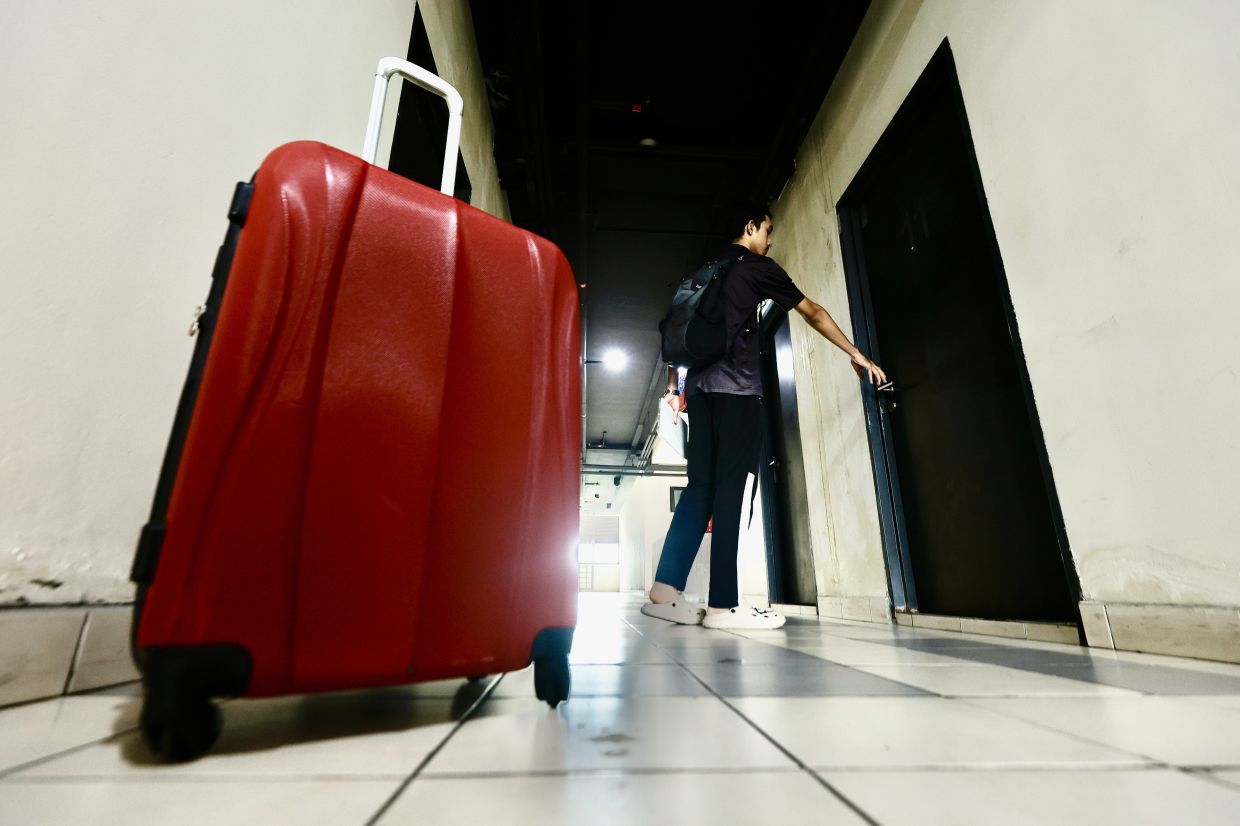
For Rizal Abdullah, the presence of STR guests in his high-rise building has been a constant source of frustration.
The signs of STR guests in the building are unmistakable, he says, starting with the noise in the corridors, with both children and adults behaving as though the apartment block is “a resort or a hotel”.
“It’s like nails on a chalkboard,” he says, adding that the situation becomes particularly unbearable during school holidays.
Noise is only part of the problem for the 40-year-old who lives in Shah Alam. Rizal says the hygiene in his building has also deteriorated, with rubbish being strewn everywhere and empty drinking cups left in the lifts. He also clocks the issues with the maintenance of amenities, as Hong mentioned, as well as additional security measures needed to monitor so many outsiders.
“More problems mean more money.
“I do not want to fork out more maintenance fees or be forced to use the sinking fund to repair any broken facilities or clean the rubbish left by these guests,” he says.
While his building does have rules governing guest behaviour, enforcement remains a challenge.
“The apartment management had to hold a meeting and warn errant owners about their guests,” he recalls.
With VM2026 now started, Rizal fears the situation will be worse than during school holidays. Still, there has been an unexpected silver lining for him amid his frustrations; he says at least the permanent residents in his building have been brought together by their dislike of STR guests.
“I guess we are united in that sense,” he jokes.
The stark contrast among the experiences of STR neighbours underscores why such accommodations continue to be a hot topic in residential communities. While some residents barely notice the presence of STR guests, others feel their living environment has been fundamentally affected.
Everyone’s responsibility
It is these concerns around noise, cleanliness, security and accountability that policymakers say the upcoming Short-Term Rental Accommodations (STRA) guidelines are intended to address.
Rental platforms such as Airbnb have also been continuously working on policies and measures aimed at reducing friction between guests, hosts, and neighbours.
Airbnb, the most popular STR hosting platform in Malaysia, has introduced various resources to guide both hosts and guests in establishing best practices over the years that form the backbone of its “Guide to Responsible Hosting in Buildings” introduced in 2024.
There is its code of conduct, which outlines shared responsibilities and common courtesy in STRs, a neighbourhood support line available in multiple languages to enable residents to flag urgent concerns about nearby listings, and a responsible hosting page to help hosts better understand their responsibilities under local laws and regulations.
Airbnb has also partnered with a local law firm to develop reference building by-laws for condominiums and apartment buildings. The platform says hosts take community responsibility very seriously, with Johor-based host and Airbnb community leader Jovin Liew saying that she sets out clear house rules before her guests arrive to help set the right tone and encourage respectful behaviour throughout her guests’ stay.
“I also place a strong emphasis on being responsive and accessible. If neighbours raise any concerns, I take them seriously and address issues quickly, whether that means speaking directly with guests, adjusting procedures or following up after a stay.
“This is something I actively encourage within the host community as well.
“I believe that with responsible management, STRs can coexist positively within neighbourhoods and communities,” she says.