ABDOUL Aziz Balde sobbed as he spoke of his son Idrissa, who left Guinea in search of a better life but has not been heard from since capsizing off the Moroccan coast.
“I know that the boat my son was on sank, but we haven’t been shown his body, so to say that the boy is dead, I just don’t know,” said the desperate father.
Thousands of young undocumented migrants from Guinea vanish along migration routes each year, leaving families in helpless limbo.
Some disappear after boarding overcrowded boats, others after being abandoned by smugglers in the desert, and some vanish in North African detention centres or Europe, too ashamed to return home.
Families scour Facebook and WhatsApp for signs, often confronted with harrowing images of shipwrecks or corpses.
The Guinean Organisation for the Fight Against Irregular Migration (OGLMI) has pioneered a support network, collaborating with migrant aid associations worldwide over the past year. The NGO estimates that thousands of Guineans remain missing.
“Out of 100 migrants who leave, at least 10 will never return,” said OGLMI executive director Elhadj Mohamed Diallo. “People have been missing for a long time but the issue has never been discussed at the civil society, government or international institution level.”
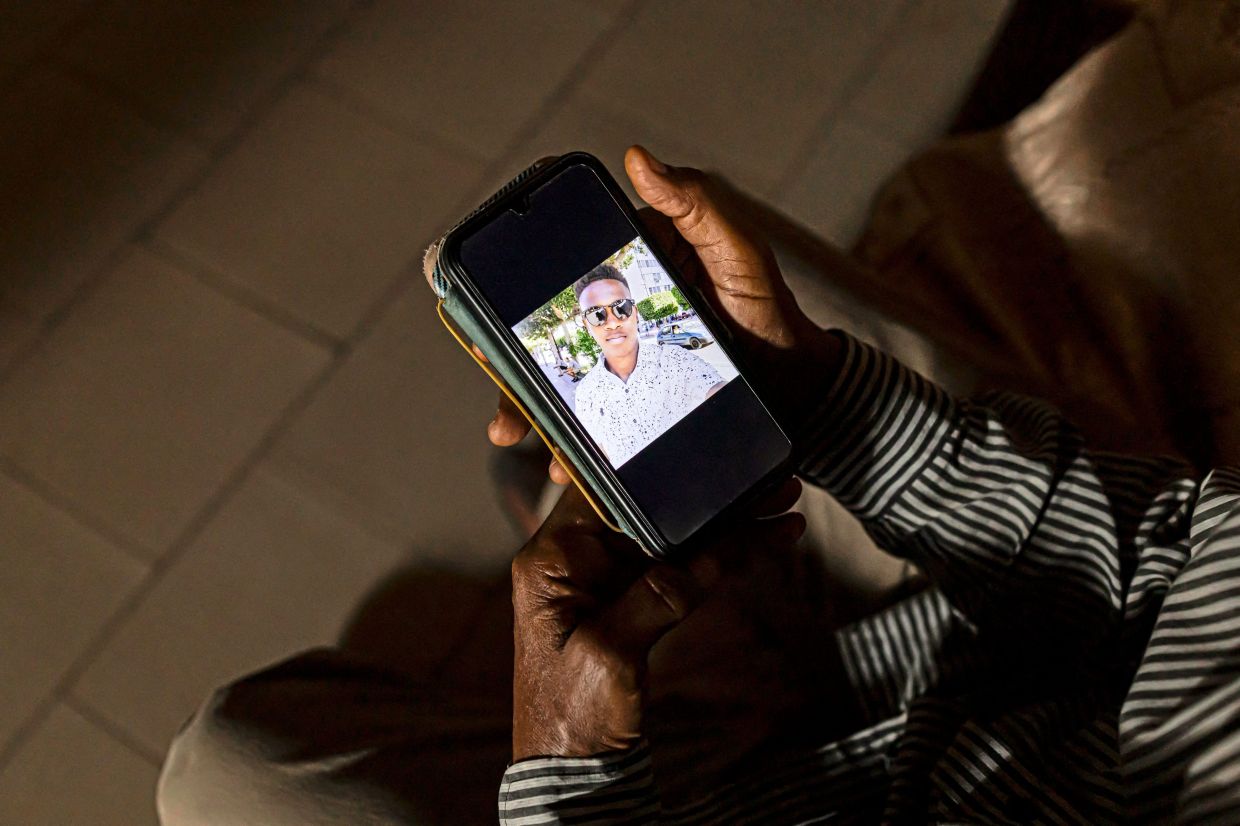
The Balde family lives in a shared home where poverty is stark. Each visit from Diallo involves scrolling through WhatsApp for Idrissa’s last virtual traces – one of the last a smiling selfie.
“He left to save us, and to save his little sister. But God didn’t want it to be,” said Abdoul Aziz, 62, a driver.
Despite his academic promise, Idrissa, who would now be 29, saw no opportunity in Guinea.
From 2023, he made three unsuccessful attempts to reach Europe, each time reaching as far as Morocco.
His parents financed his master’s studies in Senegal in 2024, but Idrissa was lured by peers who had reached Europe.
Last August, his father received a fateful phone call: “Are you Mr Balde? Do you have a son who is in Morocco? My deepest condolences. They boarded small boats ... they drowned.”
The family was able to contact a young girl on the same boat, but she had lost consciousness when a wave hit, unable to say what happened to Idrissa.
“Is he dead? Is he not dead?” Abdoul Aziz asked, voice filled with anguish.
Between 2014 and 2025, at least 33,220 migrants died or went missing in the Mediterranean and 17,768 in Africa, according to the International Organisation for Migration’s Missing Migrants Project.
Figures are likely underestimated; in 2024 alone, the NGO Caminando Fronteras recorded 10,457 dead or missing at sea along the western European-Africa route.
Guinean researcher Mahmoud Kaba is studying families who have lost loved ones during migration attempts. Some suffer strokes, others insomnia or amnesia, he said.
Families feel isolated by stricter European border policies, general indifference, and the criminalisation of migration.
Abdoulaye Diallo, 67, said he felt “abandoned” after his eldest son Abdou Karim disappeared two years ago.
Abdou had left Guinea at 18, reached Morocco, Tunisia and Libya, then returned.
On a second attempt, he vanished while trying to cross to Spain via the Spanish enclave of Melilla.
“There is violence against migrants in Morocco, especially from the security forces. It’s a country where lives are senselessly lost,” Abdoulaye said, breaking down.
OGLMI has set up WhatsApp groups in local languages to connect families, alongside a support network.
Even when disappearances are reported, follow-up is rare, Abdoulaye said.
Guinea’s ruling junta, which took power in 2021, is reluctant to discuss illegal migration, seeing it as a political failure.
Mamadou Saitiou Barry, head of the Directorate-General for Guineans Living Abroad, urged caution in labelling migrants as “disappeared”.
He said some may refuse contact, be hospitalised, imprisoned, or otherwise unreachable. Authorities have assisted families of known shipwreck victims.
“Families have the right to the truth and to file a complaint, the missing have the right to be searched for, and the deceased have the right to be buried with dignity,” said Helena Maleno, founder of Caminando Fronteras.
OGLMI gathers information on missing migrants, tracing routes, contacting associations in North Africa, Europe, and activists as far away as Mexico and the United States.
The search may even involve visiting unmarked graves in migrant cemeteries or morgues.
Some families do trace their loved ones.
Tahibou Diallo, 58, found her son Thierno Mouctar alive but homeless in Nantes, France, after two years of silence.
Others wait, uncertain, for more than a year.
“These families must be helped to grieve,” said Tahibou. “We must not forget all these missing people.” — AFP