A THUNDEROUS boom rang out through the windless late-afternoon air. Seconds later, smoke rose from the sea, as if the horizon were on fire.
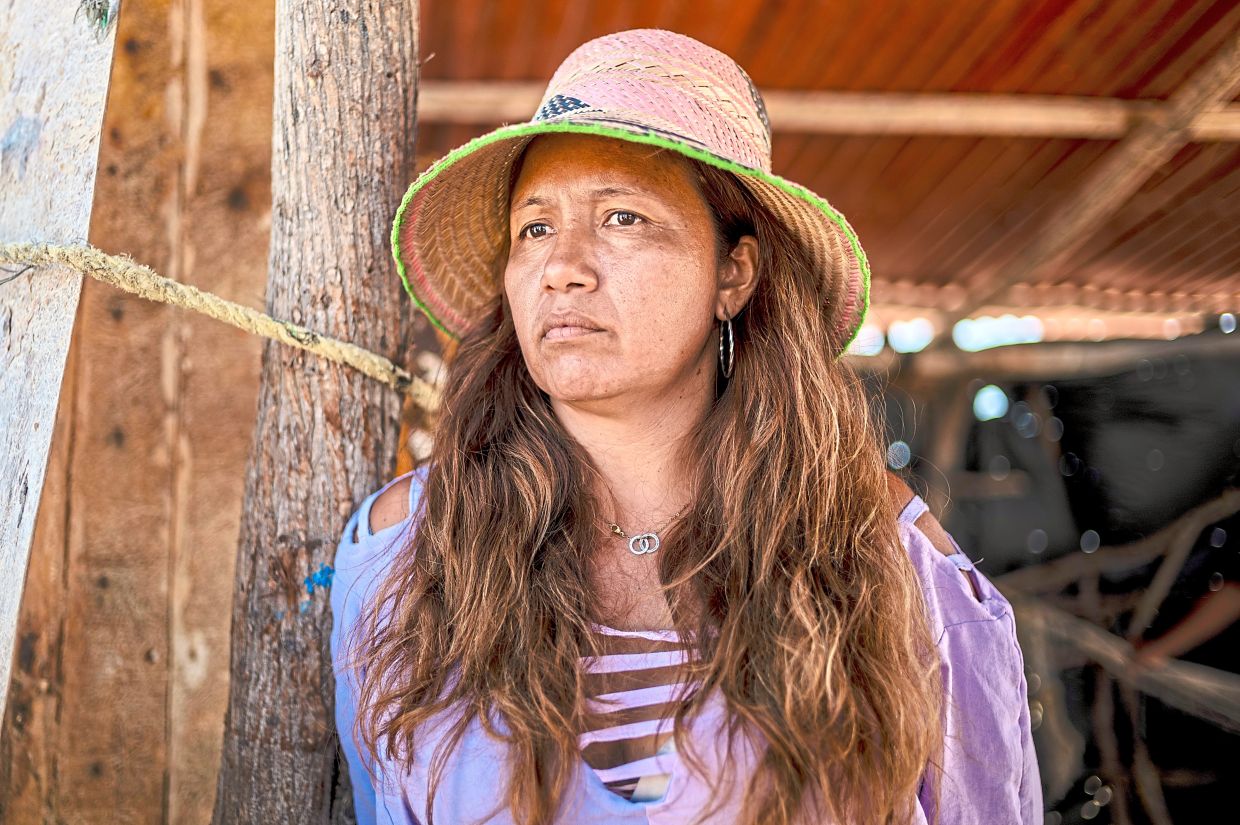
Watching from the shore on Nov 6, Erika Palacio Fernandez pulled out her phone, unwittingly recording what experts say is the only verified, independent video known to date of the aftermath of a US airstrike in the Trump administration’s campaign against what it calls “narco-terrorists”.
Two days later, a scorched speedboat about 9m long washed ashore on the same stretch of coast.
Then came two bodies. Then charred jerrycans, life jackets and dozens of plastic packets, similar to those often found after anti-narcotics operations in the region, observed by The New York Times.
Most were empty, though traces of a substance resembling marijuana were found in the lining of a few.
The debris appears to be the first tangible evidence of the US campaign, which has destroyed at least 30 vessels and killed more than 100 people in the Caribbean and eastern Pacific, according to US officials.
Other struck boats are presumed to have sunk with their crews and cargo.
The US military has provided no public evidence that the vessels destroyed were carrying illicit drugs or belonged to criminal networks.
A Times analysis matched the wreckage to a boat shown in a video posted by Defence Secretary Pete Hegseth on the night of Nov 6, hours after Palacio filmed the smoke on the horizon.
Hegseth said the strike targeted a vessel in the Caribbean operated by an unnamed “designated terrorist organisation”, killing three people in international waters.
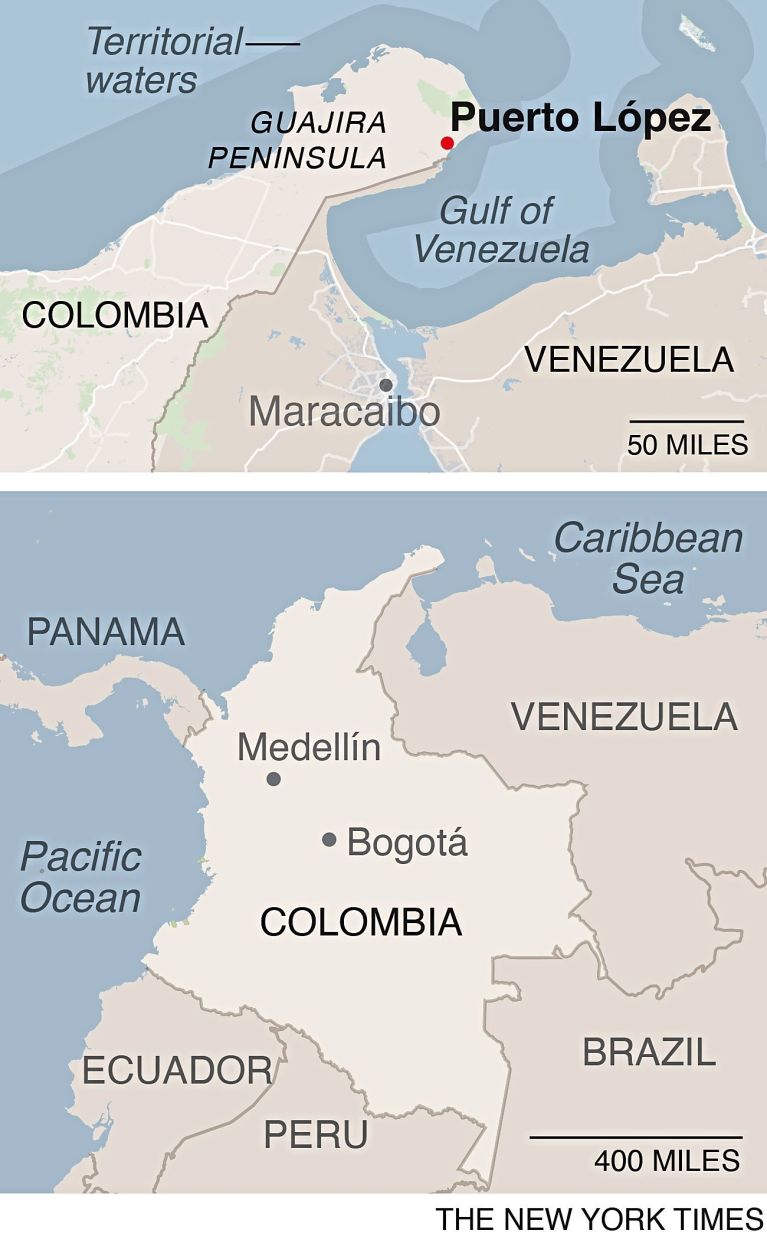
Analysis of Palacio’s footage suggests the strike occurred in the Gulf of Venezuela, where Colombia and Venezuela have long disputed their maritime boundary. The exact location could not be determined.
The wrecked boat’s slender design matches that of the vessel shown in US military footage, the analysis found, and its damage is consistent with an airstrike.
The Pentagon video shows the boat exploding beneath a plume of smoke.
That such rare physical evidence emerged weeks after the strike speaks to both the remoteness of the Guajira Peninsula and the limited reach of the Colombian state in the region.
The arid peninsula is governed semi-autonomously by the Wayuu, an indigenous community of more than half a million people straddling the Colombian-Venezuelan border.
The strike took place during an earlier phase of the US campaign, which has since shifted largely to the Pacific.
At the time, the focus appeared to be on Venezuelan rather than Colombian vessels.
Legal experts say the strikes are unlawful because international law prohibits deliberately targeting civilians unless they pose an immediate threat.
The Guajira Peninsula, South America’s northernmost point, has long served as a launchpad for smuggling – from coffee and electronics to drugs.
Reaching the coast by land requires navigating unmarked dirt tracks that are nearly impassable without a local guide.
The wreckage and the bodies were discovered on Nov 8 by fishermen, who alerted Aristotele Palmar Garcia, a Wayuu police inspector responsible for that stretch of beach.
He said he had little equipment and arrived wearing medical gloves only because his sister worked at a clinic.
Palmar said the regional police were notified but did not respond for days.
He and local fishermen buried the remains in shallow graves on the beach, following Wayuu tradition by sprinkling chirrinchi, a locally distilled liquor, and laying thorny cactus over the sites to keep dogs away.
Erika Patricia Vargas Sanchez, the regional director of Colombia’s forensic agency Medicina Legal, said two bodies were later exhumed from the area and transferred to Barranquilla on Dec 16 and 17 for autopsy.
The plastic packets that washed up nearby puzzled residents. Some bore traces of marijuana, including one found lodged in a burnt life vest.
An official with Colombia’s anti-narcotics police said neither she nor colleagues in La Guajira had knowledge of the packets.
Experts say marijuana and cocaine are often smuggled together in the region, typically by small-scale operators rather than major cartels.
“This narrative of cartels and Pablo Escobar doesn’t reflect reality here,” said Estefania Ciro, who leads a Colombian research institute on narcotics trafficking.
“One day they carry marijuana, another cocaine, another fish.”
Most residents rely on fishing and herding, not smuggling.
Mexi Misael Rincon, a fisherman, owns a boat nearly identical to the one destroyed.
Since the strike, he has ventured only into shallow waters.
His mother, Carmelena Gonzalez, said four of her sons have left Guajira to find work elsewhere. Fish that fetch better prices lie farther offshore.
“In normal times we’d go eight, 10, even 12 miles,” said Vicente Fernandez, a local fisherman and uncle of Palacio.
“Now we’re afraid to retrieve our nets.”
Since the strike, he added, he has occasionally seen drones overhead.
“They look like little planes,” he said.
“Like birds tracking prey.” — ©2026 The New York Times Company
This article originally appeared in The New York Times
Already a subscriber? Log in
Get 20% OFF The Star Digital Access
Cancel anytime. Ad-free. Unlimited access with perks.